REVIEW · CHIANG MAI
Private Tour: Sightseeing City walking Tour
Book on Viator →Operated by Private Guide in Chiang Mai · Bookable on Viator
Walking Chiang Mai beats rushing through. This private 3-hour route gets you into the old city with an English-speaking guide, plus drinking water. I love the slow pace and the fact that the stops come with meaning, not just photos. One thing to plan for: it’s still a walking tour, and the listing asks for moderate physical fitness, with no included lunch or private ride.
Chiang Mai is famous for temples and markets, but it’s easy to pick random spots if you don’t speak Thai. This tour helps you see the why behind each place, with guided time at Wat Chedi Luang and Wat Phra Singh and then a quick shift to street-level life at the Three Kings area and Somphet Market. The biggest win is that temple admission and key stops are handled as part of the experience.
If you care about stories, you’ll feel the difference a good guide makes. In past tours, guides including Oat and Lanna have delivered the kind of narration that turns a route of landmarks into a clear picture of Chiang Mai’s kingdoms and everyday culture—while still being flexible enough to match what your group wants. You’ll just need to bring good walking shoes and a light plan for what you’ll do for food after.
In This Review
- Key highlights to know before you go
- A 3-hour walking loop through Chiang Mai’s old city
- How a private English guide changes the whole feel of the day
- Wat Chedi Luang Varavihara: the royal-temple stop that sets the tone
- Wat Phra Singh: seeing the Phra Buddha Sihing story come alive
- Three Kings Monument: connecting dynasties at street level
- Somphet Market: seeing local daily life without getting lost
- Price and value: what $60.30 gets you in real terms
- What to plan for on the ground (so the day feels easy)
- Who this private Chiang Mai walking tour is best for
- Should you book this private tour?
- FAQ
- How long is the private city walking tour in Chiang Mai?
- Is this tour private or shared with other people?
- What stops are included in the tour?
- Are admission tickets included for the temples?
- Is drinking water provided?
- What’s included in the price besides the guide?
- What is not included?
- Where does the tour start and end?
- What physical fitness level do I need?
- How does cancellation work?
Key highlights to know before you go
- Private, English-speaking guidance helps you understand what you’re seeing without guessing
- Wat Chedi Luang and Wat Phra Singh are built into the route with time to take it in
- Temple tickets and fees included, so you can focus on the visit instead of logistics
- Somphet Market adds a real-life local feel, not just temple scenery
- Drinking water included keeps you comfortable in the heat
- Short loop format (about 3 hours) makes it a smart add-on to any Chiang Mai itinerary
A 3-hour walking loop through Chiang Mai’s old city
This is a tight, walk-first experience designed for getting your bearings fast. The tour runs about 3 hours, with the day’s rhythm paced around a sequence of major temple and monument stops, followed by a market visit. It starts and ends back at the meeting point, which makes it easier to plug into your morning or afternoon without burning time on backtracking.
Because it’s primarily walking, you should assume you’ll spend real time on your feet. The tour notes moderate physical fitness, which usually means you don’t need to be an athlete, but you should be comfortable with uneven pavement, temple grounds, and steady walking between stops. Also, keep in mind that private transportation and local taxi are not included—the tour is built around being near public transportation and meeting you where you’re able to reach easily.
The upside of a shorter walking tour is that you don’t feel wiped out by the time you reach the most important places. You get structure—specific stops, specific timing—so you can enjoy it instead of trying to plan the route on the fly.
You can also read our reviews of more walking tours in Chiang Mai
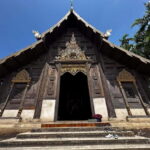
How a private English guide changes the whole feel of the day
A big part of the value here is that you’re not sorting out temple basics by yourself. This is a private tour/activity, so only your group participates. That matters because you can move at your pace and ask follow-up questions when something catches your eye.
The tour is led by an English-speaking guide, and the experience is meant for people who want Thai history and culture but may not know which sites to prioritize. That’s where guides like Oat and Lanna have stood out in past experiences: they turn temple time into story time. Instead of treating Wat Chedi Luang and Wat Phra Singh like checkboxes, you get context about what makes them significant in Chiang Mai’s royal and religious landscape.
Even if you’re not a trivia person, good interpretation helps. You’ll likely find yourself noticing details you’d otherwise pass by. And because it’s private, the guide can adjust the tone—more explanation at one stop, more breathing room at another—based on what your group responds to.
Wat Chedi Luang Varavihara: the royal-temple stop that sets the tone
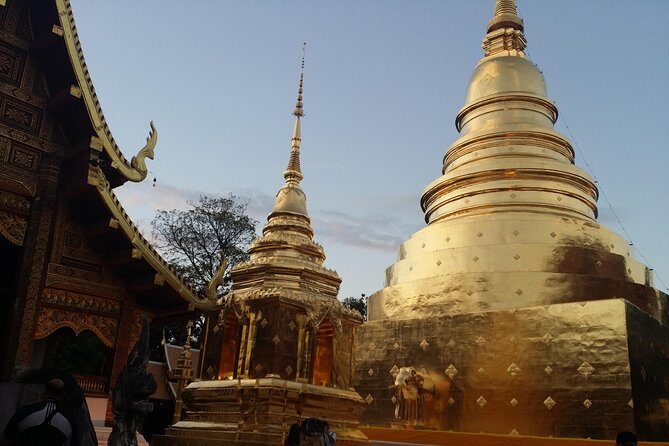
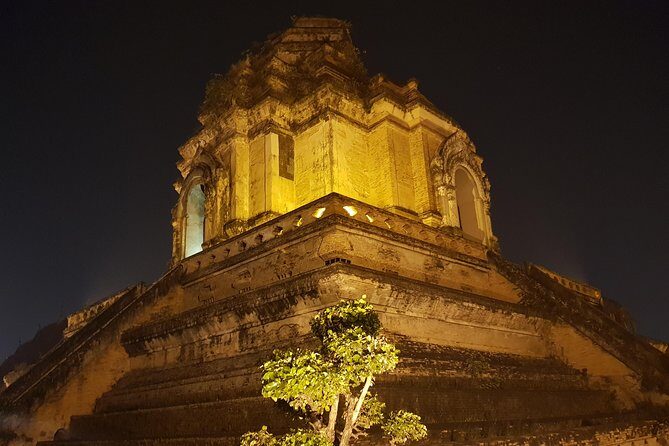
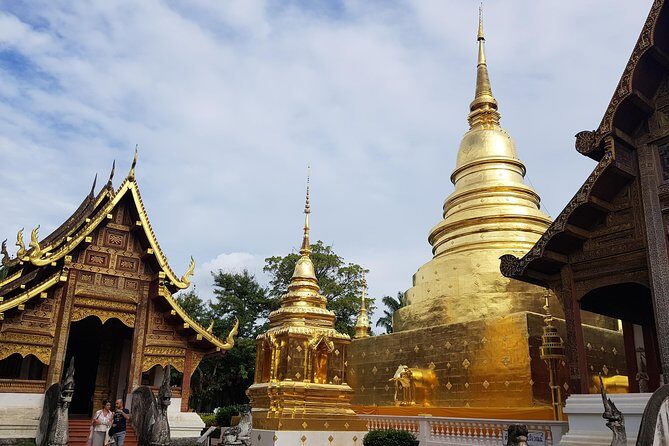
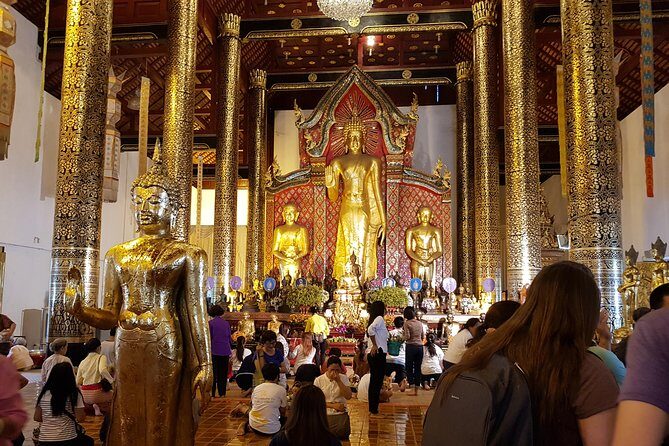
Wat Chedi Luang Varavihara is the first major anchor in the route, with about 40 minutes on site. It’s described as one of Chiang Mai’s royal temples and located in the center of the old city. That location is key: it gives you an immediate sense of how the old city was organized around sacred, important spaces.
Since admission tickets are included here, you can focus on entering and exploring rather than stopping to figure out where to buy. Use that time well. I like to approach a first temple stop with a simple goal: identify what makes it feel royal or central, then ask yourself how the architecture and layout signal importance. The guide’s narration is meant to help you read the site instead of just looking at it.
A practical tip: temples often mean shade and sunlight in fast alternation, plus areas where you’re standing and walking through courtyards. Plan for that by wearing clothing that’s comfortable for warm weather and easy to adjust if you move between bright open areas and darker temple corners. And take your photos only after you’ve listened to the main explanation—otherwise you’ll spend the visit half guessing what you’re photographing.
Wat Phra Singh: seeing the Phra Buddha Sihing story come alive

Next comes Wat Phra Singh, also around 40 minutes, and also with admission tickets included. This temple is another royal site in the old city. The standout detail is what’s enshrined here: the Phra Buddha Sihing, also written as Pra Singh.
That matters because it changes how you view the temple. Instead of just thinking about buildings and decorations, you’re prompted to think about the meaning of the Buddha image and why it would be preserved in a major temple. This is where an English-speaking guide helps most if you’re not reading Thai temple descriptions on your own.
Wat Phra Singh can be a more concentrated, meaningful stop if you’ve already started connecting the dots at Wat Chedi Luang. In a well-run guided route, the second temple feels like it adds layers—how religious objects and royal patronage connect across time in Chiang Mai.
Drawback to consider: if you’re the type who wants only the biggest sights and not the explanations, you might feel 40 minutes is a lot. But if you enjoy context, this timing gives you space to absorb the narrative and look slowly.
Three Kings Monument: connecting dynasties at street level
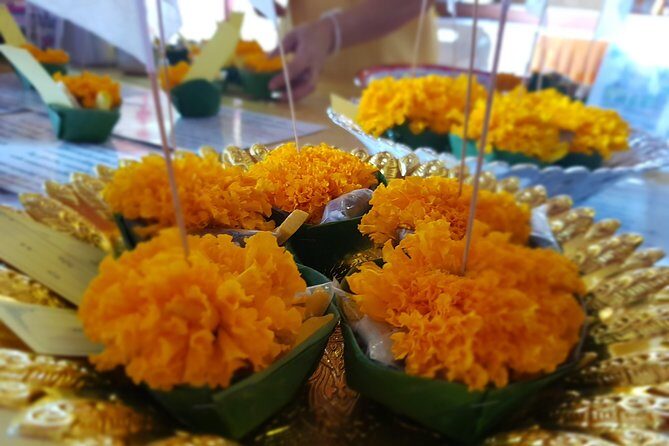
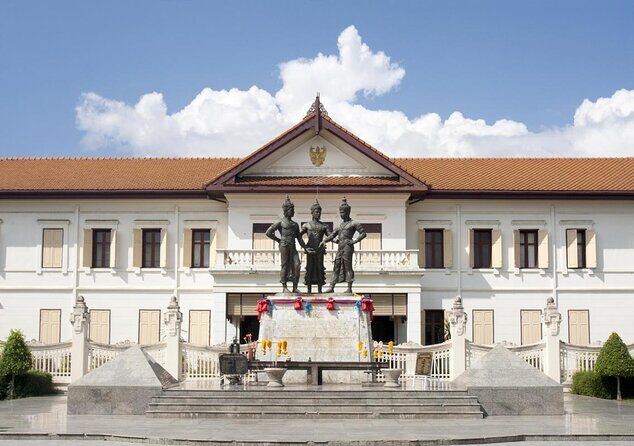
After the temples, the route shifts to something more open and quick: the Three Kings Monument. You’ll have about 20 minutes here, with admission tickets included.
The monument is tied directly to three rulers: King Mang Rai, King Ramkhamhang, and King NgmMuang. Even without knowing Chiang Mai’s political story, that list gives you a simple framework to understand why the monument is placed where it is. The guide’s role is to connect those names to the bigger picture—how their reigns shape what Chiang Mai becomes later.
This is a good breather in the itinerary. It’s shorter than the temple stops, so you can reset, take photos, and stretch your legs. Also, a monument stop gives you a change of pace from temple architecture, which helps keep the whole 3-hour tour from turning into nonstop temple-courtyard walking.
You can also read our reviews of more city tours in Chiang Mai


Somphet Market: seeing local daily life without getting lost
The final stop is Somphet Market, about 30 minutes. This is described as a fresh market where you can see local lifestyle in action. That’s the value of ending with a market: it grounds the day after the religious and historical stops.
The market time is long enough to actually observe how people move—what’s being sold, how stalls are set up, and how the local rhythm feels. The guide can also help you interpret what you’re seeing so it doesn’t just turn into random browsing.
A practical consideration: markets are naturally busy and can be warm. Even though drinking water is included, you may still want to bring a light layer for comfort and consider sunglasses. If you plan to buy snacks or small items, remember lunch and personal expenses aren’t included, so have a little cash or card ready for whatever you want.
Also, if you’re sensitive to crowds, the market portion might feel more stimulating than the temple stops. Still, it’s a short 30 minutes, which keeps it from taking over your schedule.
Price and value: what $60.30 gets you in real terms
The price is $60.30 per person for an experience that runs about 3 hours. On paper, that might look like a lot for a short walk. In practice, the value comes from what’s bundled:
Included:
- All fees and taxes
- Drinking water
- Travel insurance
And in the itinerary experience itself:
- Admission tickets are included for the major cultural stops
Not included:
- Private transportation / local taxi
- Lunch
- Personal expense
So you’re paying for structured time with a guide, interpretation in English, and included site access at the key stops. You’re not paying for a vehicle ride, which is why you should plan to reach the meeting point using public transportation or your own means. The market and temple sequence also means the guide isn’t just walking with you while you wander independently; the time is built around meaningful stops.
If you’re comparing alternatives, think about what you’d spend doing the same things solo. Without a guide, you’d need to figure out which temples to prioritize and how to understand the significance. With a guide, you get context and saved time—plus tickets handled for the included sights.
What to plan for on the ground (so the day feels easy)
A walking tour lives or dies on small choices. Here’s how I’d set yourself up for a smooth experience:
- Wear comfortable walking shoes with grip. Temple grounds and older city streets can be uneven.
- Bring sun protection. Even with drinking water included, you’ll want something for brightness and heat.
- Plan your food timing. Lunch is not included, so decide where you’ll eat before or after the tour.
- Use the guide time. Ask one or two targeted questions at each stop so the narration sticks and you don’t just drift.
- Keep expectations realistic. This is about a focused loop—temples, monument, market—not every temple in Chiang Mai.
A small practical note: the tour is near public transportation. That’s helpful if you don’t want to rely on taxis or private rides just to start the experience.
Who this private Chiang Mai walking tour is best for
This tour is a strong fit when you:
- Want Thai history and culture with clear explanations
- Don’t speak Thai and want help picking the right places
- Prefer a structured route over indecisive planning
- Like a mix of sacred sites and everyday local life
It may be less ideal if you:
- Hate walking for sustained stretches, even at a moderate fitness level
- Want an all-day itinerary including lunch and transportation
- Prefer to explore entirely on your own with no guided narration
If you’re trying to get the “feel” of Chiang Mai’s old city quickly—temples first, then market life—this format is built for that.
Should you book this private tour?
I’d book it if you want a simple, guided way to understand Chiang Mai’s old city without juggling tickets, route planning, and language gaps. The bundled temple access and included drinking water make it feel practical, and the private setup means you’re not stuck in a rigid group pace.
I’d skip or reconsider if you specifically want a long day, included meals, or a transportation-heavy itinerary. Since private transportation and local taxi aren’t included, you’ll want to be comfortable meeting the guide near public transport and walking between stops.
If you’re excited by temples with context and markets that show local lifestyle, this is one of the easiest ways to get your bearings and build a deeper connection to Chiang Mai in just three hours.
FAQ
How long is the private city walking tour in Chiang Mai?
It’s approximately 3 hours.
Is this tour private or shared with other people?
This is a private tour/activity, and only your group participates.
What stops are included in the tour?
The route includes Wat Chedi Luang Varavihara, Wat Phra Singh, the Three Kings Monument, and Somphet Market.
Are admission tickets included for the temples?
Yes. Admission tickets are included for the listed temple stops.
Is drinking water provided?
Yes. Drinking water is included.
What’s included in the price besides the guide?
All fees and taxes, drinking water, and travel insurance are included.
What is not included?
Private transportation, local taxi, lunch, and personal expenses are not included.
Where does the tour start and end?
It starts in Chiang Mai, Thailand, and ends back at the meeting point.
What physical fitness level do I need?
The tour notes a moderate physical fitness level.
How does cancellation work?
You can cancel for a full refund up to 24 hours before the experience’s start time. Free cancellation applies, and changes within 24 hours aren’t accepted.