REVIEW · CHIANG MAI
Private Chiang Mai Old City Half Day Tuk Tuk Tour
Book on Viator →Operated by Oh-Hoo · Bookable on Viator
Old City sightseeing, minus the walking pain. This half-day private tuk-tuk tour is a smart way to see Chiang Mai’s top sights without turning your feet into hamburger, and the hotel pickup/drop-off means you lose less time to figuring out where to meet. My favorite part is how the route links together gates, major wats, and local markets so you get the city’s flow, not just a checklist.
One thing to think about first: this style of tour can include extra stops at craft or shop locations, and a few people felt pressure to buy or wished they had skipped those interruptions.
In This Review
- Key things to know before you go
- How the private tuk-tuk works in 4 hours
- Price and value: what you actually get for $37.61
- Stop 1: Tha Phae Gate and the moat canal loop
- Stop 2: Wat Chedi Luang, the Big Stupa stop
- Stop 3: Three Kings Monument for a quick city-story moment
- Stop 4: Wat Sri Suphan, the Silver Temple effect
- Stop 5: Wat Phra Singh for classic northern-style architecture
- Stops 6 and 7: Muang Mai Market and Warorot Market
- The real risk: factory-shop pressure and how to steer the day
- What you should expect from the driver and the language level
- Getting comfortable: hot weather, air quality, and clothing
- How to make this day actually feel like a tour (not just transport)
- Should you book this tuk-tuk tour?
- FAQ
- How long is the private Chiang Mai Old City half-day tuk-tuk tour?
- Is hotel pickup and drop-off included?
- Are entrance fees included for the temples?
- Do I get an English-speaking guide?
- How many people can ride in each tuk-tuk?
- What happens if the weather is bad or I need to cancel?
Key things to know before you go
- A true private tour: only your group rides together, not a shared crowd
- 4 hours, multiple stops: each highlight gets about 40 minutes before you hop back in
- Temple etiquette matters: plan on covering shoulders and legs when you enter
- Basic English may vary: an English guide is not included, though some drivers handle the conversation well
- Entrance fees are extra: budget around 90 THB for sites that require payment
How the private tuk-tuk works in 4 hours
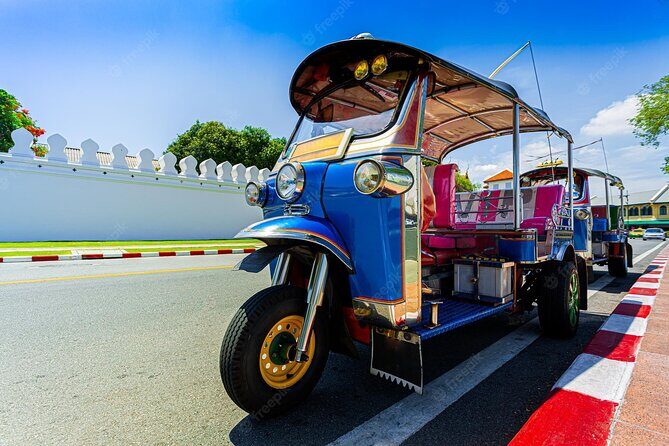
This is a half-day ride focused on moving efficiently through the Old City and nearby highlights. The schedule is built around short, repeat-able blocks: you arrive, see what’s worth seeing, and then you’re off again on a tuk-tuk. If you’re in Chiang Mai for the first time and you want your bearings fast, this format helps a lot.
The tour is also designed to be low-friction. You get pickup and drop-off within a 5km radius of Chiang Mai Old City, so you’re not dragging bags to a meeting point or trying to decipher a location pin. Once you’re on the tuk-tuk, you’ll be able to move between highlights that are spread out enough that walking would be annoying, especially in the afternoon heat.
That said, it’s worth setting expectations: this is more like a driver-and-transport plan than a full-on lecture tour. Some drivers give solid temple context; others keep it brief and rely on you to follow along at each stop. Either way, you’ll still hit the key sights listed on the route.
Finally, keep an eye on the air quality. Chiang Mai can have hazy conditions at times, and one reviewer specifically warned that if you have asthma or lung issues, you might prefer a taxi with air-conditioning for the day.
You can also read our reviews of more city tours in Chiang Mai
Price and value: what you actually get for $37.61
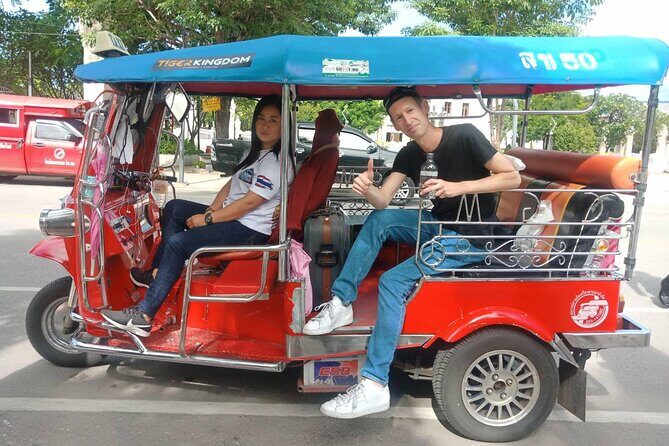
At $37.61 per group (up to 2) for about 4 hours, this is priced like a value-focused Old City sampler. The money mostly covers: a private tuk-tuk, hotel pickup/drop-off in the Old City area, and local movement between multiple stops.
The tradeoff is that you should plan for extra costs. Entrance fees aren’t included, and the total listed amount is 90 THB (so bring small cash). Also, an English-speaking guide isn’t included. In practice, some drivers speak enough English to help you understand what you’re seeing, but the coverage isn’t guaranteed.
If you’re comparing this to a more fully guided tour with a dedicated English guide, this one tends to come out cheaper because the narration level depends on your driver. If you’re comfortable reading signs a bit, asking questions, and using a quick map on your phone, you’ll likely feel you got your money’s worth.
Stop 1: Tha Phae Gate and the moat canal loop
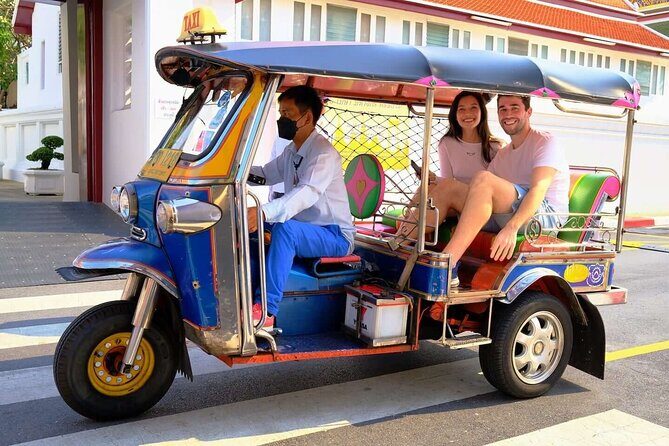
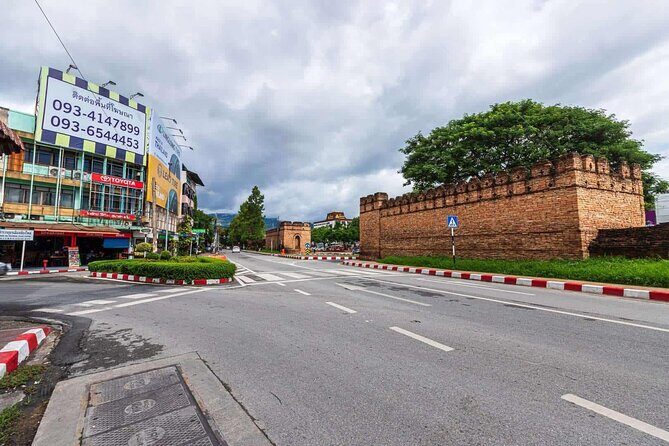
You start at the area around the Tha Phae Gate, with a look at the canal system that surrounds the Old City. This opening works well because it sets scale. You’re not yet inside the walled zone; you’re seeing how the city used to defend itself and how the moat shapes the streets today.
Tha Phae Gate is one of those landmarks that instantly helps you understand where you are. Even if you only spend around 40 minutes here, it gives you a mental map: which direction the city wall runs, where the Old City gateways sit, and how far the major temple cluster is from the market zone.
One detail to note: admission is listed as included for this stop, so you won’t get hit with extra ticket chaos right at the start.
Stop 2: Wat Chedi Luang, the Big Stupa stop
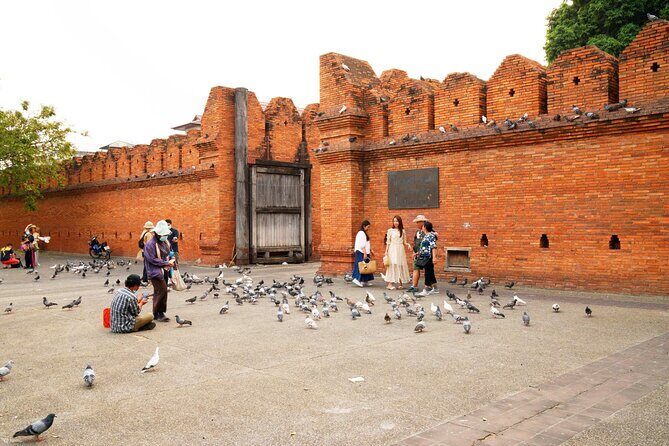
Next up is Wat Chedi Luang Varavihara, often associated with the big stupa and major Old City temple energy. This stop is one of the strongest anchors on the route because it’s a classic Chiang Mai temple that gives you real texture—stone, scale, and the feeling of a long-standing religious center.
You’ll have about 40 minutes, which is enough for a slow walk around the key areas, photos, and taking in details without feeling rushed. The entrance note for this stop says admission is not included, so treat this like the moment you might pay your temple entry portion (part of that total 90 THB).
Drawback: since an English guide isn’t included, your temple context may be limited depending on your driver’s English skills. If you want deeper explanations, ask questions like who originally built key structures or what to notice in the architecture. If your driver has enough English, you’ll likely get a useful answer.
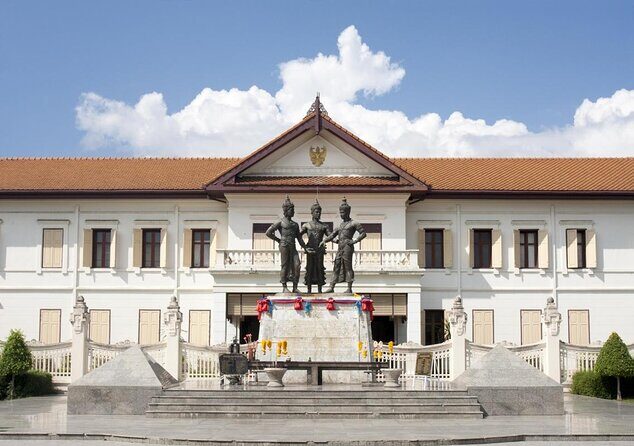
Stop 3: Three Kings Monument for a quick city-story moment
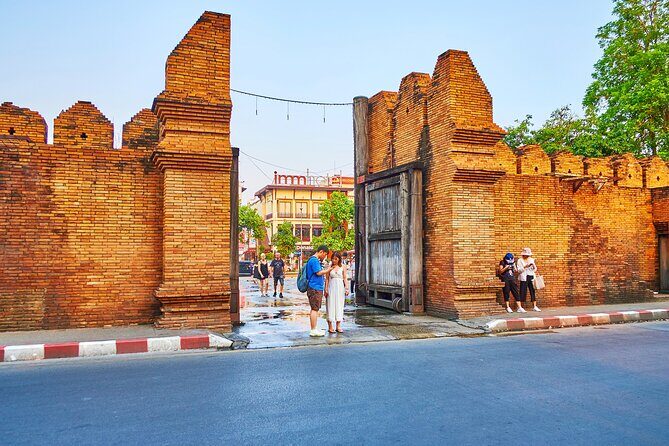
The Three Kings Monument Square is an open space right in the Old Town center. It’s a breather after temple-heavy walking, and it’s also practical: monuments like this help you orient yourself because they sit where routes naturally cross.
This stop is listed as free admission and also about 40 minutes. That time is mostly for photos, a quick read of what you can find, and then resetting before your next temple.
If your driver doesn’t give much commentary, this is still a solid stop because you can take your time and interpret it on your own. The monument is easy to spot and easy to frame.
You can also read our reviews of more private tours in Chiang Mai





Stop 4: Wat Sri Suphan, the Silver Temple effect
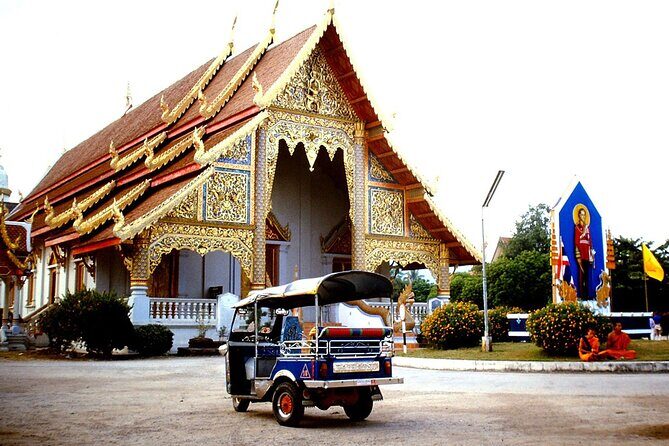
Then you’ll head to Wat Sri Suphan, commonly called the Silver Temple. The big draw here is that it’s made from an alloy with zinc silver, and it’s said to shine especially in the afternoon. That matters because if you arrive when light is hitting well, photos look better and the temple’s features stand out more.
This stop is not marked with admission included, so again, keep your entry budget in mind. Also plan for a respectful visit: this is a working temple environment, and you’ll want to follow the clothing guidance—cover shoulders and legs when you enter.
The practical value is that Wat Sri Suphan gives you variety. After Chedi Luang, which is more about monumental temple presence, this one is more about materials and shine. It’s the kind of stop that makes your route feel intentional, not random.
Stop 5: Wat Phra Singh for classic northern-style architecture
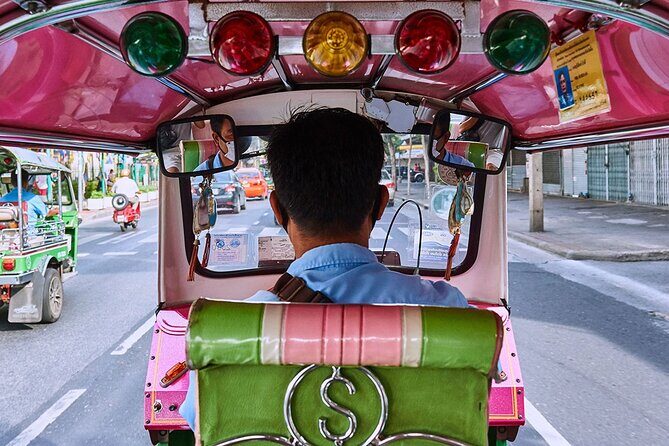
Wat Phra Singh is the next highlight, and it’s known for northern-style architecture with an especially pretty chapel. This is another temple where 40 minutes is enough if you focus on key angles and not try to see everything in one go.
Admission is not included for this stop, so you may pay here or it may be handled as part of the total entrance fee. Either way, the cost is modest compared to the value of hitting a major temple landmark on your first Old City day.
This stop also benefits from basic planning: go slower than you think you need. If your driver talks a bit, you’ll probably get just enough explanation to connect the dots. If not, you can still enjoy the architecture by noting repeating patterns and how the complex is laid out.
Stops 6 and 7: Muang Mai Market and Warorot Market
Finishing with markets is a smart move because it gives you a different kind of Chiang Mai experience than temples. You’ll visit Muang Mai Market and Warorot Market (Kad Luang), with time for browsing and snacks.
Muang Mai is described as where you’ll find the Sunday Market and also the Night Bazaar area. Warorot Market is also tied to the night market energy, and it’s listed with admission included. Translation: you’re not just wandering through a temple day—you’re ending with a practical shopping and eating zone.
If you’re price-sensitive, markets are where you can do the most compare-and-contrast. One common regret people have with certain Chiang Mai tours is spending too much time somewhere that feels like a showroom. Ending here keeps your day more grounded.
Tip for comfort: markets can be crowded and loud. If you’ve had enough temple air (and you probably have), this part is a good way to take in the street level mood without needing to climb or walk long distances.
The real risk: factory-shop pressure and how to steer the day
Here’s the honest part. Several experiences on this type of route include stops that feel like craft shop circuits—silk, silver, jade, housewares, and similar sales locations. For some people, this adds color and context. For others, it interrupts the sightseeing too much and comes with hard-selling.
You should handle this upfront with a simple strategy:
- Say what you want early: If you want more temples and fewer shops, say it before you start moving.
- Ask to skip specific categories: silk and silver factories are the most frequently cited problem areas.
- Give the driver a clear priority: temples and gates first, markets last.
In reviews, a few people were happy because their driver remembered requests to avoid tourist-trap factory stops. Others felt they didn’t have enough control and ended up in pressured warehouse-style sales environments out of town.
If English is limited with your driver, your best tool is clarity: use a short list of priorities and politely repeat them. You’ll reduce surprises and keep the day aligned with what you thought you booked.
What you should expect from the driver and the language level
The tour doesn’t include an English-speaking guide, but your experience may still be very smooth if your driver speaks enough English to explain what you’re seeing. Some people specifically praised drivers like Alan and Mr D for helpfulness and communication. Others noted limited English, so temple context might be mostly name-level rather than story-level.
So plan accordingly. If you want deeper temple meaning, bring a few notes for yourself and ask targeted questions. Examples that match what’s on the route: why Tha Phae Gate mattered for defense, what Wat Chedi Luang is known for, or what makes Wat Sri Suphan special in design.
Also, don’t count on a formal guide script. Several comments describe the experience as more of a tuk-tuk ride with stops at key points, followed by a self-guided feel. If that’s okay with you, you’ll probably enjoy the freedom.
Getting comfortable: hot weather, air quality, and clothing
Chiang Mai weather can flip from hot sun to warm evening fast, and tuk-tuks do not have air-conditioning. One practical concern raised was air pollution. If you have asthma or lung sensitivity, a taxi with air-conditioning may be a better call than a tuk-tuk for the same route.
For the rest of you, dress for temples and heat. Wear breathable clothes, bring a small water bottle, and keep something light to cover shoulders and legs for temple entry. You’ll be entering at least one temple, and the tour specifically notes that your shoulders and legs should be covered.
If you get motion-sick, tuk-tuks tend to be short hops and turns rather than highway driving, but Chiang Mai’s roads can still feel bumpy. Mention it early, and sit so you can look forward.
How to make this day actually feel like a tour (not just transport)
If you want to enjoy the Old City more than you would by yourself, use the private element correctly. This tour shines when you treat it like a flexible plan, not a rigid itinerary you just endure.
My best advice:
- Build your wish list before pickup. Temples you don’t want to miss. Markets you care about. Any food or photo priorities.
- Ask for pacing. If it’s too hot, ask your driver to adjust timing, especially around midday sun.
- Use the market stops as your reset. After wats, you’ll feel better walking through stalls with snacks and simple browsing.
Also, check your pickup location carefully. Some people reported confusion when the pickup point didn’t match what they expected, and one even described a late start due to the original driver not showing. You can protect yourself by confirming pickup details the day before and having a backup contact method ready.
Should you book this tuk-tuk tour?
Book it if you want a fast, comfortable way to hit the main Old City sights—Tha Phae Gate, Wat Chedi Luang, Three Kings Monument, Wat Sri Suphan, Wat Phra Singh, and the market pair—without walking yourself into exhaustion. It’s also a good option if you like markets and don’t want your day ending at a temple gate.
Consider skipping or choosing a different format if you want a guaranteed English guide or you strongly dislike shopping interruptions. If you do book it, go in prepared to say no to factories early and keep your priorities clear.
FAQ
How long is the private Chiang Mai Old City half-day tuk-tuk tour?
It runs for about 4 hours.
Is hotel pickup and drop-off included?
Yes. Pickup and drop-off are included within 5km of Chiang Mai Old City.
Are entrance fees included for the temples?
No. Entrance fees are not included, and the listed amount is 90 THB.
Do I get an English-speaking guide?
An English-speaking guide is not included. The experience still depends on your driver’s English level.
How many people can ride in each tuk-tuk?
The tour notes 2 adventurers per tuk-tuk. A third person may be possible depending on size (under about age 12).
What happens if the weather is bad or I need to cancel?
The tour requires good weather. If it’s canceled due to poor weather, you’ll be offered another date or a full refund. You can also cancel for a full refund up to 24 hours in advance.