REVIEW · CHIANG MAI
Chiang Mai: Ancient City Tour of Wiang Kum Kam
Book on Viator →Operated by I Asia Thailand · Bookable on Viator
Ruins by the Ping River feel oddly alive. This Chiang Mai tour threads together Wiang Kum Kam archaeology, a horse-drawn carriage ride, and a stop at the Chiang Mai City Arts and Cultural Centre, all in about 3.5 hours. I like the straightforward hit-list of places that don’t require planning or ticket wrangling, and I like how the guide turns the setting into a story you can actually picture.
The only real drawback: there are no food or drink stops built in, so you’ll want to come ready with water and a snack for the ride-and-walk pace.
In This Review
- Key points worth knowing before you go
- Wiang Kum Kam feels different: an ancient capital story in one morning
- Pickup and timing: how the 3.5 hours actually works
- Stop 1: Wat Kuu Kham (Wat Chedi Liam) Temple in 30 minutes
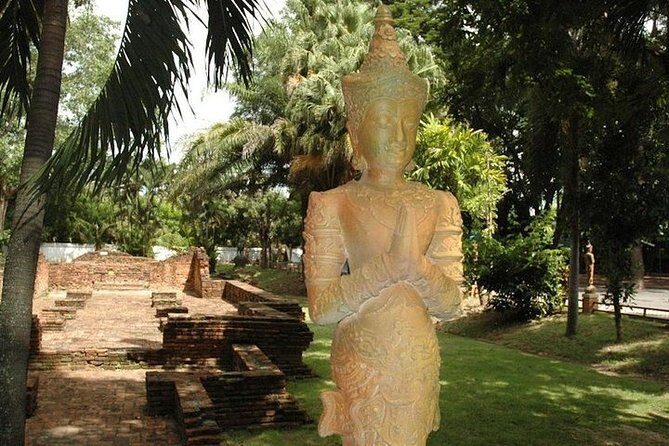
- Wiang Kum Kam: former capital ruins along the Ping River
- The included horse-drawn carriage ride: practical fun, not just a gimmick
- 3 Kings Monument and the Chiang Mai City Arts and Cultural Centre
- Monday note
- The guide experience: when it turns into the highlight
- Value check: what $47.07 buys you (and what it doesn’t)
- Who should book this Wiang Kum Kam tour
- Should you book the Chiang Mai Ancient City Tour of Wiang Kum Kam?
- FAQ
- How long is the Chiang Mai Ancient City Tour of Wiang Kum Kam?
- Is hotel pickup and round-trip transportation included?
- What attractions are included on the tour?
- Is the horse-drawn carriage ride included?
- Is admission included for each stop?
- What happens if the Chiang Mai City Arts and Cultural Centre is closed on Mondays?
- Can I cancel for a full refund?
Key points worth knowing before you go
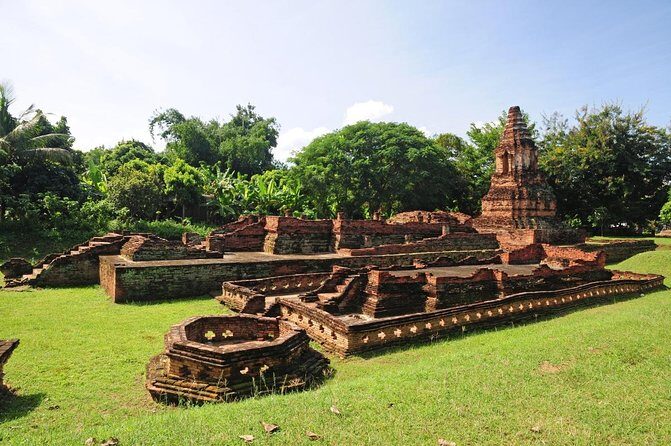
- Wiang Kum Kam ruins off the main circuit: a former capital site along the Ping River, not just another temple checklist
- Horse-drawn carriage ride included: you avoid the on-the-spot pressure and extra payments
- A small group (max 15): easier for questions and pacing than large buses
- Arts and Cultural Centre connects the dots: photos, artifacts, maps, and an audio-visual show, plus a small replica village
- Guides matter: Mr Boy was praised for clear explanations, and you’ll want to flag concerns if something doesn’t land with you
Wiang Kum Kam feels different: an ancient capital story in one morning
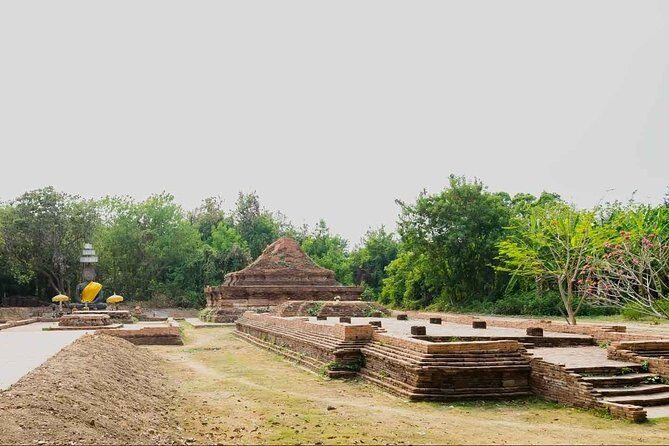
If your Chiang Mai plan is mostly Old City temples, this tour gives you a change of pace. Wiang Kum Kam is an archaeological site tied to King Mangrai the Great, who built it as his capital before moving the seat of power to Chiang Mai. That alone makes the place more than pretty ruins—you’re looking at the “before Chiang Mai” version of the city.
I also like that you’re not just dropped at one viewpoint. In about 3.5 hours, you piece together the route: a temple start, time in the ruins, then a cultural stop near the Three Kings area. It’s a compact way to get context without spending half your day figuring out logistics.
You can also read our reviews of more city tours in Chiang Mai
Pickup and timing: how the 3.5 hours actually works
This tour is built for convenience. You get round-trip transfers from your hotel in Chiang Mai, and you’ll use a mobile ticket on the day. The group size is capped at 15 travelers, which keeps things from feeling chaotic.
The day is organized around a few scheduled anchors, which helps if you like knowing where you’re going next:
- Stop 1: Wat Kuu Kham (also listed as Wat Chedi Liam) — about 30 minutes
- Stop 2: Wiang Kum Kam — about 1 hour
- Stop 3: Chiang Mai City Arts and Cultural Centre — about 1 hour
Between those, you’ll also spend time around the broader route and the 3 Kings Monument as part of the guided flow. The whole experience clocks in around 3 hours 30 minutes.
One practical tip: since food, drinks, and snacks aren’t included, plan to bring water (and something small to nibble). Without that, you can end up feeling fine during the early part and then suddenly hungry right when you’re finishing up.
Stop 1: Wat Kuu Kham (Wat Chedi Liam) Temple in 30 minutes
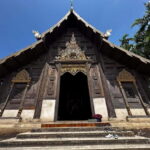
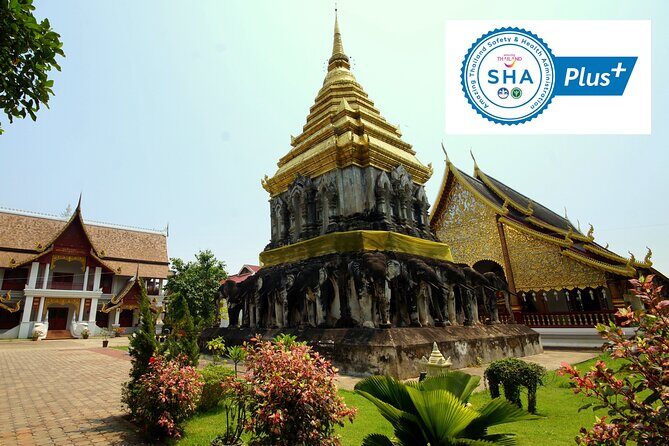
The tour starts with Wat Kuu Kham (Wat Chedi Liam), part of the Wiang Kum Kam ancient city landscape, now tied into present-day Chiang Mai. Admission here is listed as free, and you’ll have about 30 minutes.
Think of this stop as your warm-up. In a short time, you get oriented to what kind of temple ruins you’ll see later, and you can ask your guide to explain what you’re looking at—especially since the rest of Wiang Kum Kam is more archaeological and less “fully intact temple” in the usual sense.
If you care about photos: a quick start like this is helpful. You’ll still have daylight and energy later at Wiang Kum Kam, rather than saving everything for the end.
Wiang Kum Kam: former capital ruins along the Ping River
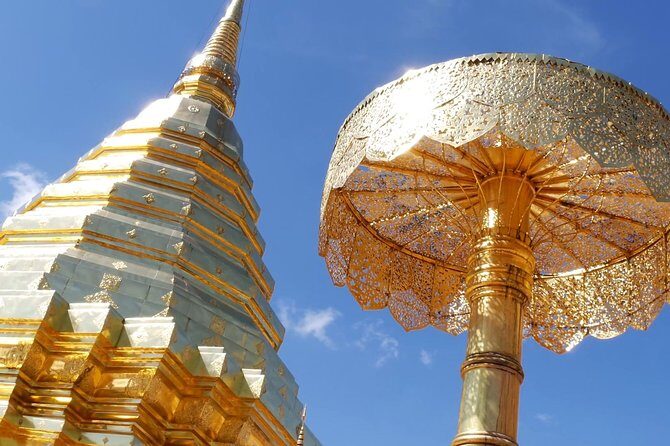
This is the main event. Wiang Kum Kam is described as an historic settlement and archaeological site along the Ping River. And the big story the guide brings is that it was built by King Mangrai the Great as his capital before the move to Chiang Mai.
You get about 1 hour here, and admission is also listed as free. That hour is long enough to walk, look closely, and still have time to hear the guide’s explanations without feeling rushed.
Here’s a detail that stuck with me from the guide-style teaching on this tour: many of the visible temple ruins weren’t excavated from the river bottom until the 1980s. That matters because it changes how you read the site. You’re not just seeing “old stones.” You’re seeing what was uncovered—and how modern archaeology brought the place back into view.
A quick caution on tone: one of the guide’s approaches has included describing Wiang Kum Kam like an underground city. If that kind of framing rubs you the wrong way, speak up kindly and early. If you’ve got concerns, the tour provider’s own response emphasizes they want to help once they know what’s bothering you.
The included horse-drawn carriage ride: practical fun, not just a gimmick
One of the tour’s best “value signals” is that the horse-drawn carriage ride is included. That means you aren’t doing the usual tourist math of who pays what, when, and for how long. The tour explicitly calls it included so you don’t pay on the spot.
Why it’s worth it: Wiang Kum Kam is an archaeological landscape, and you’re going to be on the move. A carriage ride helps you cover ground with less fatigue, and it also gives you a more “travel through the area” feeling rather than a stop-and-start bus tour.
Also, because this is part of a planned route, you’re less likely to lose time negotiating or figuring out what comes next. You can stay in sightseeing mode.





3 Kings Monument and the Chiang Mai City Arts and Cultural Centre
After the ruins, you head to a place that explains the city you’re actually standing in.
The Chiang Mai City Arts and Cultural Centre is located in the Old City, behind the Three Kings Monument. It’s inside a restored building that dates back to the 1920s, and the admission is included on this tour. You’ll spend around 1 hour here.
What I love about this stop is how it supports the morning. The centre includes:
- photos and old artifacts
- maps
- an impressive audio-visual display tracing Chiang Mai’s history from the first settlers to today
- a small-scale replica of a traditional wooden village
So even if you’re not a hardcore museum person, you’ll likely find it useful. It’s the kind of place where you can stand still for a bit, regroup, and suddenly understand why Chiang Mai looks the way it does. You’ll also get a calmer rhythm after the outside ruins and carriage ride.
Monday note
The Arts and Cultural Centre is listed as closed on Mondays, but the tour can still operate. If you’re going on a Monday, bring flexibility and plan to rely on your guide’s in-tour alternative plan for that time block (the specific substitution isn’t detailed, so just confirm on the day).
The guide experience: when it turns into the highlight
On tours like this, the guide isn’t just narration. They shape what you take away.
One review praised the on-time pickup and the work of a guide named Mr Boy, calling out how helpful he was in explaining the history of the temples visited and how organized the overall outing felt.
Another strong comment credited the guide as the best part, with a key takeaway about excavation timing—again, those ruins coming to light during the 1980s. That’s exactly the type of “you won’t get this on your own” detail that makes a guided archaeological tour feel worth it.
On the flip side, there was also a report of a concern about how the guide framed Wiang Kum Kam as an underground city. The tour provider’s response stressed they hadn’t been aware of concerns during the day, which suggests you shouldn’t sit in silence if something feels off. Speak up early, and if needed, ask to clarify.
Value check: what $47.07 buys you (and what it doesn’t)
At $47.07 per person, this is priced for people who want to see the highlights without creating a half-day self-planning project. The big value pieces are clear:
- round-trip hotel transfers are included
- a guided tour ties the stops together
- the horse-drawn carriage ride is included
- the Chiang Mai City Arts and Cultural Centre admission is included
- other stops (Wat Kuu Kham and Wiang Kum Kam) list free admission
What you should budget for separately is also clear: no food, drinks, or snacks are included. So while the tour price covers the “seeing and getting there,” you still control your own comfort on the ground.
One more value factor: the tour runs with a maximum of 15 travelers, so you’re not paying a city-tax premium for a crowded experience. Also, it’s a group tour designed to keep costs down, which is usually what you want when you’re trying to fit multiple sites into a short timeframe.
If you’re considering booking far ahead: the listing notes it’s often booked about 97 days in advance, which usually means you’ll want to reserve sooner rather than later, especially in peak periods.
Who should book this Wiang Kum Kam tour
This one fits best if you want a structured way to see Wiang Kum Kam from Chiang Mai without getting lost in planning.
You’ll likely enjoy it if:
- you like history that connects to the modern city (King Mangrai’s capital story + museum context)
- you want a short morning outing around temples and ruins
- you like having time limits that keep the day moving (about 3.5 hours total)
- you’d rather not negotiate or pay extra for the carriage ride
Family considerations: children 11 and younger must be accompanied by a paying adult. Children 1 and younger are complimentary.
Single travelers: the minimum is two people for the activity to run, and single booking may work but is subject to availability.
Language option: if you want Spanish, French, German, or Russian, there’s a private upgrade available with a supplement of Baht 800.00 for the whole party.
Should you book the Chiang Mai Ancient City Tour of Wiang Kum Kam?
If your goal is to see Wiang Kum Kam plus key Chiang Mai context in one tidy package, I’d say yes. This tour is designed for efficiency: hotel pickup, guided pacing, the included carriage ride, and a museum stop that helps you understand what you’re seeing.
Don’t book it if you’re the type who hates group timing or you need lots of free wandering time without structure. Also, if you’re strict about your tour explanations and the exact tone your guide uses, be ready to speak up right away if something feels wrong to you.
My practical recommendation: book this if you want an organized morning that goes beyond the usual Old City temple circuit. Bring water and a small snack, go in curious, and let the guide’s explanations do most of the heavy lifting—especially the kind of details that bring excavation timelines and city origins into focus.
FAQ
How long is the Chiang Mai Ancient City Tour of Wiang Kum Kam?
The tour lasts about 3 hours 30 minutes.
Is hotel pickup and round-trip transportation included?
Yes. Round-trip transfers from Chiang Mai hotels are provided.
What attractions are included on the tour?
You’ll visit Wat Kuu Kham (Wat Chedi Liam), Wiang Kum Kam, the Chiang Mai City Arts and Cultural Centre, and you’ll also include the 3 Kings Monument with the guided tour.
Is the horse-drawn carriage ride included?
Yes. The horse-drawn carriage ride is included, and it’s designed so you don’t have to pay on the spot.
Is admission included for each stop?
Wat Kuu Kham and Wiang Kum Kam list free admission. The Chiang Mai City Arts and Cultural Centre admission is included.
What happens if the Chiang Mai City Arts and Cultural Centre is closed on Mondays?
The centre is closed on Mondays, but the tour can still operate. The tour is still scheduled to run even when the centre isn’t open.
Can I cancel for a full refund?
Yes. You can cancel up to 24 hours in advance for a full refund.