REVIEW · CHIANG MAI
Old Town History and Culture Walking Tour at Chiang Mai
Book on Viator →Operated by Discova Thailand · Bookable on Viator
Three temples, one tidy story arc. This Old Town walking tour connects Chiang Mai’s 13th-century roots to three major temple stops, with a guide starting you at the Three Kings Monument and carrying you through the Lanna Kingdom’s highlights. You’ll spend time at Wat Phra Singh and Wat Chedi Luang, with room for monk teachings along the way.
What I like most is the value-per-minute. For $15, you get an English-speaking guide, bottled water, travel insurance, and entrance fees, so you’re not scrambling for cash or tickets while walking. I also like that the tour includes context, not just photos—King Mangrai’s origin story sets the tone, then the temples connect back to Lanna architecture and practice.
One possible drawback: guide style can vary. One past group struggled with communication during the opening period with a guide named Kitty, while another tour led by Khun Bim impressed with clear English and Buddhism explanations, even for someone who’d studied Theravada for decades. If you’re very picky about pacing and wording, it’s worth keeping that in mind.
In This Review
- Quick Hits You Can Use Immediately
- Entering Chiang Mai’s Old Town With King Mangrai Context
- Three Kings Monument: The Setup, Safety Briefing, and Historical Anchor
- Wat Phra Singh: Lanna Architecture and Lai Kam Murals (Dragon-Year Meaning)
- Wat Chedi Luang Varavihara: UNESCO Restoration and Monk Teachings
- The Walk Itself: Timing, Pacing, and Why 2.5 Hours Works
- Price and Value: Why $15 Can Be a Good Deal Here
- Guide Quality: English Clarity, Explanation Style, and Cultural Sensitivity
- What You’ll Take Away From the Three Temple Sequence
- Who This Walking Tour Is Best For
- Should You Book This Chiang Mai Old Town History Walk?
- FAQ
- How long is the Old Town History and Culture Walking Tour?
- Where does the tour start and where does it end?
- What’s the cost, and is it good value?
- What’s included in the tour besides the guide?
- Is hotel pickup included?
- How big are the groups and do I need a ticket in advance?
Quick Hits You Can Use Immediately
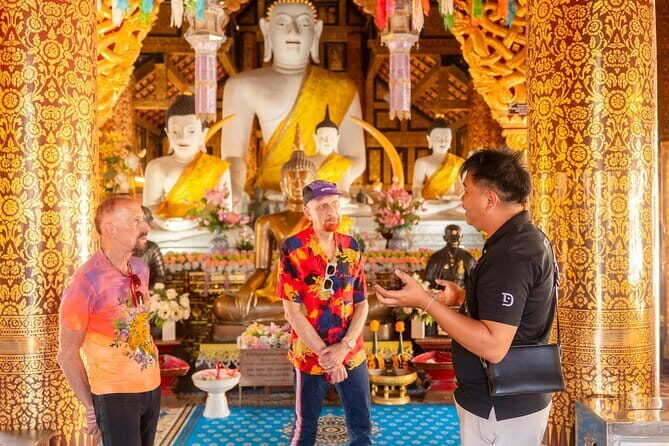
- Small group (max 8) means you’re more likely to hear questions answered instead of just following along.
- Three Kings Monument start gives you the why behind Chiang Mai’s symbols, not just where to stand.
- Wat Phra Singh murals in the Lai Kam assembly hall connect temple art to zodiac-year symbolism, including Dragon-year details.
- Wat Chedi Luang’s UNESCO-era restoration helps you understand how a centuries-old site survives modern times.
- Optional monk-related moments may include a blessing for luck, with the choice handled sensitively.
Entering Chiang Mai’s Old Town With King Mangrai Context
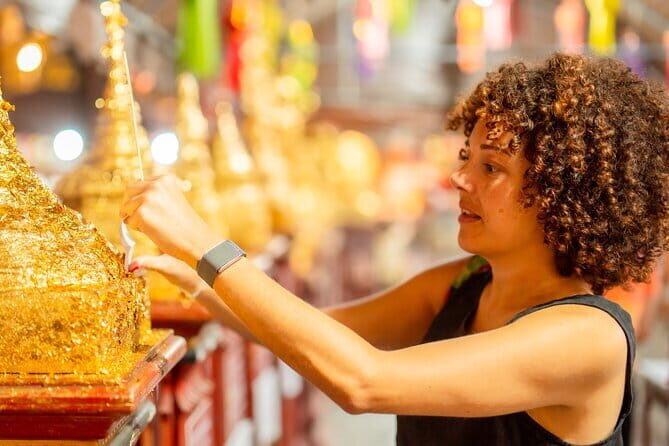
This walk is built for people who want to understand Chiang Mai faster than they could alone. You’re not just chasing temples; you’re getting a framework for why these places matter to the Lanna Kingdom, which Chiang Mai traces back to the 13th century.
It starts at the Three Kings Monument, a smart move because it gives you a mental map before your shoes start burning. King Mangrai is the anchor figure here, and your guide uses him to explain how Chiang Mai’s identity formed in the Lanna era.
I especially like that the tour doesn’t treat the temples like museum objects. It frames them as living places where art, architecture, and belief link together, which makes your photos come out with meaning.
You can also read our reviews of more walking tours in Chiang Mai
Three Kings Monument: The Setup, Safety Briefing, and Historical Anchor
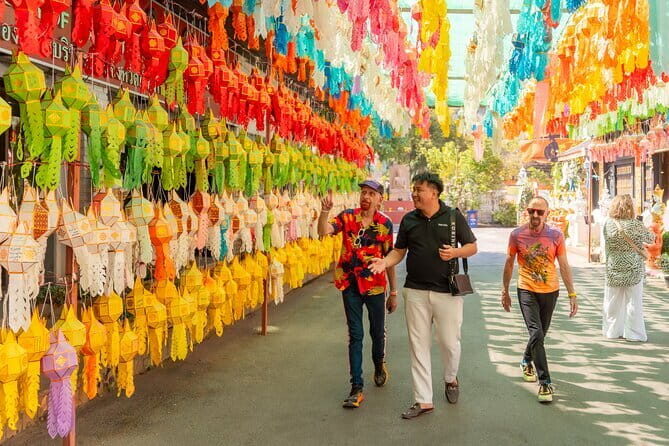
You’ll meet at the Three Kings Monument on Prapokklao Road, right in the heart of the Old Town area. Before you head out, you get a short safety briefing, which matters on city sidewalks that can be uneven and crowded.
Then comes the context piece: the monument’s significance and the role of King Mangrai are explained at the start. This matters because the rest of the tour is full of details that are easier to spot once you know what the guide is pointing to.
If you’re the type who likes a timeline, this first stop helps. Even if you don’t catch every date, you’ll understand the big idea: this walk is about origins, not just aesthetics.
Wat Phra Singh: Lanna Architecture and Lai Kam Murals (Dragon-Year Meaning)
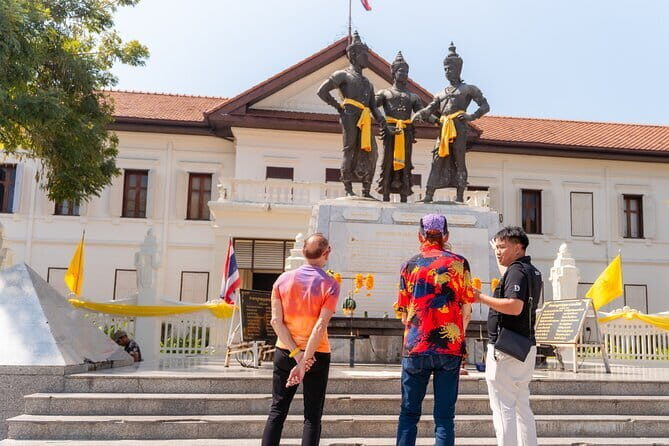
The first temple stop is Wat Phra Singh, dating to 1346. If you’ve ever wondered why some temples feel different from each other, this is a great comparison point because it’s an example of Lanna architecture.
You’ll spend about an hour here, which is a comfortable window. Long enough to look around without feeling rushed, short enough that you don’t overheat before the next site.
The highlight is the Lai Kam assembly hall and its murals. Your guide points out that these murals are significant for people born in the Year of the Dragon. If you’re into Thai and Chinese zodiac symbolism, this adds a personal layer to what you’re seeing, not just art-for-art’s-sake.
Practical note: temples mean rules. You’ll want to dress appropriately and follow any cues from your guide about where to stand and how to behave. The tour structure helps you get it right without you guessing.
Wat Chedi Luang Varavihara: UNESCO Restoration and Monk Teachings
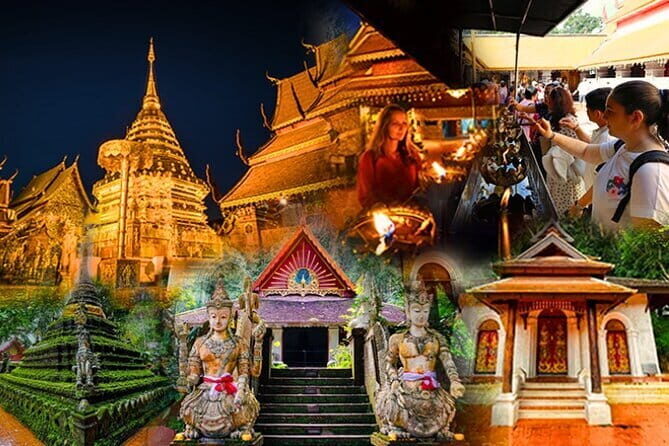
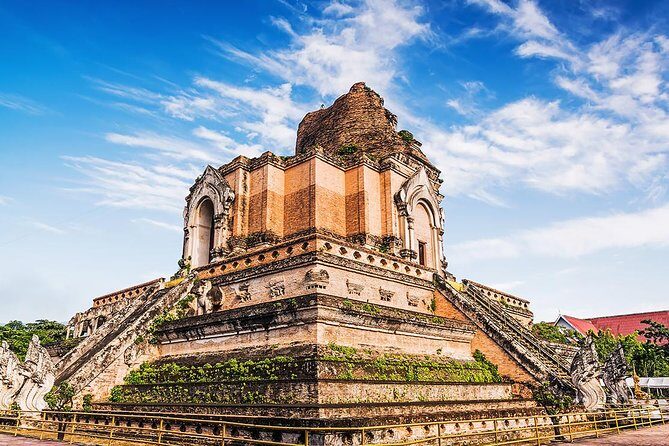
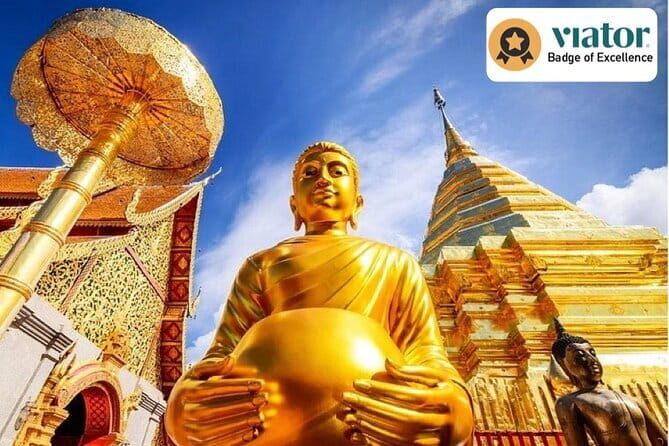
After a short walk, you’ll reach Wat Chedi Luang Varavihara, a site that’s around 600 years old. This is one of those places where the scale hits you as soon as you look up, even if you’re not a ruins person.
This stop is about an hour, and it’s particularly strong if you like how places change over time. The temple was restored by UNESCO in the 1990s, so the guide can connect what you’re seeing now to what survived and what was repaired.
What makes the site especially notable is that it’s famous for housing sacred remains of a revered figure, explained on-site by the guide. That kind of detail turns the visit from scenery into story.
Your tour also includes a chance to listen to talks by monks. That gives the walk an extra layer that you won’t get from a self-guided loop through temple courtyards. If you’re curious about Theravada practice and how it shows up in everyday temple life, this timing can be a real payoff.
The Walk Itself: Timing, Pacing, and Why 2.5 Hours Works
This is a 2 hours 30 minutes tour, designed as a simple Old Town loop. That duration is a sweet spot: you get multiple major sites without turning the day into a forced march.
Group size is capped at 8 travelers, which keeps the pace manageable. In a small group, your guide can adjust explanations based on what people are looking at, and you’re less likely to feel like you’re stuck behind the back row.
Pacing seems to be a strong point for the tour when the guide runs it well. One past experience highlighted that the timing felt perfect and never rushed, which is exactly what I’d want from a walking temple tour.
If you’re sensitive to long explanations, plan for a bit of talking at each stop. Temples reward patience, and the structure here gives you history and context rather than just a quick look-and-go.
You can also read our reviews of more historical tours in Chiang Mai


Price and Value: Why $15 Can Be a Good Deal Here
At $15 per person, this tour is priced like a budget-friendly intro, but the inclusions make it feel smarter than it sounds. You get an English-speaking guide plus entrance fees, which is the big hidden cost people forget when they plan a self-walk.
On top of that, you receive bottled water and travel insurance. That’s not glamorous, but it’s practical. It reduces the little frictions that can make a walking day feel harder than it should.
Also, the first stop at the Three Kings Monument has free admission, and the tour covers ticket costs where needed for the temple complexes. So you’re not stuck reading ticket signs in the middle of a sweaty courtyard.
One more value angle: your guide is likely to help you notice things you would miss alone—like architectural features and mural symbolism. The best value in temple tours isn’t just access; it’s interpretation.
Guide Quality: English Clarity, Explanation Style, and Cultural Sensitivity
Guide quality is the swing factor on almost every guided tour, and this one is no exception. The good sign is that there are clear examples of strong guiding.
A guide named Khun Bim was praised for excellent English and for explaining Theravada Buddhism in a way that still felt new even to someone with decades of practice. That tells me the tour can work for people who aren’t total beginners.
At the same time, there’s at least one case where a guide named Kitty was hard for the group to understand during the opening period, with extra time spent on language setup. That doesn’t mean every guide runs that way, but it’s a reminder: if you need very straightforward communication, expect the guide’s style to matter.
The tour also shows cultural sensitivity around spiritual options. You may be asked if you want to receive a blessing from a monk for luck, and the choice is handled respectfully rather than pushed.
My advice: if you want maximum benefit, show up ready to listen. This isn’t a hurry-through-the-spot tour. It rewards people who lean into the explanations.
What You’ll Take Away From the Three Temple Sequence
Each stop does a different job in the story.
- Three Kings Monument gives you the Kingdom origin lens through King Mangrai.
- Wat Phra Singh gives you Lanna architecture and mural symbolism with the Lai Kam assembly hall.
- Wat Chedi Luang gives you large-scale sacred space plus UNESCO restoration context, along with monk talk time.
That flow helps you connect the dots. Instead of thinking, I saw three temples, you finish thinking, I now understand how Chiang Mai’s identity shows up in architecture, art, and religious practice.
You’re also finishing at Wat Chedi Luang, which is helpful for planning your next stop or dinner nearby without backtracking.
Who This Walking Tour Is Best For
This fits well if you want an Old Town overview without feeling lost. The tour says most people can participate, and the small group size keeps it friendly.
It’s especially good for:
- First-time Chiang Mai visitors who want a guided shortcut to meaning
- People who like temple architecture and want explanations beyond signage
- Anyone interested in Theravada practice and hearing monk talks
- Budget-minded visitors who want entrance fees and water handled for you
If you’re the type who prefers total silence and zero interpretation, you might find guided talk a bit much. But if you’re curious, the structure is designed to keep you moving while still learning.
Should You Book This Chiang Mai Old Town History Walk?
I’d book this if you want a focused, organized introduction for a low price that doesn’t make you manage tickets. The inclusions are practical, the route covers three major temple complexes, and the chance to hear monk talks adds weight that many basic walking tours skip.
I wouldn’t book it blindly if you’re very sensitive to guide communication style. Since there are examples of both excellent and difficult English delivery, you’ll get the best result by approaching it as a learning walk and not expecting every second to be perfectly timed for your preferences.
If you’re trying to decide, I’d treat this as your best first guided move in Chiang Mai’s Old Town. It gets you oriented fast and gives you enough context to enjoy the rest of the temples on your own.
FAQ
How long is the Old Town History and Culture Walking Tour?
It runs for about 2 hours 30 minutes.
Where does the tour start and where does it end?
It starts at the Three Kings Monument and finishes at Wat Chedi Luang Varaviharn.
What’s the cost, and is it good value?
The price is $15. It includes an English-speaking guide, entrance fees, bottled water, and travel insurance, which helps value compared with paying for tickets and services separately.
What’s included in the tour besides the guide?
Included items are entrance fees, an English speaking guide, bottled water, and travel insurance.
Is hotel pickup included?
No. Hotel pickup and drop-off are not included.
How big are the groups and do I need a ticket in advance?
The group maximum is 8 people. You’ll use a mobile ticket, and you should receive confirmation at booking.