REVIEW · CHIANG MAI
Morning Thai Cooking with Grandma – Market Visit & Farm Tour
Book on Viator →Operated by Grandmas Home Cooking School · Bookable on Viator
In This Review
- A morning market tour can change your Thai cooking
- Key things I’d circle before you book
- Why this Chiang Mai cooking class feels like more than dinner
- Price and what you actually get for $38.79
- Pickup reality: easy when you’re ready, slightly messy if you’re not
- Stop 1 at the market: herbs, spices, sauces, and how to shop like Thai cooks
- The organic farm tour: rice fields, chickens, eggs, and that mushroom hut
- Back at Grandma’s cooking school: open-air kitchen, individual stations, and real guidance
- Dishes you’ll likely cook (and what to expect from the flavors)
- Mango sticky rice plus the drinks that keep the morning easy
- Vegetarian-friendly and allergy-aware cooking
- Taking the recipes home: your e-book, QR code, and what to do with it
- Who this morning trip fits best (and who should skip it)
- Should you book Morning Thai Cooking with Grandma?
A morning market tour can change your Thai cooking
This class turns a normal restaurant meal into a hands-on lesson, starting with a guided market visit and continuing to an organic farm before you cook. I like how the day mixes ingredients with action, so you’re not just watching—you’re choosing spices, picking produce, and then cooking it. I also love the farm side: feeding chickens and collecting fresh eggs makes the whole experience feel real, not staged. One thing to consider: hotel pickup can feel a little chaotic if you’re not ready right at the pickup window.
You’ll end up with a full meal you made yourself, plus a digital recipe e-book to recreate everything later. The instruction is hands-on with individual cooking stations in a small group setup at an open-air kitchen run by friendly teachers such as Kiki, Pat, Joy, Noi, or Ryan (you may meet one of them). If you’re hungry, you’ll do great here—just don’t plan on a big breakfast first.
Key things I’d circle before you book
- Market visit with real ingredient guidance: you learn what to look for in herbs, spices, sauces, and seasonal vegetables
- Organic farm time beyond sightseeing: rice fields, herb gardens, a chicken coop, and a mushroom hut
- Hands-on activities that make the meal feel personal: feed and hug chickens, collect fresh eggs, and pick mushrooms
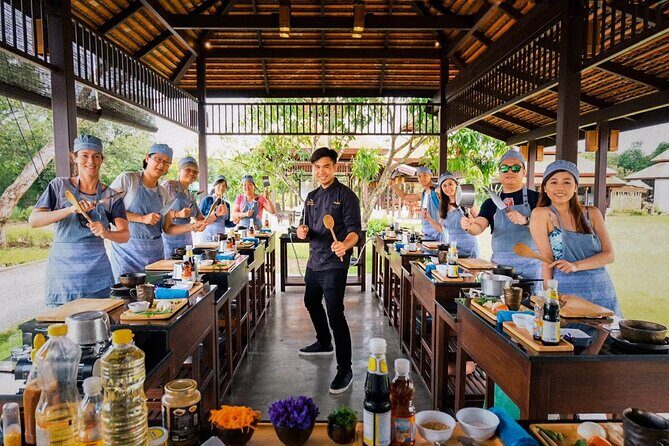
- Your own cooking station: small group setup in an open-air kitchen where you cook 4 Thai dishes
- Dessert and drinks included: mango sticky rice plus welcome drinks and unlimited bottled water
- Take-home recipes via e-book: a QR-code download so you can recreate your dishes later
You can also read our reviews of more shopping tours in Chiang Mai

Why this Chiang Mai cooking class feels like more than dinner

If you’ve ever come home from Thailand and thought, I loved that curry, but I don’t know what made it taste right, this is built for you. The day is structured around the stuff that actually changes Thai flavor: herbs, aromatics, sauces, chili paste, and how fresh ingredients behave once they hit the pan.
The big win is the sequence. You start in the market, where you learn how Thai shoppers think. Then you go to the organic farm, where you’re literally meeting ingredients at the source. Only after that do you cook. That order matters, because it makes the class stick in your brain.
You also walk away fed in a very practical way. You don’t just taste a few bites; the format pushes you to cook multiple dishes and then eat what you made. Several people mention they got stuffed, so yes, plan your morning accordingly.
Price and what you actually get for $38.79

At $38.79 per person for about 4 hours, the value is mostly in the add-ons that many cooking classes quietly skip.
Here’s what’s bundled in:
- Hotel pickup and drop-off within 5 km of Chiang Mai city center
- Guided local market visit with an instructor
- Organic farm tour with activities (chickens, eggs, mushrooms, gardens)
- Hands-on cooking class with your own station in a small group
- 4 Thai dishes cooked with step-by-step guidance
- Mango sticky rice dessert
- Welcome drink (Thai milk tea, lemon tea, or butterfly pea flower tea)
- Unlimited bottled water plus a free herbal drink during class
- Digital recipe e-book you can download later
When you add those up, it’s not just a cooking lesson. It’s market literacy plus farm experience plus cooking skills in one morning.
Does it feel like a premium event? Yes, mainly because you get time with ingredients, not just time at a cutting board.
Pickup reality: easy when you’re ready, slightly messy if you’re not
The tour offers pickup within 5 km of Chiang Mai city center, and a few people noted pickup timing can be a little chaotic. The lesson for you is simple: confirm the pickup window on your ticket or message instructions, then be ready early. If your hotel has a lobby that runs slowly, pad your timing.
If you’re outside the pickup range, you’ll need to meet at the starting point: Charoen Charoen fresh market (ตลาดเจริญเจริญ) in the San Kamphaeng area. The end of the activity goes back to the meeting point.
My practical advice: bring a phone with your booking details and keep water handy. You’ll drink during the day anyway, but being organized makes the morning feel calm.
Stop 1 at the market: herbs, spices, sauces, and how to shop like Thai cooks
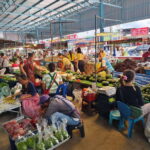
The market portion is guided, not a random walk. Your instructor helps you notice the small things that affect flavor, like:
- which herbs look freshest and smell strongest
- how different sauces show up in Thai cooking
- how dried versus fresh ingredients can be used
This part is especially useful if you plan to cook at home. Thailand’s ingredient world can feel confusing once you’re back in a grocery store with only a few options. The market lesson gives you a way to translate what you see into what you can buy later.
You’ll also get a sense of timing and seasonality. Thai cooking changes with what’s available, and your market stop is designed to show that practical rhythm.
Come with curiosity. Ask what you can substitute, and pay attention to the names of ingredients as you’re shown them. You’ll thank yourself when you’re staring at a spice shelf later.
You can also read our reviews of more tours and experiences in Chiang Mai


The organic farm tour: rice fields, chickens, eggs, and that mushroom hut
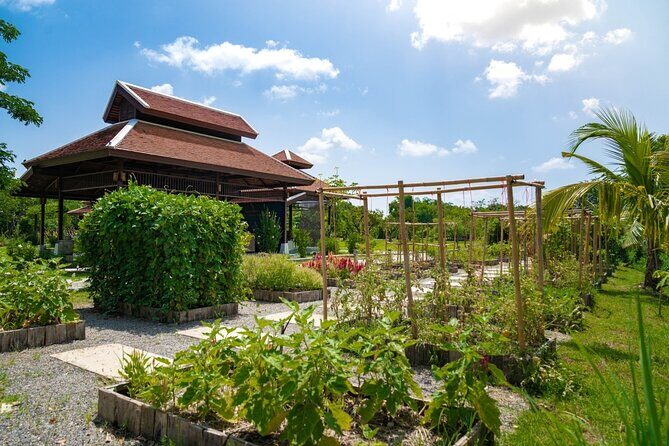
After the market, you head out to a spacious organic farm with rice fields around you. This isn’t the kind of farm visit where you stay behind a fence and take photos. You get involved.
What you’ll do on the farm:
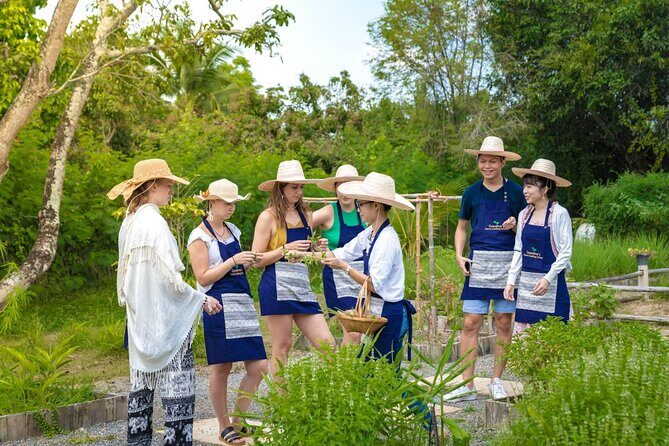
- explore gardens with herbs and vegetables
- visit the chicken coop
- feed and hug the chickens
- collect fresh eggs
- explore a mushroom hut
- pick mushrooms
That might sound like a lot, but it’s the reason the class feels grounded. When you collect eggs or pick mushrooms yourself, it changes how you cook later. You stop treating ingredients like props and start treating them like the center of flavor.
Several people also highlight that the farm feels peaceful compared to the city. If you want a break from traffic, noise, and temple crowds, this is one of the best kinds of morning retreat.
Back at Grandma’s cooking school: open-air kitchen, individual stations, and real guidance
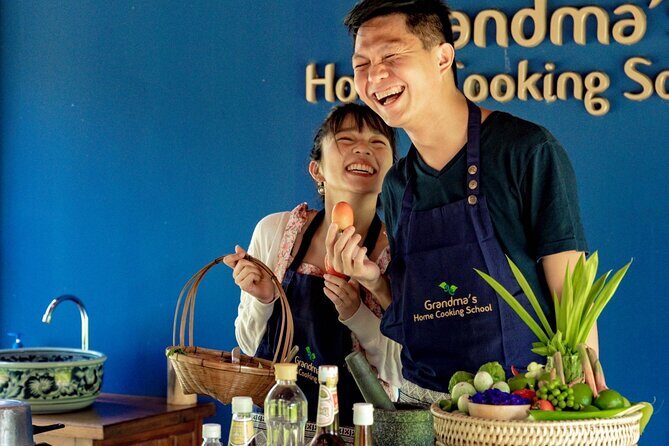
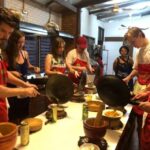
The cooking portion happens at Grandma’s Home Cooking School, in an open-air setup. The facility is outdoors with covered patios and separate dining areas, which makes it feel light and relaxed rather than hot and cramped.
Here’s how the lesson is set up:
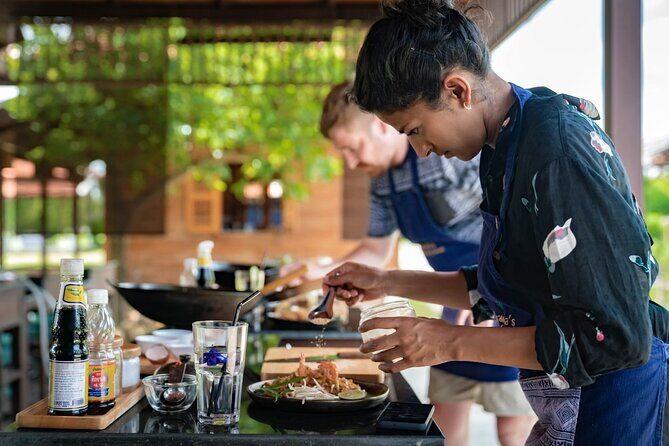
- you cook with step-by-step guidance
- you work at your own cooking station
- your group is small
- you typically cook 4 Thai dishes
Your menu can vary, but people commonly mention dishes like Pad Thai, green curry, and sour soup options such as tom yam or hot-and-sour soup. You might also make curry paste and then use it to build a curry, depending on the day’s choices.
A key detail I like: the prep is partly handled for you, so you’re not spending the entire morning washing, chopping, and fighting for a knife. You still do real cooking, just with enough structure that beginners can keep up.
And yes, you’ll eat as you go. Multiple reviews mention the food comes out hot and fresh as each dish is finished, which is how it should be.
Dishes you’ll likely cook (and what to expect from the flavors)
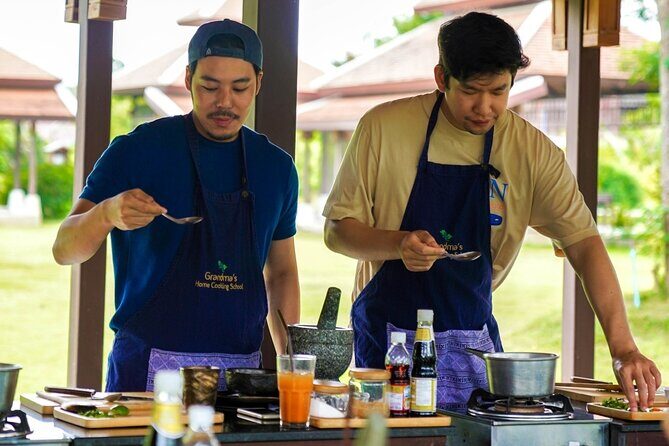
You’re aiming for four traditional dishes, often chosen from a short list. Based on what’s described, these are good possibilities:
- Tom Yam / hot and sour soup: bright, spicy, and citrusy
- Green curry: herbal, creamy, and deeply aromatic
- Pad Thai: tangy-salty-sweet noodles with plenty going on
- other Thai dishes from the class menu like curry-based items or coconut soups
Because you shop at the market and pick from the garden and farm, the dishes you cook tend to taste like they belong together. It’s not random “here’s four recipes.” It’s more like, you understand the ingredient logic behind the meal.
If you want one practical thing to do during cooking: taste as you go and pay attention to balance. Thai food often hinges on getting sour, salty, sweet, and spicy to work together. The instructors guide you, but you’ll get more out of it if you actively notice what changes when you adjust.
Mango sticky rice plus the drinks that keep the morning easy
You’ll end with mango sticky rice, served as a complimentary dessert. It’s a classic choice for this kind of class because it gives you a sweet finish that doesn’t steal focus from what you cooked.
Before and during cooking, you’re offered a welcome drink such as Thai milk tea, lemon tea, or butterfly pea flower tea. During the class, you also have unlimited bottled water and a free herbal drink.
This matters more than people think. When you spend the morning cooking and tasting, hydration helps you concentrate. It also helps if you’re heat-sensitive, since the setting is outdoor and airy but still warm.
Vegetarian-friendly and allergy-aware cooking
If you’re vegetarian, this is one of those rare cooking classes where you’re not stuck with a sad side dish. One review specifically says the recipes were adapted so vegetarian cooking worked with all the recipes.
Allergies are also mentioned as something the team can accommodate. The best move for you: tell the operator ahead of time and remind the instructor at the start so they can plan substitutions before you begin cooking.
Taking the recipes home: your e-book, QR code, and what to do with it
The class includes a digital recipe e-book. You get it through a QR-code download, and it’s meant to help you recreate the dishes after you get back home.
That’s important, because a few people expected printed copies. Here you should plan on using your phone or device to access the recipes.
Practical tip: download the e-book during the tour (or right after) when you still have reliable connectivity and time. Then you can make a proper grocery list later using what you learned at the market.
Also, don’t just save the recipes. Use the market knowledge from earlier to translate ingredients. If you remember what the instructor emphasized—like which herbs smelled strongest or how sauces were selected—you’ll have an easier time finding workable replacements.
Who this morning trip fits best (and who should skip it)
This tour is a great match if you:
- love Thai food and want to understand the ingredients behind it
- want a morning plan that feels calm and rural without leaving Chiang Mai entirely
- enjoy hands-on learning more than watching
- want a vegetarian-friendly class option
- want something more meaningful than another restaurant meal
It may be less ideal if you:
- need a very strict schedule and hate pickup timing uncertainty
- dislike outdoor settings (it’s open-air cooking and farm time)
For families: children under 10 are welcome as visitors. That makes it a possible family activity, though the best fit depends on how your kids handle farm animals and outdoor walking.
Should you book Morning Thai Cooking with Grandma?
I’d book it if you want to go home with actual skills, not just photos and hunger. The combination of market visit + organic farm + cooking at your own station is the kind of structure that helps you remember why flavors work. The reviews lean hard in the direction of fresh ingredients, plenty of food, and clear instruction, and the names of instructors like Kiki, Pat, Joy, Noi, and Ryan pop up often—so you’re likely to get someone who can teach without turning it into a lecture.
If you’re on the fence, use this simple checklist:
- If you can handle outdoor farm time, you’ll enjoy it.
- If you’re okay being hungry for several courses, you’ll love it.
- If you want ingredient guidance you can use at home, this is one of the best values in Chiang Mai’s cooking class world.
Book it for a morning you’ll feel the next day. You’ll be eating what you made, learning what it means, and walking away with a way to cook Thai food that tastes closer to the real thing.