REVIEW · CHIANG MAI
Chiang Mai: Evening Cooking Class and Local Market Visit
Book on GetYourGuide →Operated by Galangal Cooking Studio · Bookable on GetYourGuide
Five hours, four dishes, one great Thai lesson. This Chiang Mai evening blends a local market hunt with cooking in an indoor A/C kitchen, plus hotel pickup and drop-off so your night stays easy.
I especially like the way you choose your menu (stir-fry, soup, appetizer, curry/curry paste), so you’re not stuck with someone else’s idea of dinner. And I love that the instructors, often New or Aoy, keep things organized and explain ingredients clearly as you cook.
The main drawback to plan around: you need to arrive with an empty stomach, and your pickup window is tight—the driver waits no longer than 5 minutes after the scheduled time.
In This Review
- Key highlights worth your attention
- An Evening of Thai Cooking and Market Shopping in Chiang Mai
- Hotel Pickup and the Timing That Shapes Your Night
- Wandering the Market and the Organic Garden for Real Ingredients
- How You Pick Your Menu: Stir-Fry, Soup, Appetizer, Curry
- In the Kitchen With English Instruction: From Curry Paste to Pad Thai
- Eating Your Results in Air-Conditioned Comfort
- Recipes to Take Home: Your PDF Book and Make-It-Again Plan
- Price and Value at About $28 Per Person
- Dietary Needs, Seating, and Small Practical Tips
- Who Should Book This Class (and Who Should Skip It)
- Should You Book This Chiang Mai Cooking Class?
- FAQ
- How long is the Chiang Mai evening cooking class?
- Is hotel pickup and drop-off included?
- What time does pickup happen?
- Do I get to choose what dishes I cook?
- What dishes are available to choose from?
- Is the class suitable for vegetarian, vegan, Halal, or gluten-free diets?
- What do I receive at the end?
- Is there anything I need to bring or avoid?
- Can an observer come along?
Key highlights worth your attention
- Market shopping before the cutting board so you learn what makes Thai dishes taste like Thai
- An organic garden stroll to connect herbs and vegetables to the flavors in your meal
- Pick your exact dishes from stir-fry, soup, appetizer, and curry/curry paste options
- English instruction and a PDF recipe book so you can cook again at home
- Smooth hotel transfers that cover many central Chiang Mai hotels
- Dietary swaps for vegan, vegetarian, Halal, and gluten-free needs when possible
An Evening of Thai Cooking and Market Shopping in Chiang Mai
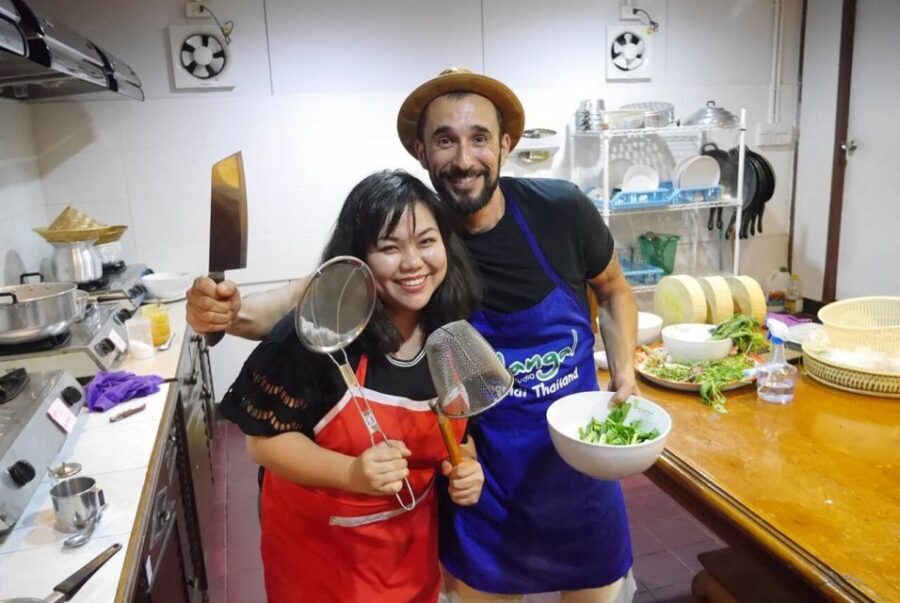
This is the kind of activity that makes sense right away. You start in the late afternoon, meet your guide, then you go ingredient-shopping like a local before you ever touch a wok.
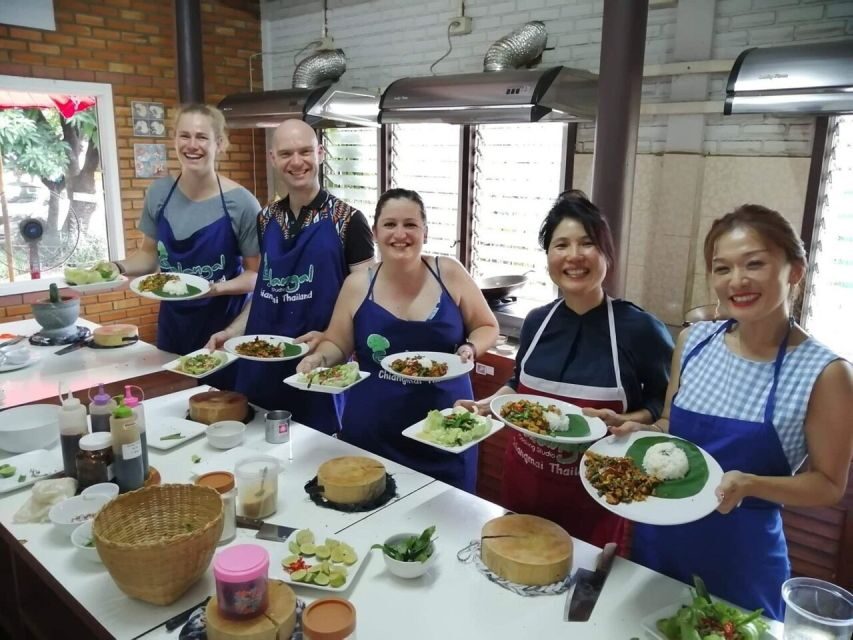
The best part is that you don’t just watch someone else cook. You’re actually making the food. You’ll stir-fry, prep components for curry, and learn curry paste basics, then sit down and eat what you made.
Because it’s set up around a true Thai dinner rhythm (they note dinner starts around 4 or 5 pm), the class is timed for eating, not sightseeing fatigue. That timing matters. If you show up hungry, you’ll enjoy the whole arc of the evening.
You can also read our reviews of more shopping tours in Chiang Mai

Hotel Pickup and the Timing That Shapes Your Night
Your night starts with pickup from central Chiang Mai—especially the old city area and roads like Santitham and Huay Keaw, plus zones from Kad Suan Keaw to Maya Shopping Mall. Pickup also includes some farther neighborhoods (parts of Nimmandhaemin Road, Sirimongkrajan Road, Wat Ket Road, Chang Pheuk, Changklan, and Changmoi), but the team checks your address.
Two timing details are key:
- Pickup is scheduled around 3:15–3:45 PM (they may begin a bit earlier due to traffic).
- The driver waits no longer than 5 minutes after the scheduled pickup time.
So yes, it’s convenient. But you’ll want to be ready in the hotel lobby close to your pickup slot. Traffic and multiple pickup points can shift things, and you don’t want to miss the ride because you’re still rounding up snacks or switching phone chargers.
The class window is set roughly for 4:00 PM to 8:30 PM when groups are larger (10–12 people). If the group is smaller, they finish earlier. That flexibility is helpful when you’re trying to protect your evening plans.
Wandering the Market and the Organic Garden for Real Ingredients
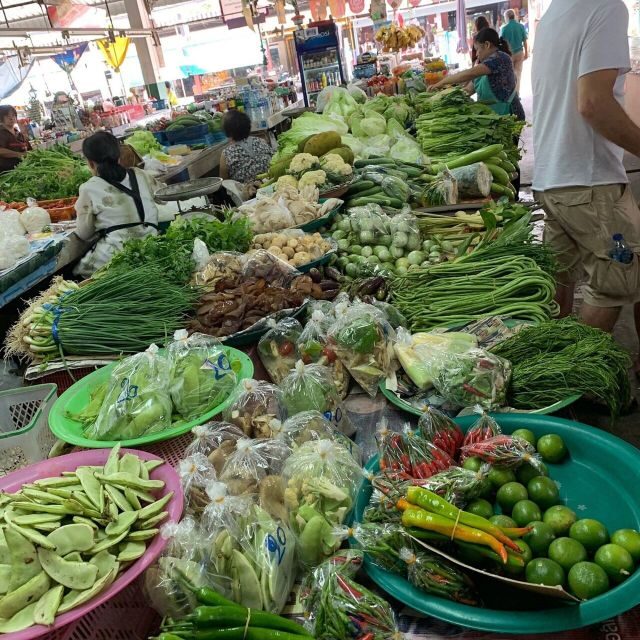
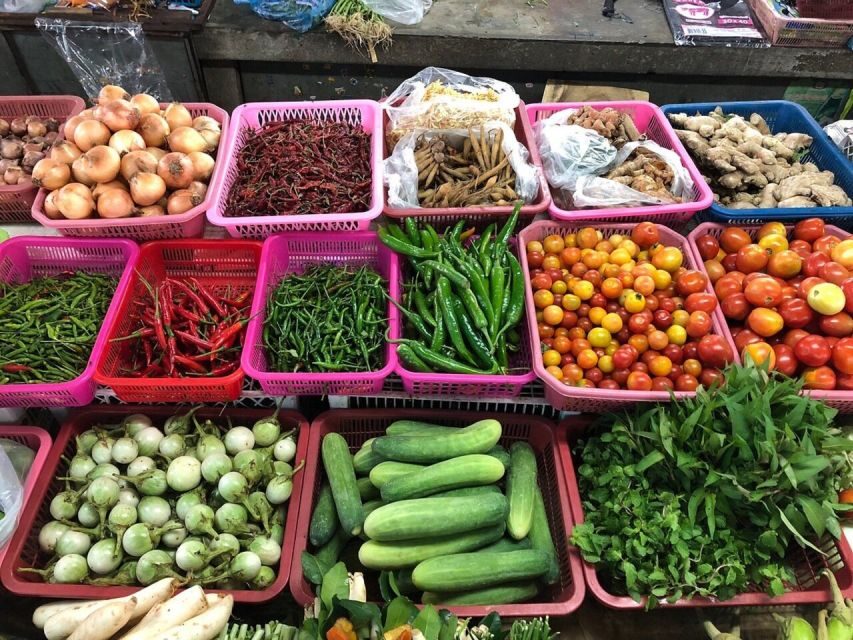
This experience earns its keep before you even get to the kitchen. You visit a market to see fresh vegetables and other ingredients, then you go to an organic garden to stroll among herbs and plants that Thai cooks actually use.
The market part matters because Thai food is ingredient-driven. You’re not just buying items. You’re learning what to look for: what’s fresh, what’s aromatic, and what becomes the backbone of each dish. You’ll be choosing ingredients based on the Thai flavors you want, and that selection carries through into what you cook.
Then comes the garden visit. This is where the “why” of Thai cooking shows up. Seeing herbs and vegetable cultivation in an organic setting makes it easier to remember ingredients later—especially herbs tied to things like curry, stir-fry, and salads.
One practical tip: if you like taking photos, do it early. Between market walking and kitchen prep, the evening moves at a steady pace.
How You Pick Your Menu: Stir-Fry, Soup, Appetizer, Curry
You choose what you cook. That’s a big value point. Instead of a fixed set menu, you can select one dish from each main category:
- Stir-fry
- Pad Thai
- Pad See Ew
- Kai Pad Med Mamuang Him Ma Pan (chicken cashew nut)
- Pad Kaphao Kai (minced chicken with holy basil)
- Soup
- Tom Yum Kung (hot and sour prawn)
- Tom Kha Kai (chicken in coconut milk)
- Tom Kha Je (vegetarian/vegan in coconut milk)
- Tom Zap Kai (hot and sour with chicken)
- Appetizer
- Som Tam (papaya salad)
- Por Pia Thod (spring roll)
- Larb Kai (chicken salad)
- Yam Woon Sen (glass noodle salad)
- Curry / curry paste making
- Kaeng Massaman (Massaman curry)
- Kaeng Kieaw Wan Kai (green curry)
- Kaeng Panaeng Kai (Panang curry)
- Khao Soi (Chiangmai noodle with chicken)
- Kaeng Ped (red curry)
- Kaeng Karee (yellow curry)
- Pad Prik Kaeng (dry red curry)
In addition, they include curry paste making as part of the curry component. This is a great choice if you want the flavor control that makes Thai food taste right at home.
They also offer flexibility for many dietary needs. The options specifically mention vegan, vegetarian, Halal, gluten-free, and allergy accommodations. You won’t be stuck doing a “modified version” with no real help. The setup is built to adapt when possible.
In the Kitchen With English Instruction: From Curry Paste to Pad Thai
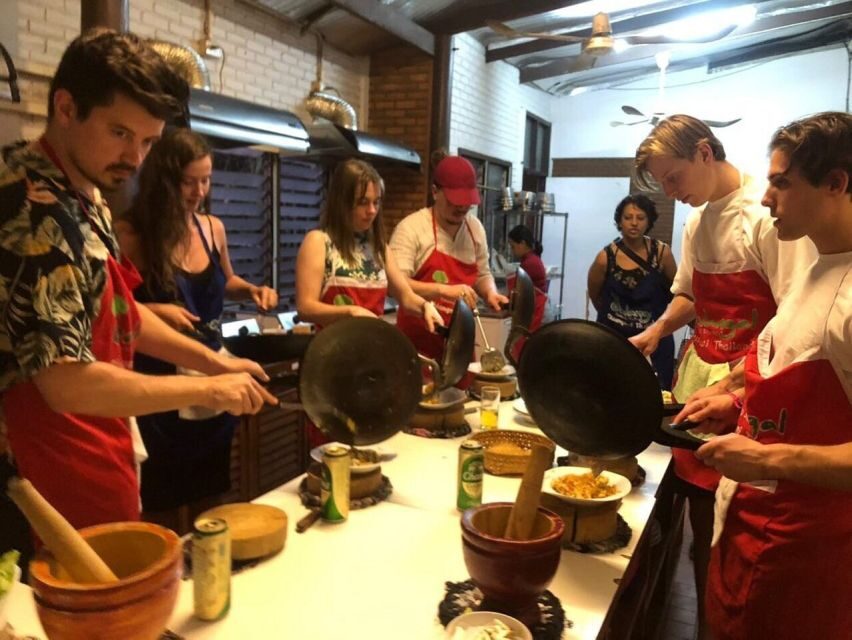
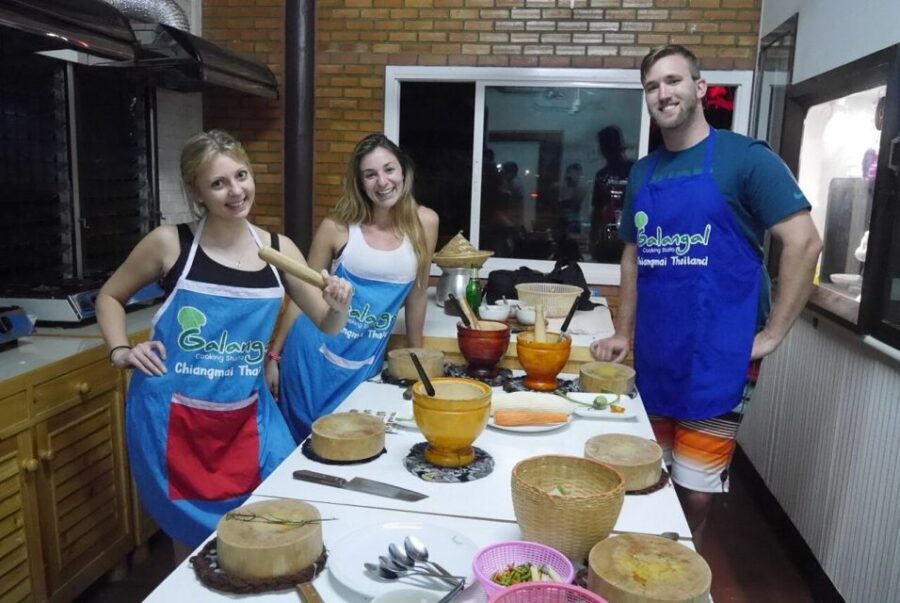
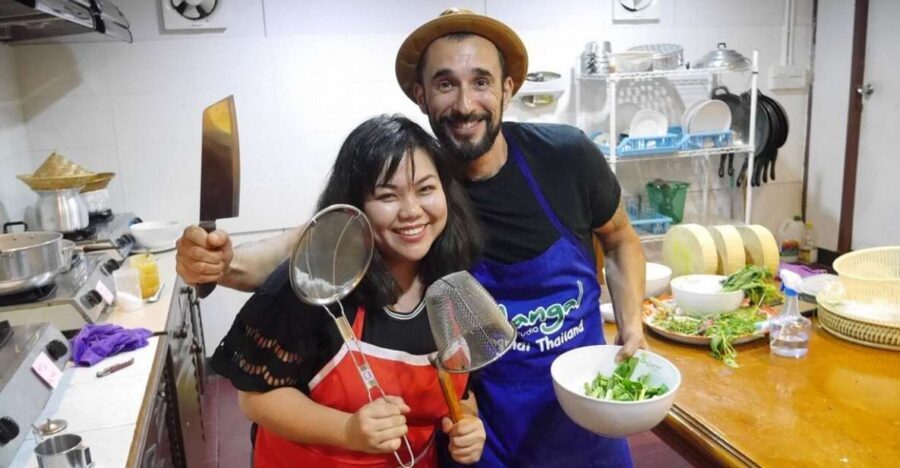
Once you reach the cooking studio, the kitchen is set up for learning. It’s an indoor room with air conditioning, and you’re guided step-by-step in English.
What I like about the teaching style (based on the consistent feedback about instructors like New and Aoy) is the balance: it’s not overly complicated, but it’s also not hand-wavy. You learn what each ingredient is doing, and you practice the actual moves—stir-fry technique, assembling flavors for salads, and working with curry paste/curry base.
Here’s what you should expect you’ll be cooking across the categories:
- Stir-fry dishes where heat control and timing matter (you’ll learn how to keep noodles or vegetables from turning soggy or bland)
- Soup where balance is everything—hot-and-sour or creamy coconut-based flavors
- Appetizers that depend on freshness and correct texture (salads and spring rolls are unforgiving in a good way)
- Curry and curry paste making so you understand what goes into the foundation, not just the final pot
If you’re a first-time cook, you’ll likely feel comfortable. The class is designed so you can follow along without needing culinary training. If you already cook at home, you’ll still get value from learning Thai ingredient roles and building flavor the Thai way.
You can also read our reviews of more tours and experiences in Chiang Mai



Eating Your Results in Air-Conditioned Comfort
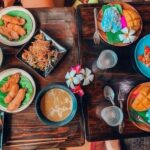
After the cooking comes the best part: you sit together and eat the dishes you made. The class is structured so you’re not cooking forever. You work, taste, adjust, then enjoy the meal.
The menu choice also makes this feel personal. If you pick Tom Yum Kung, you’re going to taste the sour-spicy Thai profile right away. If you pick Khao Soi, you’ll get a taste of Chiang Mai’s noodle identity in the same evening.
A practical note: this is a come hungry event. They specifically ask you to arrive with an empty stomach because Thai dinner happens at 4 or 5 pm. Do yourself a favor and skip a big snack before pickup. By the end, you’ll understand why.
Recipes to Take Home: Your PDF Book and Make-It-Again Plan
This class doesn’t end when you leave the kitchen. You get a recipe book in PDF form, which helps you repeat dishes without trying to remember ratios from scratch.
In real life, Thai cooking can feel hard to recreate because flavors come from a mix of ingredients and timing, not just one sauce. A recipe PDF helps you lock down the steps and ingredient list so you can reproduce the dishes in your own kitchen.
If you want to make this class “stick,” set a plan:
- Cook one dish within a week while the tastes are still fresh in your memory.
- Take the ingredients list and shop deliberately.
- Don’t try to replicate everything at once. Pick one stir-fry, or one curry, and focus on getting that right.
Price and Value at About $28 Per Person
At $28 per person for a 5-hour experience, the value is strong for three reasons.
First, you’re paying for more than a cooking session. You’re getting hotel pickup and drop-off in many central areas, plus ingredients and equipment. That’s the stuff that quietly raises costs elsewhere.
Second, you get market learning plus organic garden time. That ingredient context can be the difference between making a decent Thai meal and making a Thai meal that actually tastes like it should.
Third, you leave with the recipe support. The PDF book is part of what makes the class more than a one-night experience.
The only time the deal might feel “less great” is if you’re mainly after a short demo and you don’t want to cook. This class is built around hands-on work.
Dietary Needs, Seating, and Small Practical Tips
This is one of the more accommodating formats in Chiang Mai. They explicitly state options for vegan, vegetarian, Halal, gluten-free, and allergies. They’ll work with you, and the structure supports substitutions so you’re not stuck out of the experience.
On comfort and logistics:
- The class room is accessible (wheelchair accessible and stroller accessible).
- They note the cooking school is near public transportation.
- Infant seats are available for pickup service.
- Smoking indoors and alcohol/drugs aren’t allowed.
On what to bring:
- Bring any personal medication you might need.
On observers:
- Visitors who come to observe are welcome, but they must pay a fee (500 THB per person). An observer child 6–12 pays 350 THB.
On safety/health:
- This activity isn’t suitable for people with altitude sickness.
Who Should Book This Class (and Who Should Skip It)
Book this if you want a practical Thai food lesson with real ingredient context. It’s especially good if you like structure:
- You’re selecting your own dishes.
- You’re taught in English.
- You eat what you cook.
- You get recipes for later.
It also works well for couples and solo diners. The flow is easy to follow, and the group size is flexible, so your session timing may change depending on how many people book.
Skip it if:
- You can’t handle cooking with other people (the class is hands-on).
- You have altitude sickness concerns.
- You’re not willing to arrive with an empty stomach.
If you’re choosing just one food experience in Chiang Mai, this is the one that gives you skills, not only memories.
Should You Book This Chiang Mai Cooking Class?
If you like Thai food and want to cook it again at home, I’d book it. The combination of market + organic garden + hands-on cooking is what makes the night feel complete, not just entertaining.
The decision comes down to two questions:
1) Do you want to cook (not just watch)? If yes, you’ll enjoy this.
2) Can you show up ready to eat? If yes, you’ll love the flow.
At around $28 for a full evening with pickup, ingredients, and a recipe book, it’s a fair deal. Just line up your pickup timing carefully, come hungry, and pick the dishes you actually want to taste.
FAQ
How long is the Chiang Mai evening cooking class?
The duration is 5 hours.
Is hotel pickup and drop-off included?
Yes. Pickup and drop-off are included for many hotels in central Chiang Mai, plus some additional areas. Your accommodation address is checked to confirm coverage.
What time does pickup happen?
Pickup is offered between 3:15 PM and 3:45 PM, and they may start a little earlier due to traffic. The driver waits no longer than 5 minutes after the scheduled pickup time.
Do I get to choose what dishes I cook?
Yes. You can select one dish from each category: stir-fried, soup, appetizer, and curry/curry paste making.
What dishes are available to choose from?
You can choose from options including Pad Thai, Pad See Ew, chicken cashew nut, holy basil minced chicken, Tom Yum Kung, Tom Kha Kai, vegetarian/vegan Tom Kha Je, Som Tam, spring rolls, chicken salad (Larb Kai), glass noodle salad (Yam Woon Sen), and several curries like Massaman, green curry, Panang, Khao Soi, red curry, yellow curry, and dry red curry.
Is the class suitable for vegetarian, vegan, Halal, or gluten-free diets?
The activity states it is available for vegan, vegetarian, Halal, gluten-free people, and for people with allergies.
What do I receive at the end?
You receive a PDF version of a recipe book and you get cooking instructions. Water, tea, and coffee are included.
Is there anything I need to bring or avoid?
They ask you to bring personal medication if needed. Smoking indoors is not allowed, and alcohol and drugs are not allowed.
Can an observer come along?
Yes, observers can come, but they must pay an observer fee (500 THB per person; 350 THB for observer children aged 6–12).