REVIEW · CHIANG MAI
Chiang Mai Temples and Market Tuk-Tuk Evening Night Tour
Book on Viator →Operated by WanderSiam · Bookable on Viator
Night temples in a tuk-tuk beat the heat. This 4-hour evening run is a fast way to see Chiang Mai’s glow-up temples plus the Night Bazaar street-food tastings, all after sunset. One thing to plan for: you’ll pay cash entrance fees for Wat Phra Singh and Wat Chedi Luang.
My favorite part is the guide’s storytelling. If you’re lucky with someone like Tik, Jane, Nancy, or Saman, you’ll get clear context for what you’re seeing, and even help with better temple photos without wandering around blind.
In This Review
- Key things to look forward to
- Tuk-tuk after sunset: why this Chiang Mai night temple plan feels easier
- Price and value: what $34.24 covers, plus the cash add-on
- Meeting point and timing: Burger King start, Night Bazaar finish
- Wat Phra Singh at night: Lion Buddha, active temple energy
- Wat Phan Tao and Wat Chedi Luang: two stops that teach you how ruins still matter
- Wat Lok Molee: the calm, older temple stop outside the old city core
- Night Bazaar food tastings: how to eat like a confident first-timer
- The guide is the whole game: Tik, Jane, Saman, and why English matters
- Rain, comfort, and the tuk-tuk reality check
- Who should book this Chiang Mai temple and Night Bazaar tuk-tuk evening?
- Should you book it?
- FAQ
- What time does the Chiang Mai Temples and Market Tuk-Tuk Evening Night Tour start?
- How long is the tour?
- Where do I meet the guide for this tour?
- Which temples are visited, and are any entrance fees included?
- What food is included during the tour?
- Where does the tour end?
- What happens if it rains?
Key things to look forward to
- Tuk-tuk between temples means you don’t waste energy navigating dark, crowded old-city lanes
- Wat Phra Singh and Wat Chedi Luang are timed for the softer evening light and less midday heat
- Street-food tastings + dessert are included, so you can eat your way through the Night Bazaar without guesswork
- Free temple stops at Wat Phan Tao and Wat Lok Molee help keep costs steadier
- Small groups (max 12) make it easier for the guide to herd you between sights and food stalls
Tuk-tuk after sunset: why this Chiang Mai night temple plan feels easier
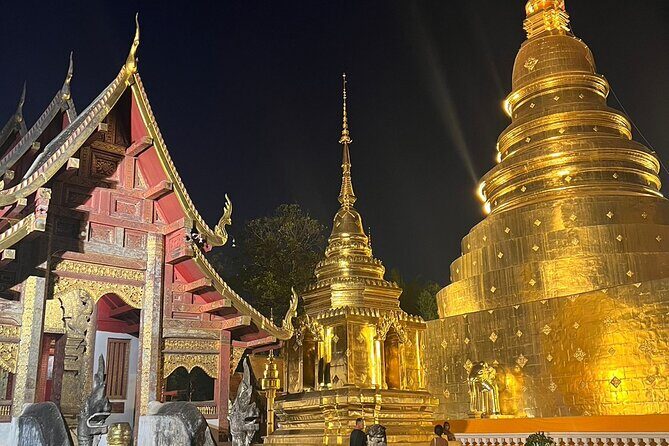
Chiang Mai gets hot. A lot. Doing temples at night changes the whole mood. The air is cooler, there are fewer day-trippers, and the temples look great with the lights on—like stage sets for Buddhism.
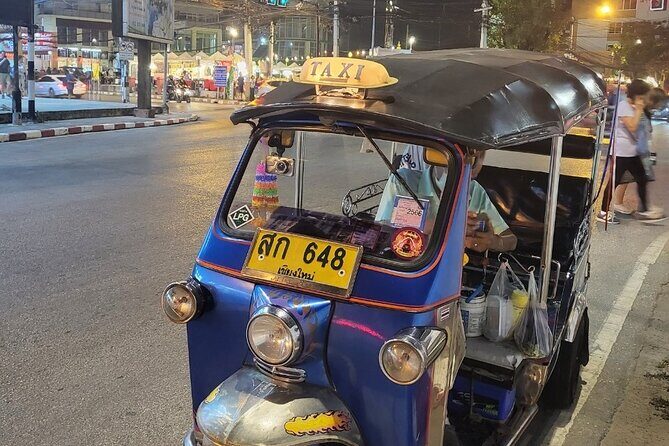
The tuk-tuk ride matters too. You’re bouncing between sites in a way that feels quick but not rushed. It’s also a practical shortcut around the old city’s narrow roads, where walking can turn into a lot of zig-zagging.
And because the tour runs in the evening, you get a built-in path: temples first, then the Night Bazaar. That’s a better order than trying to do both on your own after dark.
You can also read our reviews of more shopping tours in Chiang Mai
Price and value: what $34.24 covers, plus the cash add-on
At about $34.24 per person, you’re paying for transport, a guide, and food. This is not just a sightseeing checklist. You get tuk-tuk with a driver, an English-speaking guide, a simple street-food meal, dessert, and water.
Now for the part you should budget: entrance fees. Wat Chedi Luang and Wat Phra Singh cost THB 50 each, paid in cash the day of the tour. That means you should plan about THB 100 total if you do both paid temples.
Wat Phan Tao and Wat Lok Molee are free, so the extra money is really just for those two biggest name temples.
If you’re comparing value, look at the full package:
- transport by tuk-tuk (time-saving)
- guide interpretation (context so it doesn’t feel like random buildings)
- included food and dessert (so your evening doesn’t turn into “just one snack”)
This tour is usually a strong deal if you want structure. It’s less great if you already know the temples well and you mainly want a market stroll.
Meeting point and timing: Burger King start, Night Bazaar finish
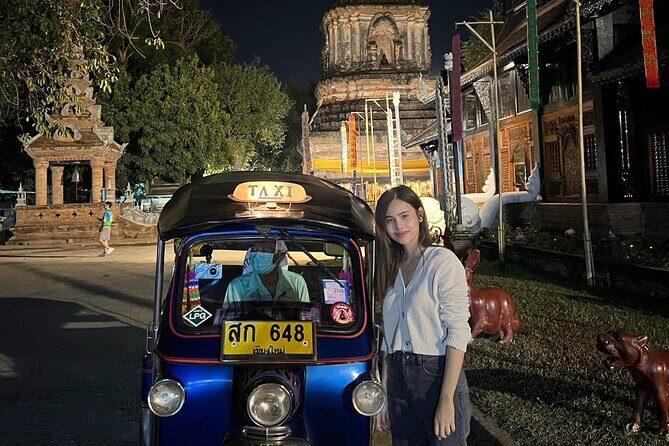
Your tour starts at 6:30 pm at Burger King – Thapae (2-6 Rachadamnoen Rd), Chiang Mai. The end point is Chiang Mai Night Bazaar, Changklan Rd.
A quick practical note: the group can wait up to 10 minutes after the scheduled meeting time. If you’re cutting it close, you’ll feel it. Show up early, especially because it’s an evening start when streets can be slower than you expect.
You’ll also appreciate where the tour ends. The Night Bazaar area is a convenient place to continue your evening—food, shopping, and people-watching. The flip side is that it may not be right by your hotel, so have a plan for getting back afterward (grab a tuk-tuk or use whatever local transport you prefer).
Wat Phra Singh at night: Lion Buddha, active temple energy
Wat Phra Singh is one of the most famous sights inside Chiang Mai’s old walled city. It’s known as the Monastery of the Lion Buddha, and it’s also an active temple, not a quiet “museum-only” stop.
In practice, that changes how you experience it. You’re walking through a living religious space, and your time there is best spent slowly. Evening lighting helps too. Details pop when the background is darker, and you can take photos without the glare that often hits during the day.
Expect about 30 minutes here. That’s enough time to:
- notice the main features
- understand the basic symbolism your guide explains
- grab a few photos without feeling like you’re rushing out
Possible drawback: if your guide’s English is tough to follow, it can feel like you’re just looking at architecture. In that case, bring curiosity, and ask your guide to point out what matters most in simple terms.
Wat Phan Tao and Wat Chedi Luang: two stops that teach you how ruins still matter
The tour then moves to Wat Phan Tao, a temple with some of the oldest roots in Chiang Mai—its earliest structures are likely from the late 14th century. It’s also located within the old walled city, right by Wat Chedi Luang. One strong benefit here is the pacing: you get history without a long travel break.
Wat Phan Tao is free, so you’re saving money while still seeing an older, quieter feel than the big headline temples.
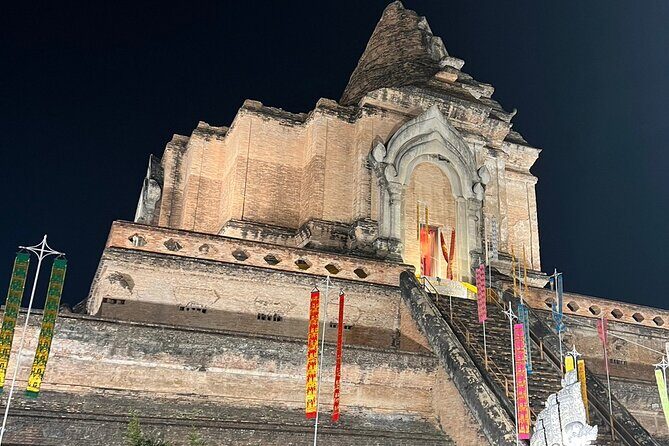
Next is the big one: Wat Chedi Luang Varavihara, also known as the temple of the Great Stupa. Construction ran from 1391 to 1475. Then came the earthquake: it collapsed in 1545.
That ruin story is what makes this stop more than a pretty backdrop. Even with the collapse, the site keeps its presence and meaning. If your guide is someone like Saman (who’s been praised for sharing building methods and significance of sculptures), you’re more likely to notice the craftsmanship instead of just seeing broken stone.
This is also one of the paid stops: THB 50 cash entrance fee. Paying the fee is part of respecting the site, and it helps you spend your time there smarter.
Time-wise, you’re there about 30 minutes again. With ruins, that’s a good amount: long enough to understand the basics, short enough not to get tired.
You can also read our reviews of more tours and experiences in Chiang Mai

Wat Lok Molee: the calm, older temple stop outside the old city core
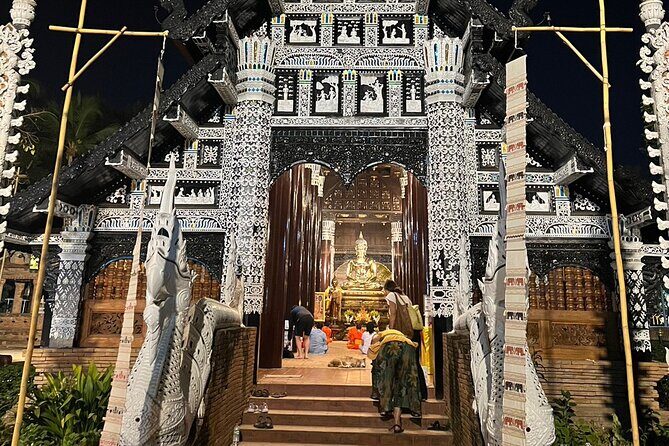
After the two heavier-history stops, you’ll visit Wat Lok Molee, which sits just outside the old walled city center. It’s described as one of the city’s older temples, with an especially impressive chedi listed among its highlights.
What I like about including a temple outside the main cluster is the contrast. The old city sites can start to feel similar, especially if you’ve been stacking temples in one day. Lok Molee gives your eyes a rest.
It’s also free, which is a nice bonus for your budget.
This stop is about 30 minutes, so treat it as your “slow down” moment. Ask your guide what to look for here. If your guide is strong (reviews frequently mention guides like Nancy and Jane for making stops feel clear and approachable), you’ll walk away with at least a few concrete details you’d never guess from a quick glance.
Night Bazaar food tastings: how to eat like a confident first-timer
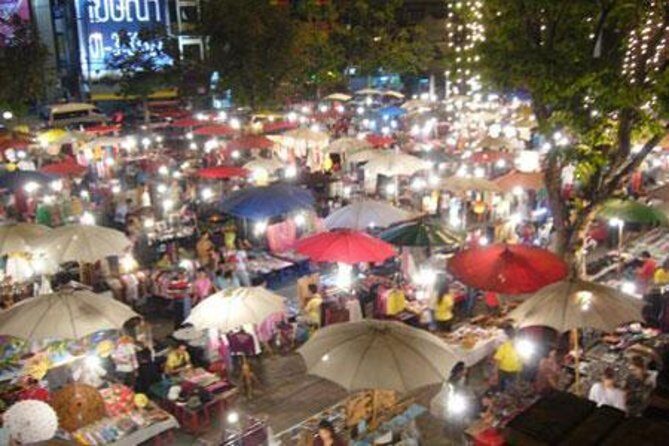
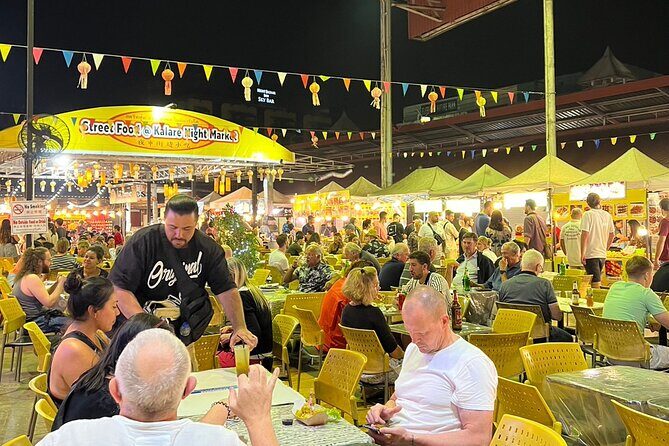
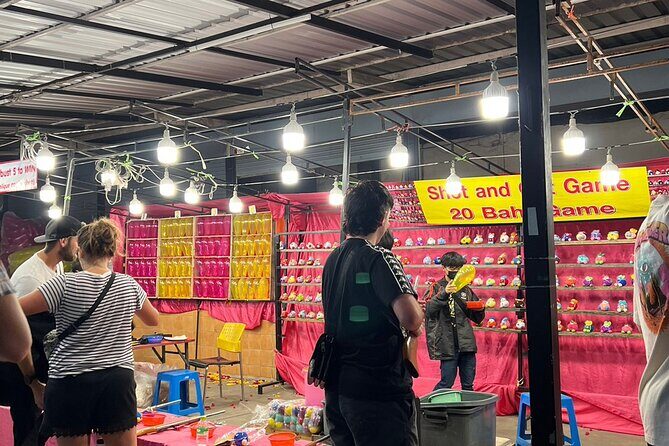
Your final block is the Chiang Mai Night Bazaar, with about 1.5 hours to roam. It’s famous for street-side stalls, and it skews toward clothing and handicrafts—but the real fun is the food ecosystem around it.
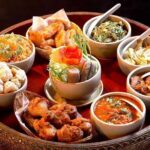
Here’s the advantage of this tour: you don’t arrive hungry and confused. The tour includes a simple street-food meal, plus dessert, and you get a bottle of drinking water. That’s a big deal for first-timers.
You also get guidance on what to try. If your guide is Jane, Saman, or another praised guide from the past, you may get hands-on help like pointing you toward good stalls and even talking with vendors so you’re not stuck translating while everyone crowds around you.
How I’d do it during your 1.5 hours:
- Eat the included items first, so you don’t accidentally over-order.
- Then browse and pick one extra thing you genuinely want.
- If a stall looks very busy, wait a moment. You’ll get served faster than you think.
Possible drawback: if you’re extremely picky with food, the tour’s included meal may not match every preference. You’ll do best by telling your guide early what you don’t want.
The guide is the whole game: Tik, Jane, Saman, and why English matters
This tour can feel brilliant or just okay, depending on your guide. The positive reviews repeatedly highlight guides such as Tik and Nancy for explaining Buddhism and temple meaning in a way that clicks. Reviews also praise Jane and Saman for making it easier to see details and get good photos.
But there are also complaints about English clarity in some cases. That doesn’t mean every guide is poor. It just means you should go in with the right expectations.
If English is a bit rough for your group, you can still make it work:
- ask one or two simple questions early (What is this structure? What does this symbol mean?)
- point at a feature and ask what it is
- lean on your own observation for the rest
A good guide will still help you connect the dots. And even with less perfect communication, you’ll still get the practical value: tuk-tuk transport, temple timing, and food stops that keep the evening flowing.
Rain, comfort, and the tuk-tuk reality check
This tour runs rain or shine. Thai showers can be quick, but heavy rain can happen. You should come prepared.
Bring a poncho or raincoat. One review mentioned a tuk-tuk with no plastic sides during pouring rain, so you may get damp even if the driver provides umbrellas. You can’t control the weather, but you can control your clothing choices.
Also, tuk-tuks can be a little awkward to get in and out of. A few past experiences mentioned steps and seat height issues, which is worth considering if you have mobility concerns or just hate climbing. Wear shoes with grip, hold the handle, and take your time boarding.
Finally, keep your head up in crowded market areas. Night markets are busy, and you’ll be mixing with people, scooters, and stall traffic. Watch your footing, especially near curbs and uneven ground.
Who should book this Chiang Mai temple and Night Bazaar tuk-tuk evening?
This tour is a strong match for you if:
- you want a structured evening with temples + Night Bazaar in one go
- you dislike the daytime heat and prefer cooler night walking
- you like learning context, not just taking photos
- you’re first-timer enough that a guide helps you avoid dead ends
It’s also ideal if you’re solo or in a small group, since the tour max is 12 travelers. Smaller groups generally mean easier movement and more attention from the guide.
I’d think twice if:
- you already have a deep understanding of Chiang Mai temples and want self-guided flexibility
- you have strict food needs and don’t want included meal surprises
- you’re very sensitive to rain and prefer fully enclosed transport
Should you book it?
Yes, if you want an efficient, guided way to see Chiang Mai’s most famous temple names and then eat your way through the Night Bazaar without spending hours planning routes. The value is in the package: tuk-tuk transport, guide context, and included food.
Do it with two expectations set up front: bring cash for Wat Phra Singh and Wat Chedi Luang (THB 50 each), and bring rain protection because the tour keeps going. If you get a guide like Tik, Nancy, Jane, or Saman, you’ll likely come away with real understanding—not just photos.
FAQ
What time does the Chiang Mai Temples and Market Tuk-Tuk Evening Night Tour start?
The tour starts at 6:30 pm.
How long is the tour?
It runs about 4 hours (approximately).
Where do I meet the guide for this tour?
The meeting point is Burger King – Thapae (2-6 Rachadamnoen Rd, Tambon Si Phum, Amphoe Mueang Chiang Mai).
Which temples are visited, and are any entrance fees included?
Wat Phra Singh and Wat Chedi Luang require an entrance fee (THB 50 per person for each, paid in cash). Wat Phan Tao and Wat Lok Molee are listed as free.
What food is included during the tour?
You get a simple street-food meal, dessert, and a bottle of drinking water. Soft drinks and alcoholic beverages are not included.
Where does the tour end?
The tour ends at Chiang Mai Night Bazaar on Changklan Rd.
What happens if it rains?
The tour operates rain or shine. If it rains heavily, the guide will try to find shelter and continue when the weather improves. Cancellations due to weather are not eligible for a refund.