REVIEW · CHIANG MAI
Morning Thai cooking class
Book on Viator →Operated by Aromdii Cooking School · Bookable on Viator
Cooking in Chiang Mai feels personal.
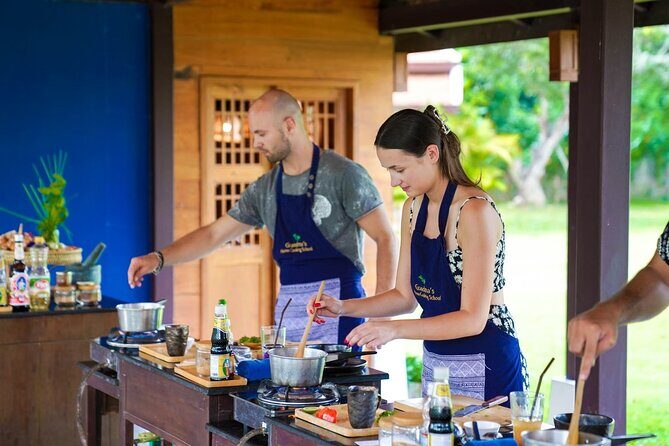
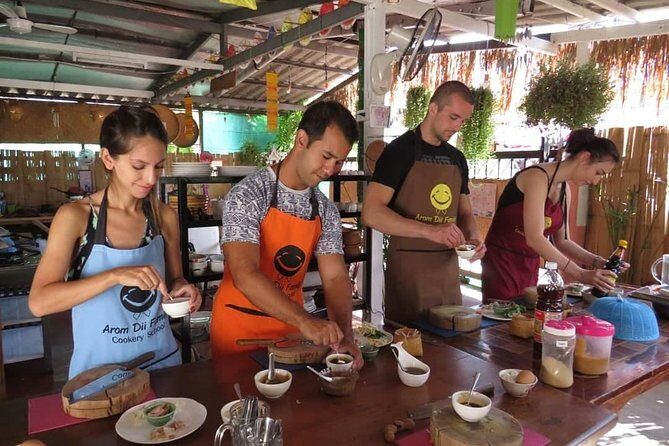
This morning Thai cooking class pairs a quick market walk with a small-group (8 max) kitchen session where you learn five traditional dishes from scratch, including curry paste made the proper way. I like that you start by picking your menu, then follow the ingredients from market to pan, so it feels less like a show and more like learning how Thai cooks actually work.
You’ll especially enjoy the hands-on flow: stir-fry first, then soup/appetizer, then curry and dessert—so your morning has momentum instead of bouncing around. One thing to consider: the kitchen and eating area don’t have air-conditioning, just fans, so it can feel warm in March–June and humid in the rainy season.
In This Review
- Key things to know before you go
- Morning Market to Kitchen: How the schedule really works
- Price and logistics: what you actually get for $27.70
- Kad Kom Market: the 15–20 minute ingredient reset
- What to do (so you don’t miss the important part)
- Picking your menu before you cook
- Stir-fried options
- Appetizer options
- Soup options
- Curry options (with curry paste made from scratch)
- Dessert options
- Kitchen reality check: no aircon, just fans
- The cooking order: stir-fry, then soup/appetizer, then curry + dessert
- First: stir fried dish
- Next: soup and appetizer
- Finally: dessert plus curry paste and curry
- The biggest wins: why this class earns a perfect rating
- 1) The organization keeps you moving
- 2) Small group size leads to personal guidance
- 3) You get real takeaway value, not just a meal
- What you’ll learn beyond the dishes
- Who should book this cooking class in Chiang Mai
- Should you book? My honest take
- FAQ
- FAQ
- How long is the morning Thai cooking class?
- What time does the class start in Chiang Mai?
- Where does the tour begin?
- Is pickup included?
- How many people are in the class?
- What dishes can I choose from?
- Are there vegan or vegetarian options?
- What’s included in the price besides cooking?
- Is there air-conditioning in the kitchen?
- What happens if the weather is bad?
- What if the minimum number of travelers isn’t met?
Key things to know before you go
- Menu choice happens up front: everyone selects dishes before the class begins.
- Market tour is short and practical: about 15–20 minutes at Kad Kom Market.
- Curry paste from scratch: you’ll make the paste as part of the curry segment.
- Five-dish lesson plan: stir-fried dish, appetizer, soup, curry/curry paste, and dessert.
- Price includes more than the class: water, seasonal fruit, and nearby transport within 3 km.
- No big crowd energy: reserved space for participants only, maximum 8 travelers.
Morning Market to Kitchen: How the schedule really works
This tour is built like a tight little chain: select your dishes, shop for what you chose, then cook them in a set order. Start time is 9:00 am, and the total duration is about 4 hours 30 minutes. You end back at the meeting point, so you’re not left guessing about a second pickup.
The structure matters because Thai cooking is ingredient-driven. You don’t just memorize steps—you see what’s in the market, understand what Thai cooks look for, and then apply it. That’s how the flavor “sticks” once you get home.
Also, the group size is capped at eight, which is a big deal for learning. Thai cooking has small technique points—heat level, timing, how to build flavor—and smaller groups usually mean more personal correction (and less standing around).
You can also read our reviews of more cooking classes in Chiang Mai

Price and logistics: what you actually get for $27.70
At $27.70 per person, you’re paying for far more than a demonstration. Your cost covers:
- a market tour (about 15–20 minutes)
- transportation for nearby locations within 3 km
- cooking instruction for five dishes
- bottle water and seasonal fruit
- a handmade recipe download from the school’s website
- a kitchen experience limited to participants only (no visitors)
When you break it down, the value comes from the “from scratch” part—especially the curry paste. Pre-made curry paste is common in some classes. Here, you’re making it yourself, which is the difference between average and authentic flavor.
One small practical note: the class location is near public transportation, and you’ll use a mobile ticket. If you’re staying in the Old City area, you may find it easy to reach either by foot or a short ride.
Kad Kom Market: the 15–20 minute ingredient reset
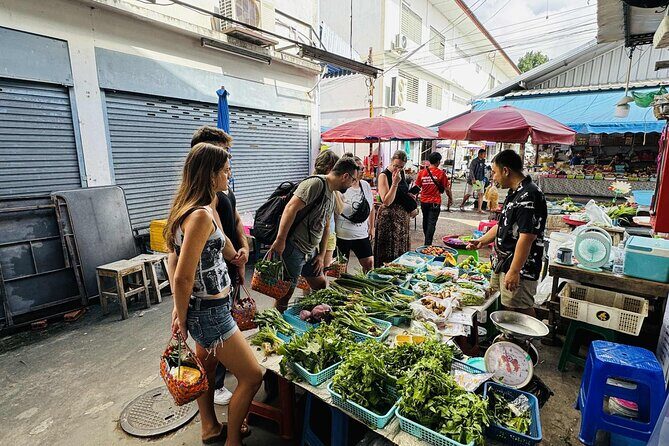
Your meeting point is Kad Kom Market, with the address listed as บ้านเลขที่19 3มบ เวียงทอง 1, Tambon Chang Khlan, อ.เมือง Chiang Mai 50100. The market segment is short—about 15–20 minutes—so the goal is not shopping for hours. It’s orientation: you’re there to identify what you’ll cook with.
In this market walk, you’ll learn about Thai vegetables, spices, and herbs. The tour also gives you time to take photos and, if you want, buy spices to take home. That last bit is useful. Many cooking classes end right when you’re motivated to learn. This one gives you a small shopping window when your new knowledge is fresh.
What to do (so you don’t miss the important part)
Bring a camera-ready phone and be ready to ask questions while you’re there. You’ll move through the market at a quick pace, so if there’s an ingredient you’re curious about, ask then. After the class starts, the day’s energy shifts from shopping to chopping.
Picking your menu before you cook
A key detail that improves the whole experience: everyone chooses the menus before class starts. That means when you arrive at the kitchen, your instructor isn’t guessing what people want. It’s organized.
From there, you’ll also pick up the ingredients for the dishes you selected. That makes the class feel like a real meal prep run—because you’re not just cooking. You’re sourcing.
Your menu options are grouped by course:
You can also read our reviews of more tours and experiences in Chiang Mai


Stir-fried options
- Pad Thai
- Fried Drunken Noodles
- Pad See Ew
- Fried cashew nut
Appetizer options
- Papaya salad
- Fresh spring rolls
- Fried spring rolls
- Mixed fruits salad
Soup options
- Hot & Sour Prawns thick soup
- Coconut chicken
- Tom Yum Chicken
- Hot & Sour Prawns clear soup
Curry options (with curry paste made from scratch)
- Khao Soi (Chiang Mai noodles)
- Green curry
- Massaman curry
- Red curry
Dessert options
- Mango sticky rice
- Pumpkin in coconut milk
A practical tip: pick based on what you can’t easily recreate at home. If you have a good pantry and love spice, choose a curry option. If you want something approachable and fast to remake later, pad see ew or pad thai can be a good match.
Also, the class notes that there are vegan and vegetarian options. If you eat that way, double-check which specific dishes are available when you select your menu.
Kitchen reality check: no aircon, just fans
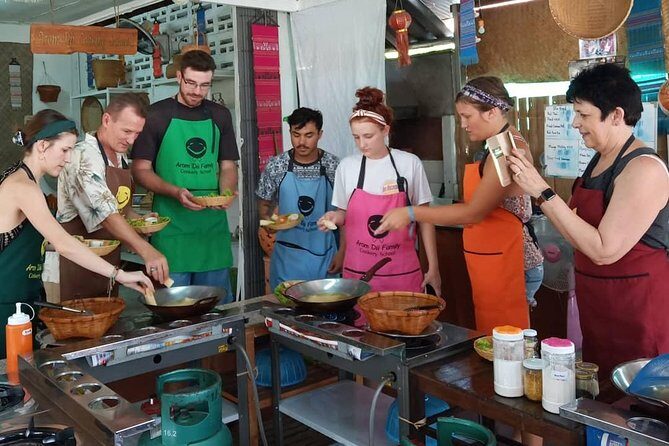
Here’s the part most people don’t think about until they’re in the room. The kitchen and eating area don’t have air-conditioning—there are only fans. Seasonal timing can matter:
- March–June (summer): expect heat
- July–October (rainy season): expect humidity
- November–February (winter): usually more comfortable
The good news is that cooking is still very doable. Thai kitchens are built for real-world weather, and fans keep the air moving while you work. Just plan for a sweaty shirt if you’re sensitive to warm indoor spaces. Water helps, and that’s included.
I also like that the school is transparent about this. No surprises. Just show up ready to cook.
The cooking order: stir-fry, then soup/appetizer, then curry + dessert
The day is organized into clear steps, and that makes it easier to follow what you’re doing.
First: stir fried dish
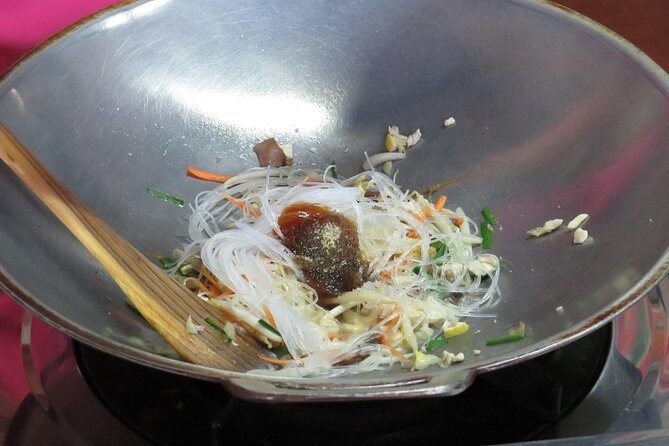
The class starts with the stir-fry segment. This is smart because stir-frying is technique-heavy—heat control and timing. If you’re learning, getting this first means you build confidence early.
Depending on your choice, you’ll work with noodles or cashews, and you’ll practice Thai flavor building in a way that’s easier to understand once you’ve been shown the key ingredients.
Next: soup and appetizer
Then you shift to soup and appetizer. This is where the class becomes more “food culture” and less just “make this dish.” You’ll see how Thai cooks balance sour, salty, spicy, and aromatic notes—especially with soup choices like Tom Yum Chicken or the hot and sour prawns versions.
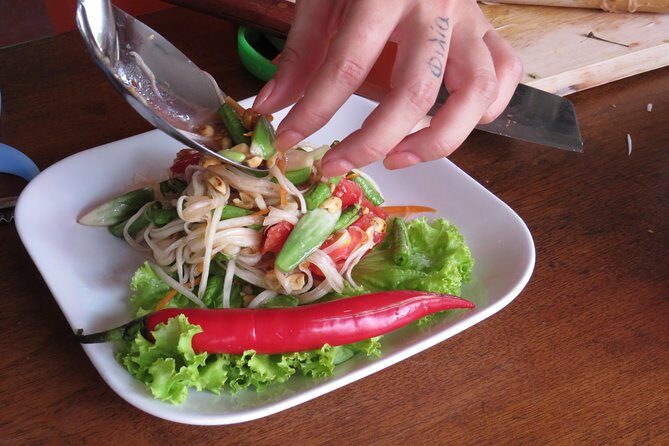
Your appetizer selection also changes the feel of the course. Papaya salad, for example, is all about dressing and texture. Spring rolls add a different rhythm—wrapping and crisping.
Finally: dessert plus curry paste and curry
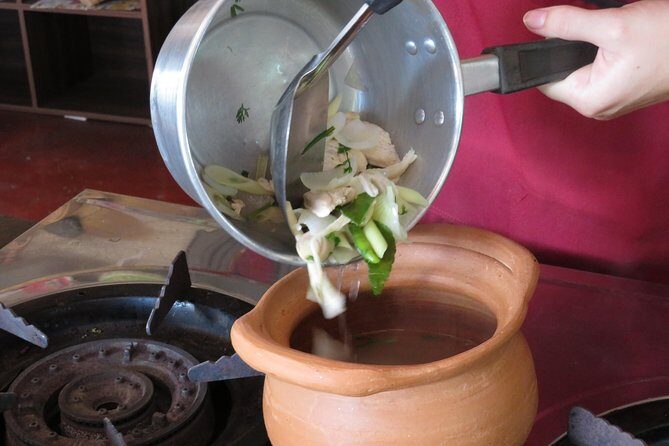
The last block includes dessert and curry, and here’s the standout detail: you’ll make curry paste from scratch. That paste is the heart of curry flavor, and making it yourself helps you understand why green, red, and massaman taste like they do. Even if you only cook once in your life, this step gives you the foundation.
For curry, you might cook:
- Khao Soi (Chiang Mai noodles)
- Green curry
- Massaman curry
- Red curry
Dessert comes from one of two choices: mango sticky rice or pumpkin in coconut milk. Either way, it gives the morning a satisfying finish.
The biggest wins: why this class earns a perfect rating
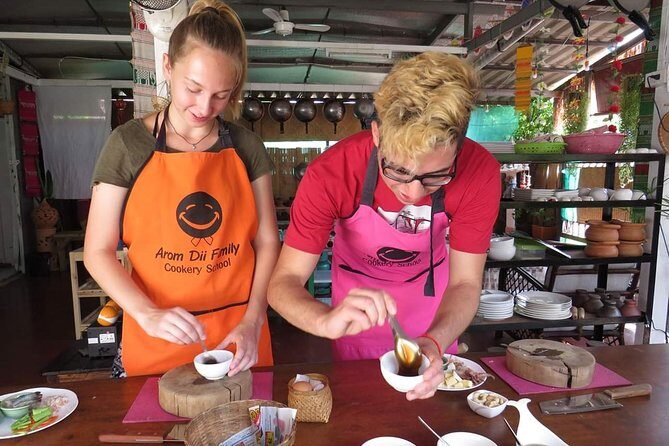
The feedback for this experience is consistently positive, and the reasons are practical.
1) The organization keeps you moving
When a cooking class has good organization, you spend less time waiting and more time cooking. The flow here is structured: menu choice first, market then kitchen, stir-fry first, then soup/appetizer, then curry paste and dessert. That keeps the momentum going.
2) Small group size leads to personal guidance
A class capped at eight really helps. It’s easier to get hands-on help, especially for technique steps like stir-frying and paste-making. If you like learning without feeling rushed or ignored, this format is the right size.
3) You get real takeaway value, not just a meal
You get a handmade recipe download after the class. That matters because Thai cooking depends on ingredients and proportions. A recipe file helps you recreate what you made without guessing.
What you’ll learn beyond the dishes
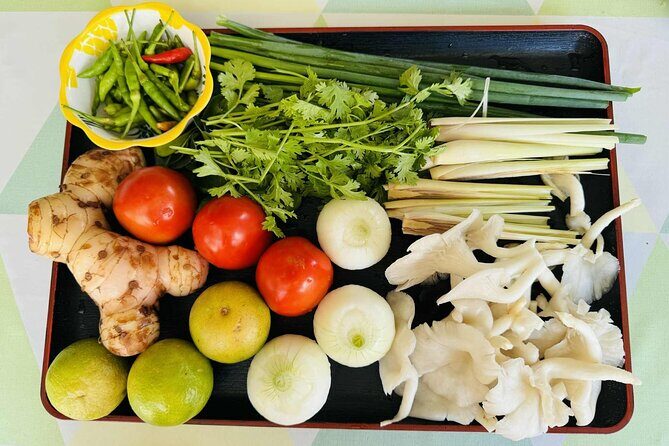
Even if you don’t end up making every dish at home, you’ll learn useful patterns.
You learn to think in categories: noodle/wok cooking, balance in soup, and paste-based curry structure. And because you shop for the exact ingredients you chose, you start to recognize Thai flavors as combinations—aromatics, herbs, chili balance, sour and salty sources.
You also get a quick crash course on Thai veggie and herb basics during the market segment. That helps you understand what to buy later if you’re cooking at a Thai market back home.
Who should book this cooking class in Chiang Mai
This experience is a great match if you:
- want an authentic, hands-on class without a huge crowd
- like the idea of cooking five dishes in one morning
- enjoy ingredient learning as much as eating
- want help with technique, especially curry paste
It’s less ideal if:
- you strongly dislike warm indoor spaces (remember: no aircon, only fans)
- you want a totally quiet, sit-and-watch type of experience (this one is active)
If you’re traveling with dietary needs, keep in mind there are vegan and vegetarian options, but you’ll still need to choose your menu items in advance.
Should you book? My honest take
If you’re choosing between a quick Thai cooking demo and a real skill-building class, this one leans toward skills. The combination of a short market tour, menu choice, small group size, and cooking five dishes from scratch—especially curry paste—creates real value for your money.
Book it if you want to leave Chiang Mai with more than photos. You’ll leave with a clearer sense of Thai flavor logic and a set of dishes you can remake.
Don’t book it if you’re heat-sensitive and hate cooking in a room without air-conditioning. Otherwise, this is one of the most practical ways to spend a morning in Chiang Mai.
FAQ
FAQ
How long is the morning Thai cooking class?
It runs for about 4 hours 30 minutes (approximately).
What time does the class start in Chiang Mai?
The start time is 9:00 am, and it ends back at the meeting point.
Where does the tour begin?
You meet at Kad Kom Market, address: บ้านเลขที่19 3มบ เวียงทอง 1, Tambon Chang Khlan, อ.เมือง Chiang Mai 50100, Thailand.
Is pickup included?
Transportation is included for nearby locations within 3 kilometers. Pickup is offered.
How many people are in the class?
The class is limited to a maximum of 8 travelers.
What dishes can I choose from?
You choose from options in these categories: stir-fried dishes, appetizers, soups, curry (including curry paste from scratch), and dessert. Specific options include Pad Thai, papaya salad, Tom Yum Chicken, Khao Soi, and mango sticky rice, among others.
Are there vegan or vegetarian options?
Yes, the menu accommodates vegan and vegetarian options.
What’s included in the price besides cooking?
The price includes bottle water, seasonal fruit, transportation (within the nearby 3 km range), and a handmade recipe download from the school’s website.
Is there air-conditioning in the kitchen?
No. There are only fans in the kitchen and eating room.
What happens if the weather is bad?
The experience requires good weather. If it’s canceled due to poor weather, you’ll be offered a different date or a full refund.
What if the minimum number of travelers isn’t met?
If it’s canceled because the minimum isn’t met, you’ll be offered a different date/experience or a full refund.