REVIEW · CHIANG MAI
Half Day Guided Thai Cooking Class in Chiang Mai
Book on Viator →Operated by Baan Thai Cookery School · Bookable on Viator
Hands-on Thai cooking, for less money than dinner. This half-day class at Baan Thai Cookery School turns Thai food lessons into something you actually do, not just watch. You get guidance from English-fluent instructors in a comfortable indoor kitchen setup, plus you can tailor spice and dietary needs.
I especially like the small class size (up to 8 people). That matters because it keeps the experience personal and helps you get unstuck when you hit a tricky step.
One consideration: the time is short (about 4 hours 30 minutes), so you’ll cook a focused set of dishes rather than a big multi-course parade. Still, most menus end up leaving you properly fed.
In This Review
- Key things to know before you book
- Baan Thai Cookery School: what you’re really paying for
- Getting to the school in Chiang Mai without stress
- The class rhythm: what happens in about 4.5 hours
- What you’ll actually cook: menu choices and real Thai variety
- Inside the kitchen: why the setup makes learning easier
- Spice, seasonings, and dietary needs: you’re not stuck with one version
- Instructors and language: clear steps you can follow
- The meal payoff: leaving stuffed, with flavors you can repeat
- Is it worth it for different kinds of travelers?
- Price and value in plain terms
- Should you book this Thai cooking class in Chiang Mai?
- FAQ
- Where is the half-day cooking class in Chiang Mai?
- How long is the Thai cooking class?
- What is the price?
- Is pickup available?
- How many people are in a class?
- Will the instruction be in English?
- Can the class accommodate vegetarians or food allergies?
- Can you adjust the spice level?
- Is the cooking done indoors?
- What is the cancellation policy?
Key things to know before you book
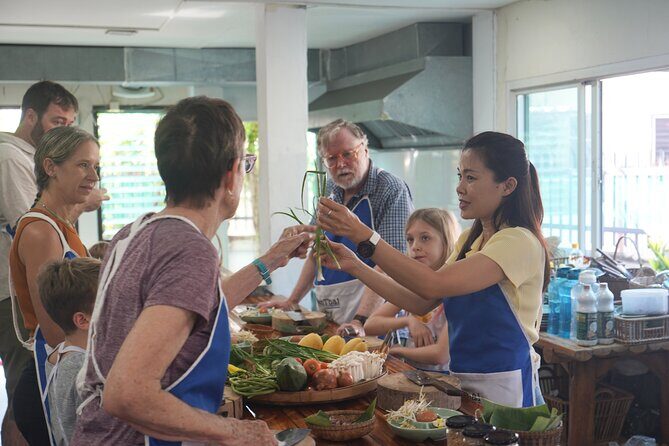
- Max 8 people means more hands-on time and less waiting around
- Hands-on cooking with clear English instruction, not a passive demo
- Spice levels and seasonings can be customized to your taste
- Vegetarian and allergy support with substitutions and adjustments
- Organic farm + local ingredients are part of the experience
- Air-conditioned dining room + indoor kitchen keeps things comfortable
Baan Thai Cookery School: what you’re really paying for
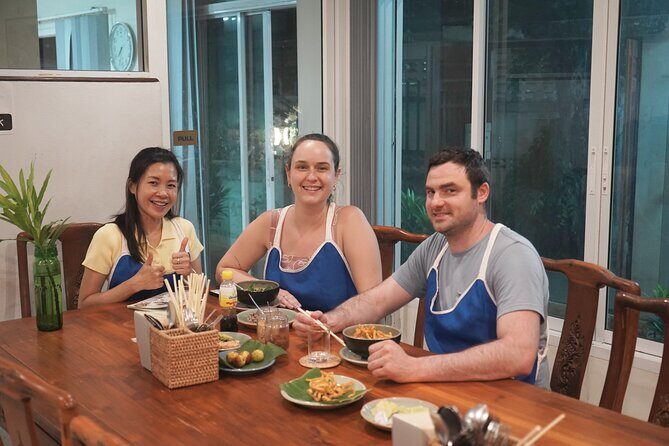
At about $29 for a half-day guided cooking class, the value comes from the balance: you’re not paying extra for a fancy show—you’re paying for time at the stove with someone correcting your technique. The school’s model is built around small groups, and that keeps the instruction practical. You’re more likely to leave knowing what to do next time you cook Thai at home.
Another big piece of value is that your meal isn’t an afterthought. This class is structured around making dishes and eating what you cook, in an air-conditioned setting. Thai cooking can be precise, especially with balance (salty, sour, sweet, heat), and getting those flavors right with guidance is the point.
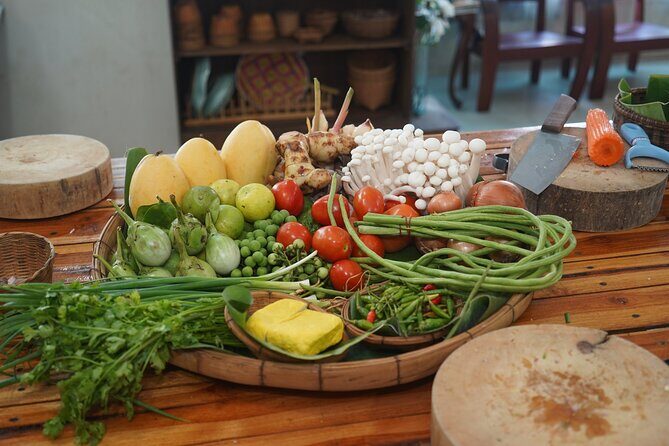
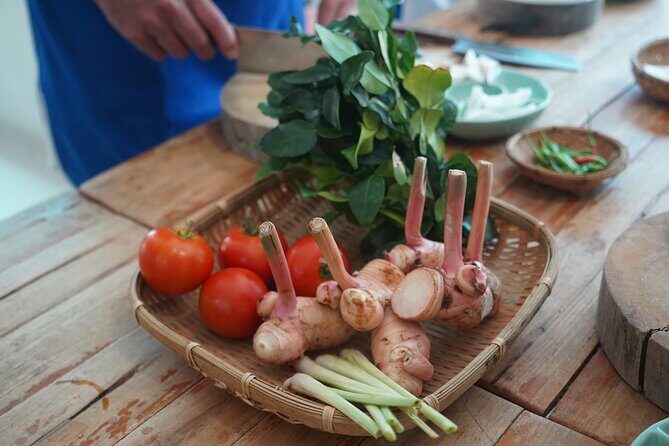
The ingredient approach helps too. You’ll use organic ingredients from the farm and local sources, which matters because Thai food lives and dies by freshness. You’re tasting a difference when herbs, aromatics, and produce aren’t tired or bland.
You can also read our reviews of more guided tours in Chiang Mai


Getting to the school in Chiang Mai without stress
The class starts and ends at Baan Thai Cookery School, 9 Prapokklao Rd. Lane 9, Mueng, Chiang Mai 50200. Because the activity is set up as a straightforward start-and-return experience, you don’t need to plan a complicated day around it.
Pickup is offered, which can be a lifesaver in Chiang Mai traffic or if you’re staying a bit farther out. If you’re exploring on your own, you’ll also be glad to know it’s near public transportation, so you aren’t stuck if you decide not to use pickup.
You’ll use a mobile ticket, which is handy if you don’t want to mess with printed vouchers while you’re out. Also, since this is an end-back-at-the-start setup, you’re keeping your logistics simple: you’re not building the day around finding a new drop-off point.
The class rhythm: what happens in about 4.5 hours
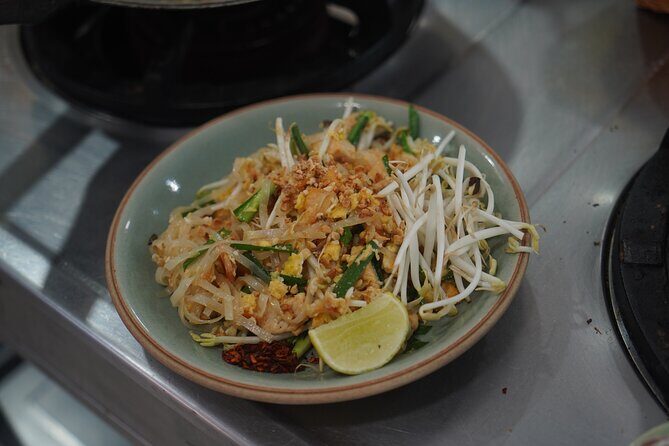
This is a half-day experience, roughly 4 hours 30 minutes. That timing is long enough for real cooking practice, but short enough that it fits easily between sightseeing days.
Here’s what you can expect in the flow:
First, you’ll get set up with instruction and the plan for what you’ll cook. The school runs small classes (1–8 people), so your instructor can pace things based on the group. If you’re a first-timer, you’ll get clear guidance on how Thai cooking steps work—especially the order of operations and how to avoid common flavor problems.
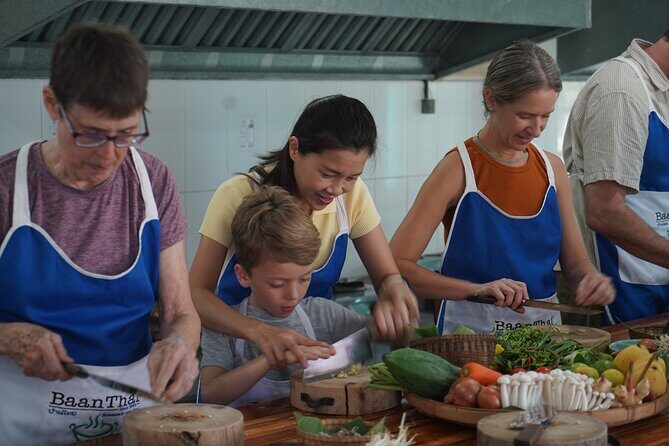
Then comes the hands-on cooking stage. The core of this class is participating at your station, not watching from the sidelines. You’ll learn how ingredients are handled and combined, and you’ll be able to adjust what you taste as you go (including spice level).
Finally, you’ll eat the results in the school’s indoor dining setup. One menu example from the class choices includes dishes like Pad Thai, Tom Kha Gai (and Tom Yum Goong as a partner option), plus spring rolls and Khao Soi. In other words, you’re not just making one “starter” dish and calling it a day—you’re typically leaving with a meaningful spread.
What you’ll actually cook: menu choices and real Thai variety
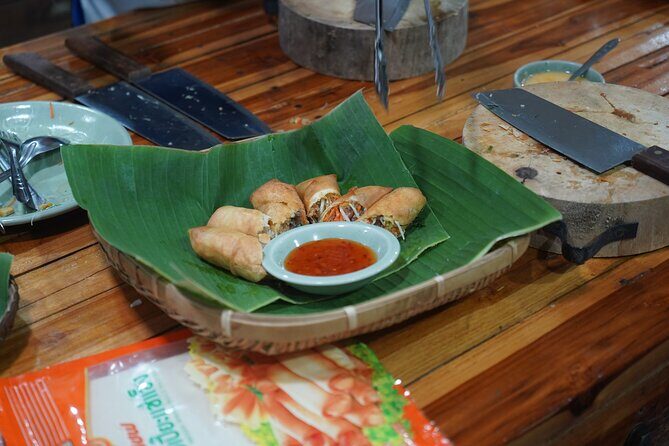
Thai cooking is about balance, texture, and heat. The good news is this class gives you a chance to practice different styles, from noodle stir-frying to curry-soup flavors to crisp textures in rolls.
From the menu examples shared, you can expect options that include:
- Pad Thai (noodle wok-favorite)
- Tom Kha Gai (coconut-based chicken soup)
- Tom Yum Goong / Tom Yum-style flavors as an option for other preferences
- Spring rolls
- Khao Soi (a distinctive Chiang Mai-style dish)
You’ll often end up cooking multiple dishes rather than only learning one recipe. That’s one reason this class scores so well for day-to-day practicality: you build a small “menu skill set,” not just one win.
One smart thing to do before you go (if you have preferences): decide how adventurous your spice tolerance will be. The school can adjust spice levels, but having a clear idea helps your instructor tune your seasoning while you cook.
Inside the kitchen: why the setup makes learning easier

This is not a cramped, chaotic kitchen experience. The school has an indoor kitchen and an air-conditioned dining room, so you get to focus on cooking instead of fighting heat.
That matters for technique. When you’re sweating, you tend to rush. Indoors, you can actually learn. You’re more likely to notice what the instructor means about timing—when to add aromatics, how to manage sauce thickness, and when to stop cooking so flavors stay fresh.
The ingredient handling also supports learning. Since the school uses organic farm ingredients plus local sources, you’re working with flavors that are already close to correct. That reduces frustration. If an herb smells weak or a produce item tastes off, the recipe can feel “wrong” even if you cooked it correctly.
If you’re traveling and want a cooking lesson that feels doable, this kitchen setup is a quiet advantage.
You can also read our reviews of more cooking classes in Chiang Mai


Spice, seasonings, and dietary needs: you’re not stuck with one version
One of the most useful parts of this class is how adaptable it is. You can request vegetarian cooking and food-allergy support. The school handles this by offering substitutions and adjusting seasonings.
That’s important because Thai recipes often rely on specific ingredients for depth: things like fish sauce, shrimp paste, or certain aromatics. Having an instructor who can swap ingredients without breaking the flavor balance means you still get the Thai experience, not a watered-down substitute.
Spice level is also customizable. You can set the heat level to match your taste, and the instructor can tune seasoning as you cook. For you, that means two things:
1) You can enjoy the flavors without being overwhelmed.
2) You learn what “correct” spice feels like for your personal tolerance.
If you have allergies, don’t treat this as a vague request—plan to communicate your needs clearly during the class setup. The whole point is that the school is prepared to adjust, so you’ll get the best result when your requirements are spelled out.
Instructors and language: clear steps you can follow
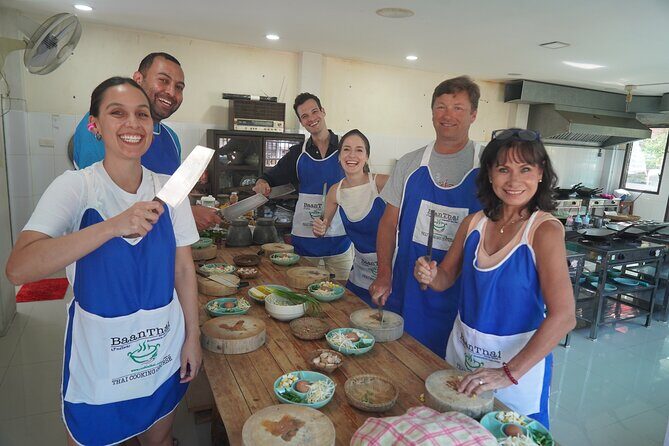
This class is taught by English-fluent instructors, which is a real quality-of-life factor in Thailand. Thai cooking has steps that can sound simple but aren’t. The difference between good and great Pad Thai, for example, can come down to timing and how you manage the sauce.
The small group format also helps with understanding. When you cook with fewer people, it’s easier for an instructor to notice where you might be going off track—like adding something too early or not stirring long enough.
Also, since the class is fully hands-on, you’re not learning from a distance. You’re getting your own bite-sized practice. That’s where the language support pays off: you can ask questions in plain English and adjust while you’re still cooking, not after the meal.
The meal payoff: leaving stuffed, with flavors you can repeat
A cooking class only feels worth it if you leave satisfied. This one is set up that way: you cook, you eat, and you get a solid spread.
In the menu example described, students choose combinations that include a noodle dish (Pad Thai), a coconut soup (Tom Kha Gai), spring rolls, and a regional specialty like Khao Soi. That’s a good mix of flavors and textures: sweet-savory noodles, creamy sour soup, crisp rolls, and a complex Chiang Mai-style curry-noodle profile.
Why that matters for you: it gives you multiple “memory anchors.” Even if you can’t remember every step, you’ll remember the final flavor targets—and that makes it easier to recreate dishes later.
It also means your half day has a built-in meal, so you aren’t paying extra for lunch elsewhere. You’re essentially buying a guided cooking session plus a full, satisfying Thai meal.
Is it worth it for different kinds of travelers?
This class is especially a fit if you want Thai food you can recreate, not just Thai food you can eat. If you’re new to cooking, hands-on instruction plus small group attention helps you build confidence fast.
It also works well for families and mixed groups because:
- You cook together in a structured way.
- You can customize spice and dietary needs.
- The menu options give some flexibility, so people don’t feel forced into one flavor.
If you’re an experienced cook, you’ll still get value from technique coaching—especially around balancing flavors and understanding how Thai recipes are built.
Price and value in plain terms
$29 is a competitive price for a guided, hands-on cooking class with ingredient handling, English instruction, and the meal you eat at the end. What makes it feel like real value is that you’re not paying for luxury extras. You’re paying for the core service: time with an instructor, practical cooking steps, and a filling meal.
Could you find cheaper? Possibly. But when you factor in small group size (max 8), dietary/spice customization, and organic/local ingredient sourcing, the class reads like a smart spend rather than a gamble.
Should you book this Thai cooking class in Chiang Mai?
Book it if you want:
- A half-day activity that gives you a full meal built into the experience
- Hands-on cooking with English guidance
- Flexible spice levels plus vegetarian/allergy support
- A menu that can include classics like Pad Thai, Tom Kha Gai, and Khao Soi
Consider skipping if you’re only looking for a quick snack lesson or you want a longer, multi-part program with more dishes and stops. At about 4.5 hours, this is focused by design.
FAQ
Where is the half-day cooking class in Chiang Mai?
The class starts at Baan Thai Cookery School, 9 Prapokklao Rd. Lane 9, Mueng, Chiang Mai 50200, Thailand.
How long is the Thai cooking class?
It runs about 4 hours 30 minutes.
What is the price?
The price is $29.
Is pickup available?
Pickup is offered.
How many people are in a class?
The maximum group size is 8 travelers.
Will the instruction be in English?
Yes. The instructors are English-fluent.
Can the class accommodate vegetarians or food allergies?
Yes. Vegetarian options and food-allergy substitutions are available, with substitutions and adjustments to seasonings.
Can you adjust the spice level?
Yes. You can customize spice levels according to your preferences.
Is the cooking done indoors?
Yes. There’s an indoor kitchen and an air-conditioned dining room.
What is the cancellation policy?
You can cancel for free up to 24 hours in advance for a full refund. Changes made less than 24 hours before the start time aren’t accepted.