REVIEW · CHIANG MAI
Cooking class in organic garden and local market tour ThaiCottage
Book on Viator →Operated by Thai Cottage Home Cookery School · Bookable on Viator
If you love Thai food, this class gives you the hands-on stuff, not just a demo. I like how you start with a local market to spot real ingredients, and then move into the organic garden to choose what ends up on your cutting board. One thing to keep in mind: the day runs at a steady pace, and a few ingredients may already be partially prepared, so it’s not pure A-to-Z cooking for every single component.
You’re also in a small group (max 8), and the setup is designed for you to cook, not just watch. You’ll get English instruction, a recipe PDF you can use later, and round-trip hotel transfers within a defined area, which makes this feel easy to fit into a Chiang Mai itinerary.
In This Review
- Key highlights you’ll feel fast
- Market First: Hotel Pickup and the Ingredient Walk That Matters
- The Organic Herb Garden: Where Your Food Starts Growing
- Curry Paste From Scratch: The Skill You’ll Actually Use
- Sticky Rice With Mango: The Classic Sweet Finish
- Choosing Your Dishes: Cooking With Options Instead of Suffering
- How the Kitchen Works: Traditional Family-Style, Hands-On Stations
- What You’ll Eat: Soups, Stir-Fry, Curry, and Dessert (Plus More)
- Recipes You Can Actually Use: PDF Book After the Class
- Price and Logistics: Why $35.86 Can Be Great Value
- Weather and Pace: The Two Things to Plan Around
- Who Should Book This ThaiCottage Cooking Class?
- Final Call: Should You Book It?
- FAQ
- How long is the ThaiCottage cooking class in Chiang Mai?
- Do I get hotel pickup and drop-off?
- Is the class limited to a small group?
- What do I do during the market and garden parts?
- Can I choose which dishes to cook?
- What’s included with the cooking instruction?
- What will I learn to cook?
- What if the weather is bad?
Key highlights you’ll feel fast
- Market-to-garden-to-kitchen flow so ingredients have a story, not just a label
- Make curry paste from scratch using what you choose at the garden
- Pick your dishes so you’re not stuck with something you don’t want
- Sticky rice with mango taught as a classic Thai finish
- Small group (up to 8) for real hands-on time at your station
- Family-style cooking with clear coaching so beginners can keep up
Market First: Hotel Pickup and the Ingredient Walk That Matters
This is the kind of cooking class that starts smart. You get round-trip hotel transfer as long as you’re within 3 km of the city area, which helps a lot if you’re trying to avoid logistics on a food-focused day. The class is about 4 hours, so it doesn’t eat your whole day, but it also isn’t a quick “taste and go” version.
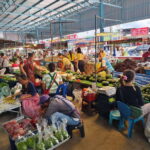
Then you head to a local market. This stop is more than sightseeing. You’ll be looking for the building blocks of Thai cooking: herbs, vegetables, aromatics, and the sauces and flavor bases that turn a home-cooked dish into Thai-style food. Even if you just wander for a bit before cooking starts, you’ll still come away with a better feel for what each ingredient actually does.
In practical terms, this makes you a better cook. You learn what to look for, what you’re likely substituting at home, and how Thai flavors are balanced. I also like that there’s time to look around, so you’re not herded like cattle from one booth to the next.
One small caution: this is not framed as a long, guided deep study of every single product. You may get a general orientation, but don’t expect a slow, product-by-product lecture that lasts the entire market portion.
You can also read our reviews of more shopping tours in Chiang Mai

The Organic Herb Garden: Where Your Food Starts Growing
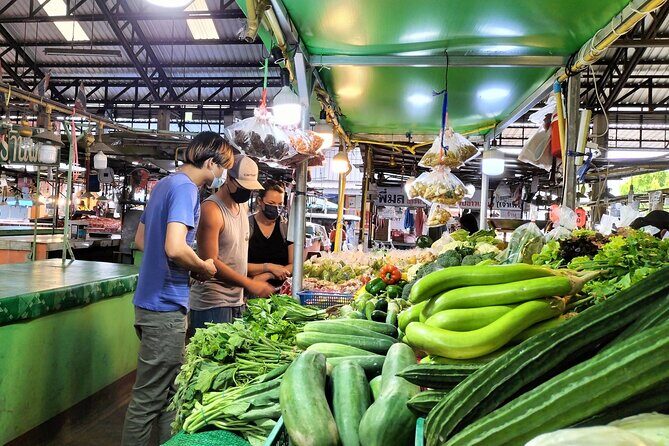
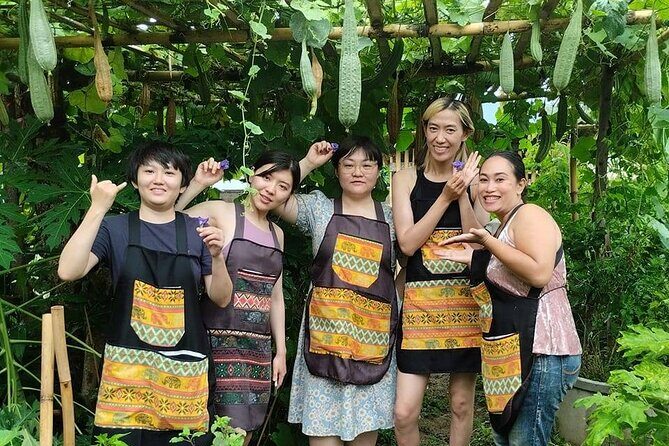
After the market, you go to an organic Thai herb garden. This is where the class shifts from eating culture to ingredient culture. You’ll see what your recipes are built from before you touch a stove.
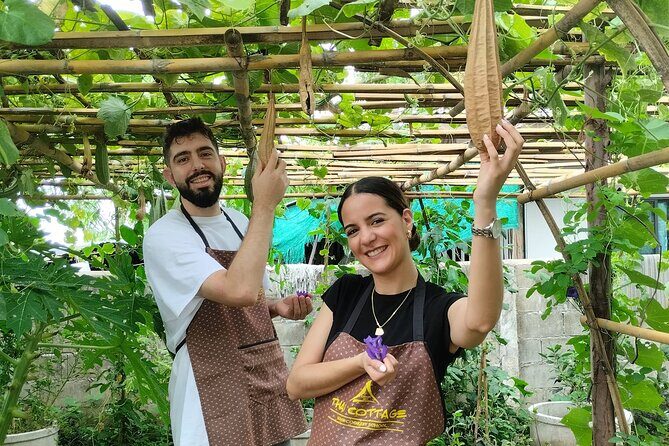
You’ll have the chance to discover herbs and vegetables that will be featured in your cooking, and then you’ll get to choose and learn how to prepare six Thai dishes, each from a different category. That choice matters. When you can select what you want to cook, you stay motivated the whole time. You also get a meal that feels like your taste, not the instructor’s best guess.
A lot of cooking classes say organic, but here it connects directly to your menu. You’re not just touring plants. You’re selecting ingredients that become part of the dishes you cook later. That connection is the difference between learning a recipe and learning Thai flavor logic.
Curry Paste From Scratch: The Skill You’ll Actually Use
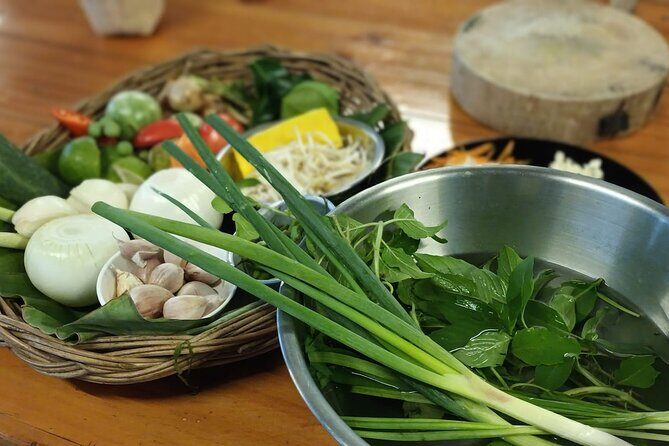
The curry paste part is one of the main reasons to book this class. You’ll make your own curry paste from scratch. That means you get to experience how Thai curry starts with grinding and mixing aromatics until the flavors click into place.
If you’ve only ever used curry paste from a jar, you’ll feel the difference. Homemade paste tastes fresher and more balanced, and it’s also a great way to understand how heat, sweetness, sour notes, and aromatics work together.
And because your market visit and herb garden choices feed into what you cook, you’re not guessing. You’ve seen the ingredients in the real world first. That makes the curry paste step feel less like following instructions and more like learning a method.
Practical tip: go in with a slightly patient mindset for the paste-making. This isn’t a microwave shortcut. It’s hands, effort, and small adjustments, and it’s exactly where your payoff comes from.
Sticky Rice With Mango: The Classic Sweet Finish
You’ll also learn the sticky rice component, specifically the traditional Thai sweet version served with mango. This is taught as part of the core experience, not just an afterthought.
Sticky rice can be tricky if you’ve never made it before, so learning the method matters. Once you get the basics down here, it becomes a dessert you can repeat, not something you only eat in restaurants.
The mango pairing also gives you a natural contrast: warm, chewy rice plus cool fruit. It’s a simple idea, but the flavors are very Thai. And since you’ll be cooking it yourself, it feels like a real win, not a “sample spoon” moment.
Choosing Your Dishes: Cooking With Options Instead of Suffering
Here’s what I really like: you can choose what you cook. The class is built around creating multiple dishes, and the menu options keep it from turning into a forced tasting parade.
The plan centers on cooking six Thai dishes across different categories, plus everyone learns sticky rice with mango and curry paste from scratch. In other words, you get structured core skills, but you’re still allowed to steer your meal.
In a small group (max 8), choice also reduces the risk of ending up with a dish you secretly dislike. You still get variety, but you’re not sacrificing personal taste to match a group template.
You can also read our reviews of more tours and experiences in Chiang Mai


How the Kitchen Works: Traditional Family-Style, Hands-On Stations

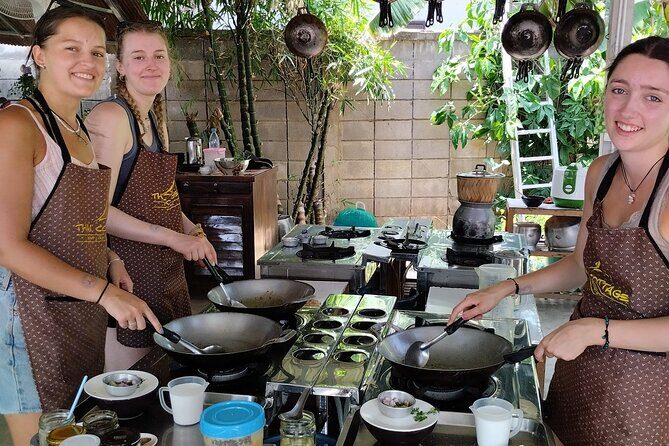
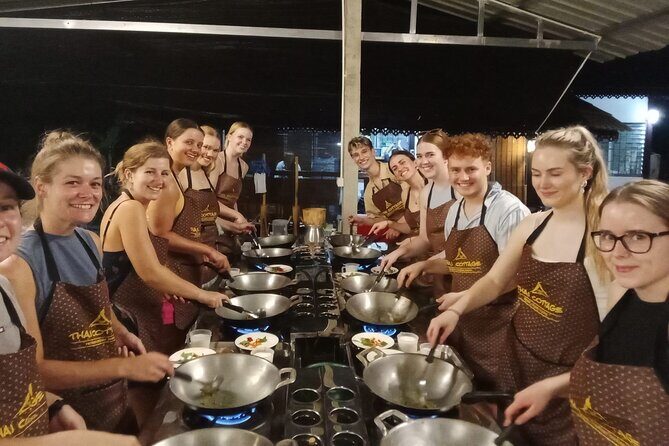
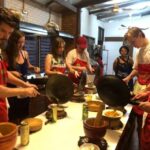
After the garden, you cook in a traditional Thai family-style setup in an organic kitchen garden. Everyone’s guided through techniques by the instructor, and the class uses an English-speaking approach with ingredients, recipes, and instruction materials included.
One recurring theme in the experience is pacing and clarity. The instructor coaching is designed to keep you on track, especially if you’re a beginner. You’re not thrown into the deep end with zero help.
Another practical detail: the hands-on setup aims to give you your own work area. That matters because cooking is physical. If you’re constantly waiting for space, you lose time and enthusiasm. With a group this small, you typically get more control over your own pan, pot, and prep work.
You’ll also get drinking water provided, and you’ll be eating what you make right after. That’s the best way to learn: cook, taste, adjust, repeat.
What You’ll Eat: Soups, Stir-Fry, Curry, and Dessert (Plus More)
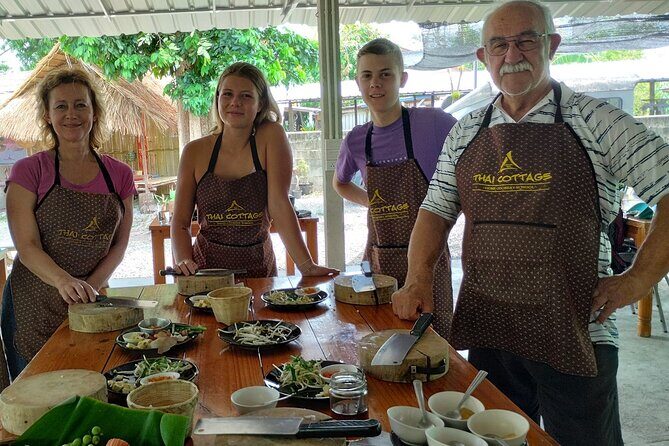
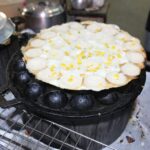
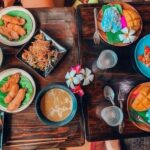
Most cooking classes “teach dishes,” but ThaiCottage has you cook a full meal. You’ll make a set of dishes that can include things like soup, stir-fry, curry, and dessert-style components, depending on your selections and the categories covered that day.
The big win is that you’re not just tasting random bites. You’re cooking enough to feel satisfied after. The meal structure also reinforces learning: soup teaches balance, stir-fry teaches heat control and timing, curry paste teaches flavor building, and sticky rice with mango teaches sweet finishing.
When you eat your own food, you start to connect flavors with techniques. That connection is what makes a class worth repeating at home.
Recipes You Can Actually Use: PDF Book After the Class
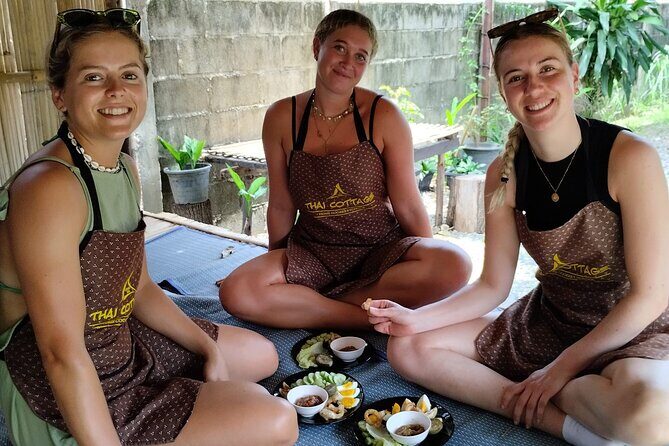
This experience isn’t just a one-day event. You’ll receive a PDF version recipe book online with the recipes and instructions. That’s important. A lot of classes give you a card with vague steps. Here, you get a real recipe reference so you can recreate what you learned.
For practical home cooking, curry paste and sticky rice are the two skills most likely to pay off. If you can make those, you can build many Thai-style meals without relying entirely on restaurant ordering.
A nice side effect: once you have the recipe guide, you can shop smarter. Instead of buying random “Thai curry stuff,” you can match ingredients to the dishes you actually cooked.
Price and Logistics: Why $35.86 Can Be Great Value
At $35.86 per person, the value depends on what’s included, and this one is packed. You’re paying for:
- Hotel round-trip transfer (within 3 km of the city area)
- Market visit
- Organic herb garden visit
- Ingredients, recipes, and English instruction
- Sticky rice with mango and curry paste from scratch learning
Compared to cooking experiences that charge more for only a single dish or a short demo, this offers a full workflow: see ingredients, pick ingredients, cook multiple dishes, then eat. The small group size (max 8) also helps justify the price because it usually means more individual attention and less waiting.
A possible trade-off is time. Because it’s only about four hours, the pace can be efficient. If you want a slow, ultra-scratch-from-nothing cooking day where every chopped bit is made fresh from start to finish, you might find some parts already partially prepared.
Still, for most people, the price feels fair because you’re learning core Thai techniques and leaving with recipes.
Weather and Pace: The Two Things to Plan Around
This is an outdoor-leaning experience. It requires good weather, and if it’s canceled due to poor weather, you’ll be offered a different date or a full refund. That’s a normal reality for garden-based learning, but it’s worth checking forecast before your day.
The second planning factor is pace. You’ll move from hotel to market, then to the organic garden, then into the kitchen, all within a tight window. That structure is great for keeping momentum, but it means you should avoid scheduling something intense right before or immediately after.
If you like your activities to breathe, give yourself a little buffer time.
Who Should Book This ThaiCottage Cooking Class?
You’ll likely love ThaiCottage if you:
- want a Thai cooking class that’s hands-on, not just watching
- care about ingredients and want a market + herb garden link
- enjoy learning key techniques like curry paste and sticky rice with mango
- prefer smaller groups (max 8) where you can actually cook
It might not be the best match if you want a super slow, fully from-scratch cooking retreat where every component is cooked and prepped from zero without any shortcuts. Even then, you’ll still learn useful methods, but your expectations should be set around efficiency.
Also, if you’re in Chiang Mai for a short time and want a single activity that covers both culture and cooking, this format does that well.
Final Call: Should You Book It?
Yes, I’d book ThaiCottage if your goal is practical Thai cooking skills with a real ingredient pathway. The standout pieces are the market start, the organic garden ingredient choices, and the core lessons: curry paste from scratch and sticky rice with mango. For the money, the included transfers, visits, ingredients, and recipes make it feel like a complete experience rather than a half-lesson.
Just plan around weather and accept that the class runs tight. If you show up ready to cook and taste, you’ll leave with both a fuller stomach and a better sense of how Thai flavors are built.
FAQ
How long is the ThaiCottage cooking class in Chiang Mai?
It lasts about 4 hours.
Do I get hotel pickup and drop-off?
Yes. Round-trip hotel transfers are included, but only within 3 km of the city area.
Is the class limited to a small group?
Yes. The maximum group size is 8 travelers.
What do I do during the market and garden parts?
You’ll visit a local market, then go to an organic Thai herb garden to see the herbs and vegetables used in the class and help choose ingredients for what you cook.
Can I choose which dishes to cook?
Yes. You get options and can choose dishes you want to cook, while still learning curry paste and sticky rice with mango.
What’s included with the cooking instruction?
You get ingredients, recipes, and instructions in English, plus drinking water and the market and organic garden visits. Alcoholic drinks are not included.
What will I learn to cook?
You’ll learn to make curry paste from scratch and sticky rice with mango, and you’ll cook six Thai dishes across different categories.
What if the weather is bad?
The experience requires good weather. If it’s canceled due to poor weather, you’ll be offered a different date or a full refund.