REVIEW · CHIANG MAI
Chiang Mai: Traditional Thai Cooking Class with Market Tour
Book on GetYourGuide →Operated by Chiang Mai Smart Cook · Bookable on GetYourGuide
A Thai cooking class that starts in a real market. You’ll get hands-on lessons in a traditional Lanna home—then sit down to eat what you made.
What I like most is the practical skill focus: you’ll learn a full curry paste from scratch routine and finish with classic dishes like sticky rice with mango.
The second big win is the way the market and ingredients connect to the cooking—herbs, spices, and vegetables aren’t just shown, you learn what they do and why they matter. One thing to consider: the meal at the end is satisfying, but if you expect a guaranteed full dinner-level portion, you might still want a little extra later.
In This Review
- Key Things That Make This Class Worth Your Time
- A Lanna Home Kitchen Beats a Demo-Only Class
- Your 4-Hour Flow: Pickup, Market, Then 6 Dishes
- Hotel pickup and timing
- The market portion comes first
- Then the cooking portion
- The Market Tour: Herbs, Spices, and Real-World Ingredient Choices
- Curry Paste From Scratch: The Skill That Makes Everything Click
- Sticky Rice With Mango: Learning Texture, Not Just a Sweet Dish
- The Cooking Stations and How the Class Feels in Practice
- Spice control
- Eating What You Cook: Meal Size, Spice Level, and Satisfaction
- What You Get for $32: Real Value for the Skills Included
- English Instruction and Instructor Energy
- Practical Tips Before You Go
- Wear and pack smart
- Know the rules
- Transport reality check
- Should You Book This Chiang Mai Cooking Class?
- FAQ
- FAQ
- What’s the price and duration of this Chiang Mai cooking class?
- Does the class include a market tour?
- How many dishes will I cook?
- Do I make curry paste from scratch?
- Is there sticky rice with mango in the menu?
- Is hotel pickup included?
- What language is the instruction in?
- Is alcohol included in the price?
- Is free cancellation available?
Key Things That Make This Class Worth Your Time
- Market-first approach so ingredients make sense before the stove turns on
- Curry paste from scratch instead of relying on shortcuts
- Hands-on cooking for 6 dishes at stations set up for you
- Sticky rice with mango to learn one of Thailand’s most famous sweet textures
- Small-group feel with instructors who help throughout (names you may hear include Tu, Tuu, Flook, Wave, Balloon, Mew, and Kat)
- You eat the meal you cook, not just sample bites
A Lanna Home Kitchen Beats a Demo-Only Class
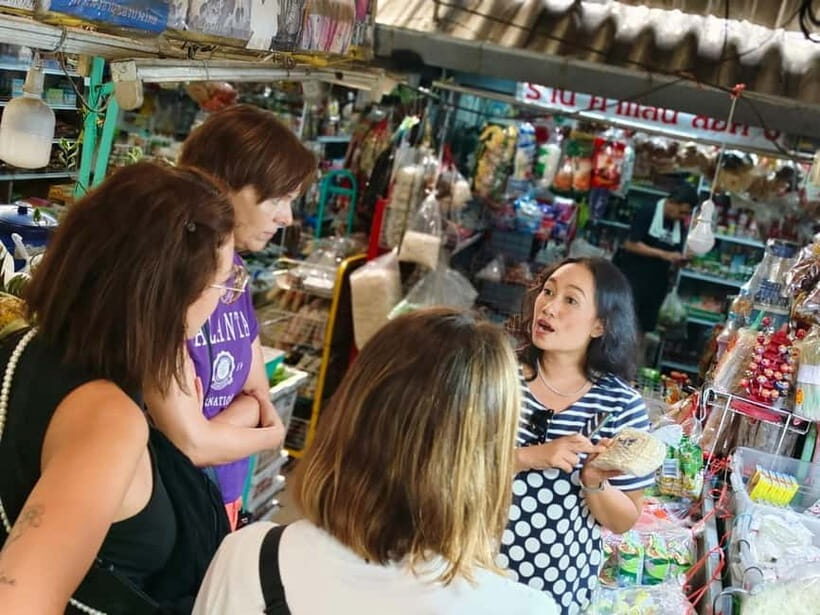
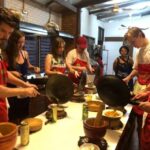
This isn’t the typical show-and-watch setup. The experience runs in a traditional Lanna home in the old city area, close to the Chiang Mai Gate Market. That setting matters because it turns cooking into something you do with your hands—not something you observe from the sidelines.
Another reason I’m into this format: the class is built for real participation. You’re not juggling confusion while everyone else cooks. The stations are set up, and you’re guided step-by-step through each dish. Reviews repeatedly mention that instructors keep things organized and actively help, including with the little moments that usually slow people down—timing, texture, and how to adjust flavors as you go.
Finally, the class structure helps you learn what Thai cooking actually is: balancing salty, sour, sweet, and heat using fresh ingredients. When you leave with a recipe book too, it becomes more than a fun afternoon. It turns into a repeatable skill.
You can also read our reviews of more shopping tours in Chiang Mai

Your 4-Hour Flow: Pickup, Market, Then 6 Dishes
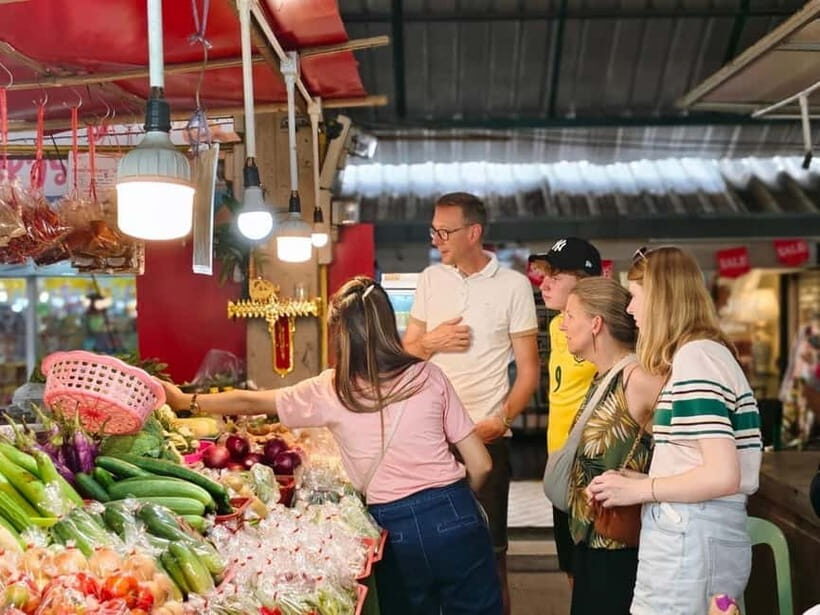
The rhythm of the class is simple and efficient: pickup from your hotel, a market tour to learn ingredients, and then a cooking session designed around multiple dishes.
Hotel pickup and timing
You’ll get hotel pickup, and you should plan to wait in the lobby 15–30 minutes before scheduled time. Pickup timing can vary, and depending on the day, transportation may feel a bit bumpy and hot—so dress for warm weather.
The market portion comes first
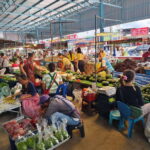
You start with a local market visit so you see herbs, spices, and vegetables before you cook. This order is smart. When you later touch those aromatics in your curry paste, it’s easier to remember what each one contributes.
Then the cooking portion
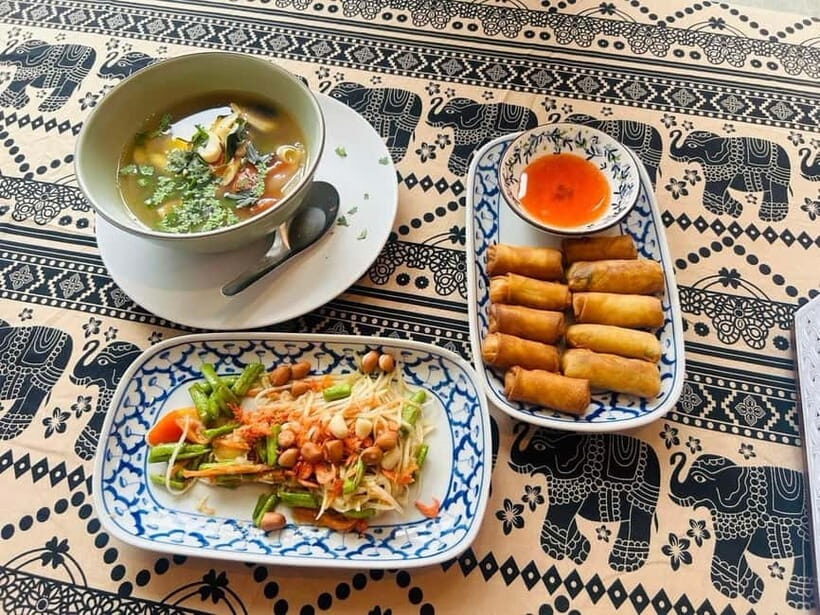
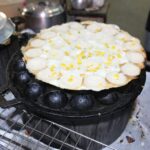
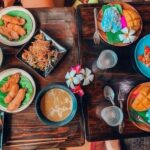
The core of the class is cooking 6 different traditional Thai dishes. One of the key highlights is making curry paste from scratch. Another featured dish is sticky rice with mango. The class also includes a very local Thai meal style, and the menu is designed so you end with a full spread from what you prepared.
By the end, you eat the dishes you cooked. Several people mention there’s plenty of food, but at least one person felt a bit hungry afterward—more on that later.
You can also read our reviews of more tours and experiences in Chiang Mai


The Market Tour: Herbs, Spices, and Real-World Ingredient Choices
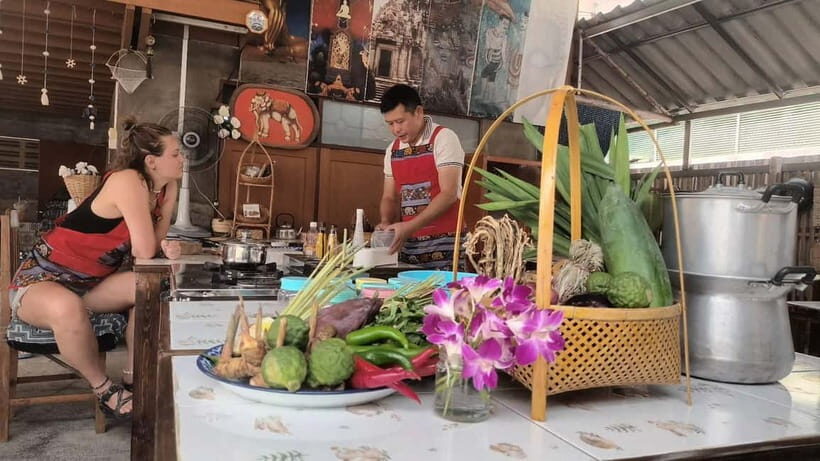
The market visit isn’t a quick look-and-take photo stop. It’s structured as an ingredient lesson, with an emphasis on Thai herbs, spices, and vegetables—what they look like, how they’re used, and how they show up in Thai flavors.
This part is valuable because Thai cooking is ingredient-driven. Many flavors come from fresh aromatics and the way they’re combined, not just from a single sauce or paste. Seeing the ingredients in context helps you understand what to buy (and what to substitute) when you cook later at home.
A few practical notes based on how the day feels:
- Expect the market portion to be warm and active. Wear comfortable clothes.
- Ask questions while you’re there. The market tour is when the instructor can explain which ingredients matter most for taste and balance.
- If you have a sensitive palate, mention it. Instructors are used to adjusting spice levels, and you won’t be forced into super-hot dishes only.
Curry Paste From Scratch: The Skill That Makes Everything Click
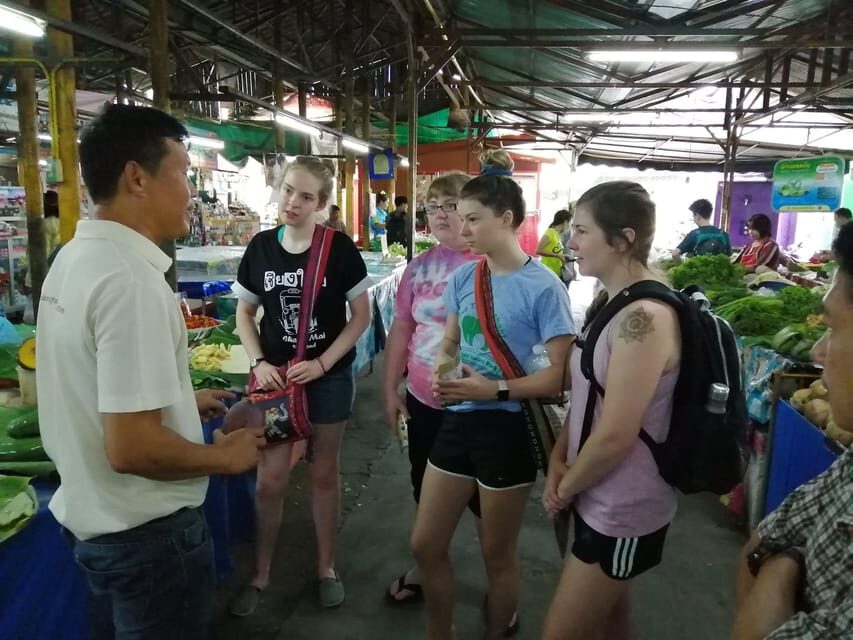
Curry paste is where most people either learn a real technique—or end up with a flavor that tastes close but not quite right. Here, the highlight is that you’ll make the curry paste from scratch, not open a jar and hope.
What I like about this approach is that you’re learning a process, not just a recipe. Thai curry paste is about grinding and blending aromatics until they combine into a fragrant base. Once you’ve built that base yourself, you understand why the curry tastes different from one brand to another.
In your class, curry paste is taught as a key dish step, which means you likely get guidance on:
- how the paste should look and smell as it comes together
- how to work with the paste during cooking
- how the flavor base connects to the final curry
Even if you’re a beginner, curry paste from scratch is the moment that gives you confidence. It’s also the one thing you’ll want to repeat at home because it directly affects results.
Sticky Rice With Mango: Learning Texture, Not Just a Sweet Dish
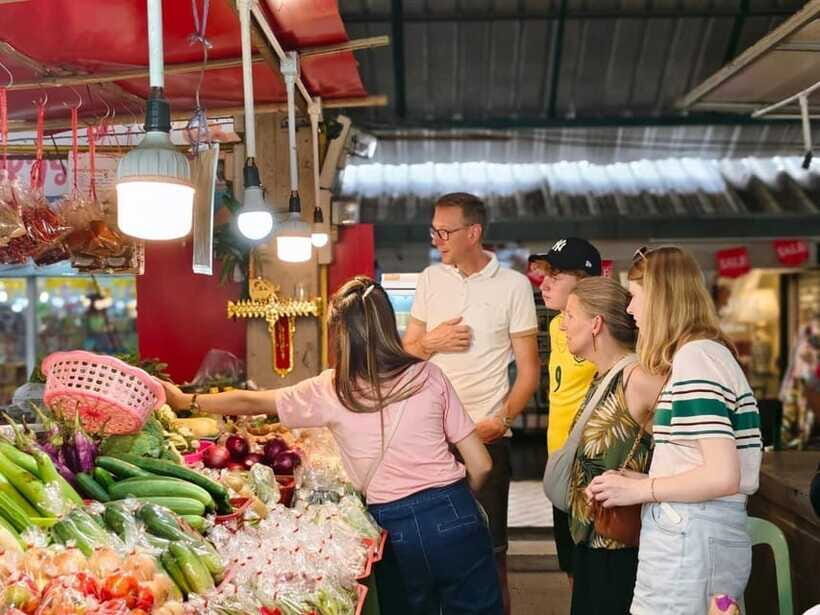
Sticky rice with mango is one of those dishes that sounds simple until you try to recreate it. The magic is in texture and timing, and this class specifically includes making sticky rice with mango.
This is a smart inclusion for a few reasons:
- It balances the savory part of the class with a classic Thai dessert.
- You learn how Thai sweets depend on texture and proportion, not just sweetness.
- It gives you another dish you can confidently serve when you want a Thai-food “wow” effect.
If you’ve had sticky rice that turned out hard or dry elsewhere, this is the kind of lesson that helps you fix the most common issues. You’re not just tasting; you’re learning how to produce the right consistency.
The Cooking Stations and How the Class Feels in Practice
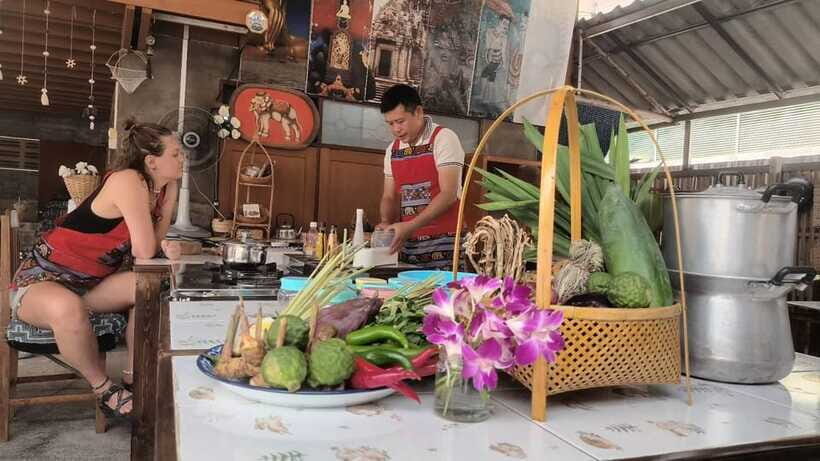
A good class doesn’t just teach; it manages the chaos. This experience seems built around organization and support. Many participants mention that instructors were funny, patient, and helpful during every step.
You’ll also likely notice small details that improve the experience:
- your cooking stations are set up for you
- you’re guided through steps without feeling lost
- stations and tools are handled so the lesson stays moving
One neat detail that shows up in reviews: after cooking, the dishes are taken care of and cleaned up for you, which helps the class keep a relaxed pace.
Spice control
Thailand has a range of heat levels, and you can get stuck when you’re thrown into dishes that are too spicy too fast. The class includes dish variety, and at least one review specifically notes that not all dishes are extremely spicy. That means you’re more likely to enjoy everything rather than spend the whole session avoiding chili.
Eating What You Cook: Meal Size, Spice Level, and Satisfaction
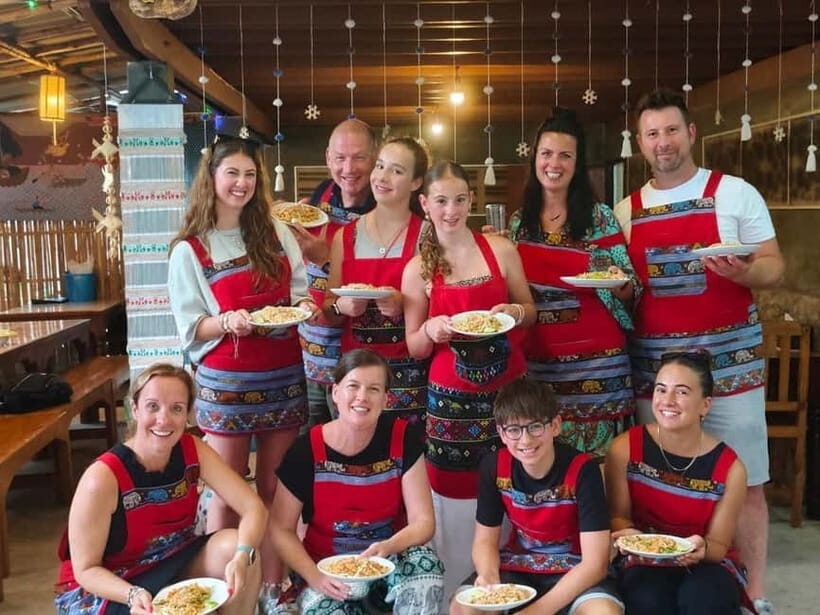
You end by eating the dishes you prepared. That’s one of the best parts because it closes the loop: you do the work, then you taste your results right away.
Most people describe it as a full, satisfying meal. Still, there’s one clear consideration: one review mentions leaving still feeling a little hungry and expecting larger portions—especially if you were counting on the class meal to cover dinner.
So here’s my practical advice:
- If you’re booking this as your only meal for the day, plan to get a small snack either before or after.
- If you’re pairing it with lunch/brunch plans, it should work well, since the class includes food but portion size may vary person to person.
What You Get for $32: Real Value for the Skills Included
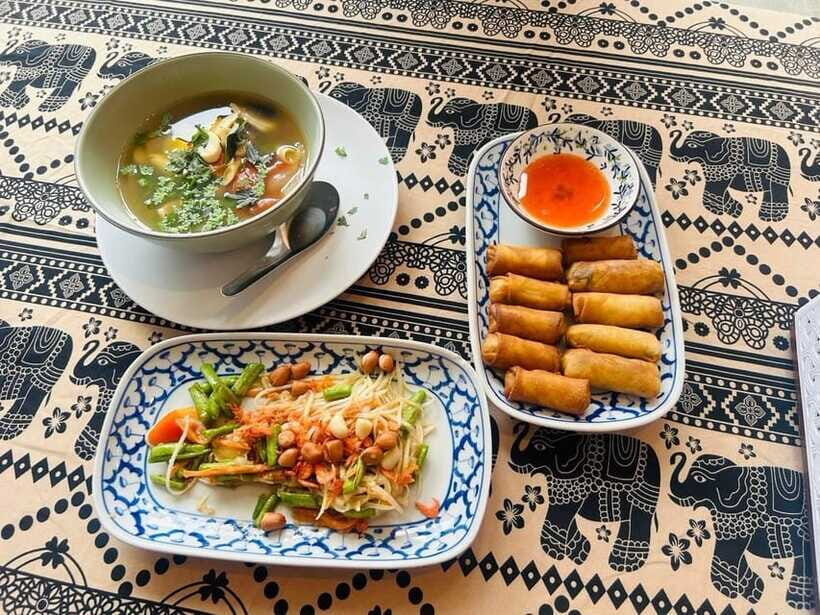
At around $32 per person for a 4-hour class, the value is in what’s included, not just the price tag. You’re paying for:
- hotel pickup
- a market tour that teaches ingredients
- cooking instruction for 6 dishes
- ingredients for cooking
- a recipe book
This adds up because you’re covering multiple learning modes in one go: you see ingredients in the market, then you handle them in cooking, then you eat what you produced. Many classes charge less but leave you with a shorter, more passive experience.
Also, alcohol isn’t included. That’s usually fine, because the day is structured around learning and eating, and you’ll probably want to stay fully clear-headed—especially when you’re making curry paste and managing texture.
English Instruction and Instructor Energy
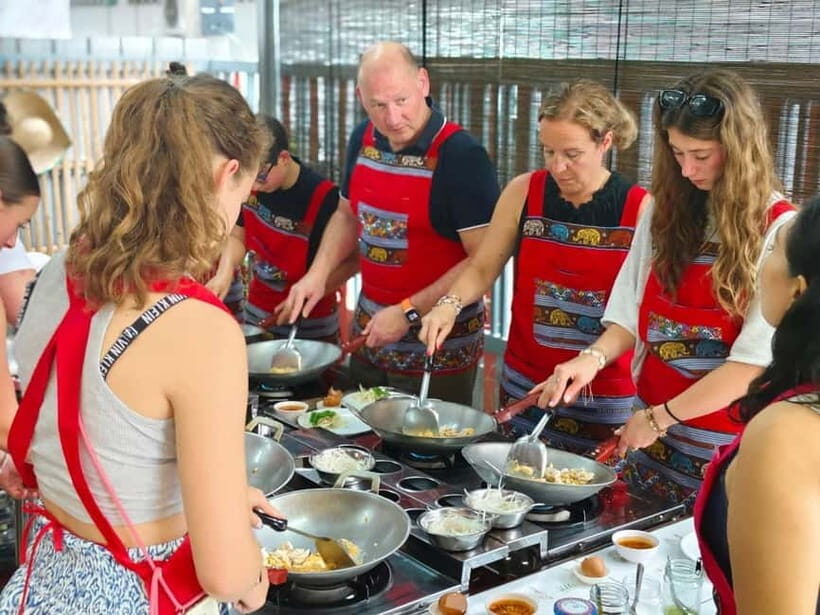
The class runs in English, which is a big deal if you don’t read Thai. What also matters is the teaching style. Reviews repeatedly mention instructors who are funny, encouraging, and supportive, with people calling out names like Tu, Tuu, Flook, Wave, Balloon, and Mew.
That instructor energy isn’t just personality. It affects how quickly you learn:
- when you feel comfortable asking questions
- when you get corrected mid-step
- when timing and texture feel manageable
One review also notes a small class feel, which usually means you get more direct attention—especially if you’re new to cooking with fresh herbs and spices.
Practical Tips Before You Go
This is one of those tours where small preparation helps a lot.
Wear and pack smart
- Wear comfortable clothes you can move in and get a little warm.
- Plan for sun and heat during the market portion.
- Bring a positive attitude about getting your hands involved.
Know the rules
- Alcohol and drugs are not allowed.
- The tour isn’t suitable for children under 5.
Transport reality check
Pickup and transport are included, but the ride to/from the market can be bumpy depending on the vehicle used that day. If you’re sensitive to rough rides, consider taking that into account.
Should You Book This Chiang Mai Cooking Class?
Yes, this is a strong choice if you want practical Thai cooking skills, not just a fun food outing.
Book it if:
- you want to learn curry paste from scratch (the core technique that improves everything)
- you like a market-to-kitchen flow that teaches ingredients in context
- you’re excited to cook and then eat a full set of dishes over a focused 4-hour session
- you’d value a class in English with hands-on coaching and small-group attention
Skip it or think twice if:
- you’re expecting the end meal to be a guaranteed full dinner portion with no follow-up needed
- you’re extremely sensitive to heat and bumpy rides (the day can involve both)
If you’re doing Chiang Mai on a tight schedule and want one experience that teaches you something you can actually repeat later, this is one of the best bets at this price.
FAQ
FAQ
What’s the price and duration of this Chiang Mai cooking class?
It costs about $32 per person and lasts 4 hours.
Does the class include a market tour?
Yes. You’ll visit a local market to learn about Thai herbs, spices, and vegetables before cooking.
How many dishes will I cook?
You’ll cook 6 different traditional Thai dishes.
Do I make curry paste from scratch?
Yes. Curry paste from scratch is a key part of the class.
Is there sticky rice with mango in the menu?
Yes. Sticky rice with mango is included in what you’ll learn to cook.
Is hotel pickup included?
Yes. Hotel pickup is included, and you should wait in the lobby 15–30 minutes before pickup.
What language is the instruction in?
Instruction is in English.
Is alcohol included in the price?
No. Beer and alcohol are not included.
Is free cancellation available?
Yes. You can cancel up to 24 hours in advance for a full refund.