REVIEW · CHIANG MAI
Team Aim Thai Cooking School (#1 Cooking Class in Chiang Mai)
Book on Viator →Operated by Local Tours Center · Bookable on Viator
Woks, spices, and a market tour in one sitting. You’ll get a guided market stop plus a hands-on open-air cooking class, built around learning ingredients and making multiple Thai dishes with your own adjustable heat level. Two things I really like are the chance to shop with Cindy’s ingredient commentary in the market, and the one-person-per-wok format that keeps you actually cooking (not watching).
One caution: these sessions are long enough that you should treat them as your main meal plan, not a quick add-on, and the free transport only covers a small area near the Old City.
In This Review
- Key points that make this cooking class worth your time
- Why This Market-to-Wok Plan Works in Chiang Mai
- Somphet Market: Shopping for Flavor First
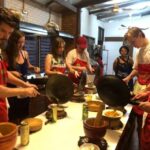
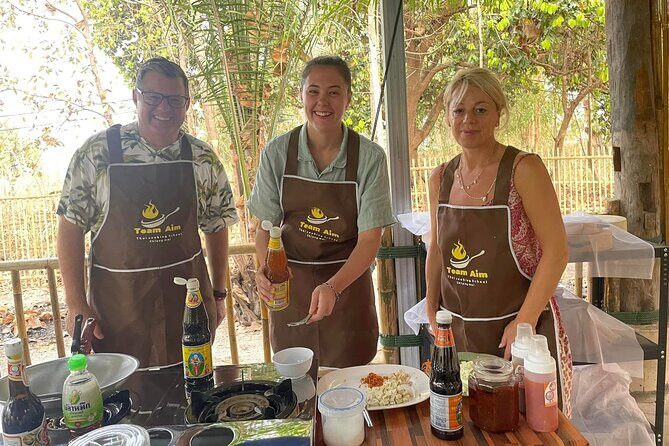
- The Open-Air Kitchen Setup and the One-Wok Rule
- What You’ll Cook: Spring Rolls, Curries, Thai Tea, and Sticky Rice Mango
- A practical note on cooking and eating
- Why curry paste is a big deal here
- Morning vs Evening Timing: Pick the Session That Fits Your Day
- Price and Value: What You’re Really Getting for $34.01
- Transportation, Meeting Point, and Where Pickup Really Helps
- How to Choose Your Menu Like a Pro
- Who This Cooking Class Is Best For (and Who Might Skip It)
- Should You Book Team Aim Thai Cooking School in Chiang Mai?
- FAQ
- FAQ
- Where is the meeting point for the cooking class?
- Does the class include pickup?
- How long is the cooking class?
- What are the session times?
- What do I cook during the class?
- Can I choose the dishes I cook?
- Can the dishes be made vegetarian or vegan?
- Can I adjust how spicy the food is?
- Is there anything included besides cooking?
- What should I expect regarding tickets?
Key points that make this cooking class worth your time
- Somphet Market shopping with guided ingredient explanations before you cook
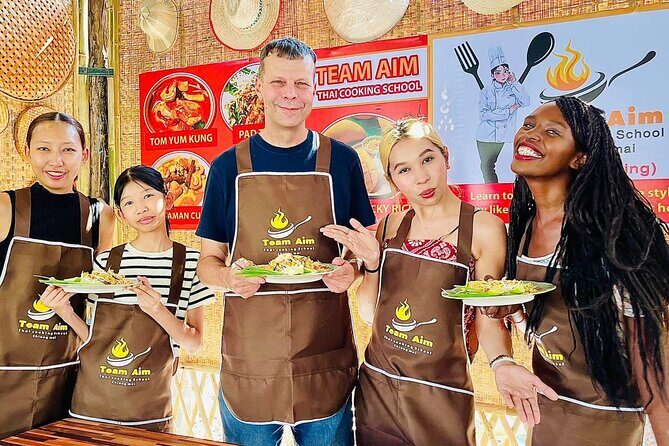
- Small group size (2–9 people) for hands-on attention
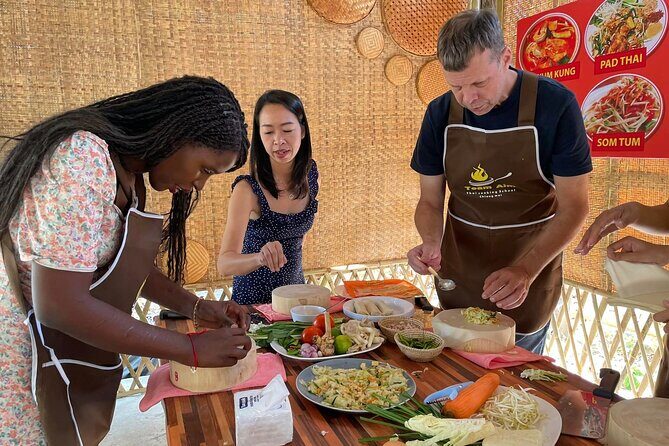
- Open-air kitchen setup so you can work comfortably and see what you’re making
- Choose your menu: cook 4 dishes + 1 curry paste + sticky rice with mango
- Vegetarian or vegan options plus you control how spicy you go
Why This Market-to-Wok Plan Works in Chiang Mai
If you love Thai food, this is the kind of class that helps you understand why it tastes the way it does. You’re not just tasting finished dishes. You’re learning how the ingredients connect, from what you pick up at the market to the order you cook things in the wok.
The value is in the structure. You start with shopping—learning what to look for and what each ingredient is doing—then you move to the kitchen and put it all into practice right away. It also helps that the class stays small, capped at 9 people. That size matters. In a big class, you can get stuck waiting. Here, you’re in the flow of cooking.
You’ll also get a practical skill you can reuse later. Many visitors leave with a few flavor notes. You can leave with a working recipe system: how to make curry paste, how to balance sweet-salty-sour flavors, and how to adjust heat to your own comfort.
You can also read our reviews of more cooking classes in Chiang Mai

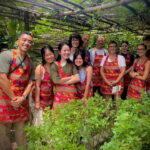
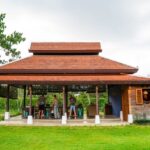
Somphet Market: Shopping for Flavor First
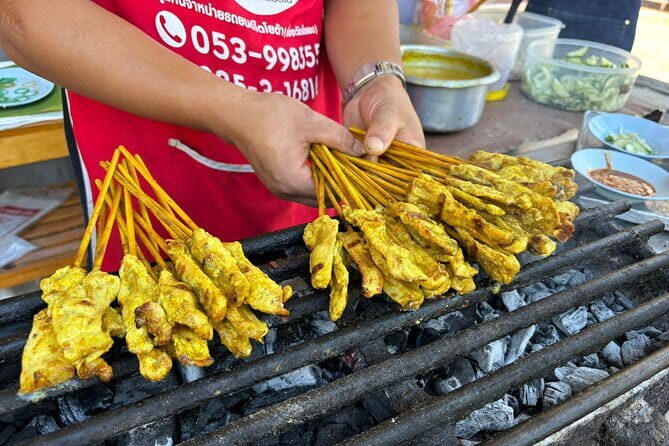
The experience begins at Somphet Market, with your guide taking you through what to buy and why. This is one of the most useful parts of any Thai cooking class, because Thai cooking depends heavily on fresh aromatics and specific staples.
Your market time isn’t random wandering. You’re learning with a point. You’ll shop the ingredients that match what you’ll cook, and you’ll get commentary that connects the dots: which items go into curry paste, what herbs and seasonings support Thai salads, and what helps a stir-fry or noodle dish taste like itself.
A detail I’d take seriously before you go: come ready to see a lot of ingredients quickly. Markets are fast-paced. The guide helps you keep up, and it saves you from the common mistake of thinking you can recreate Thai flavors later without knowing what you bought and how it’s used.
The Open-Air Kitchen Setup and the One-Wok Rule
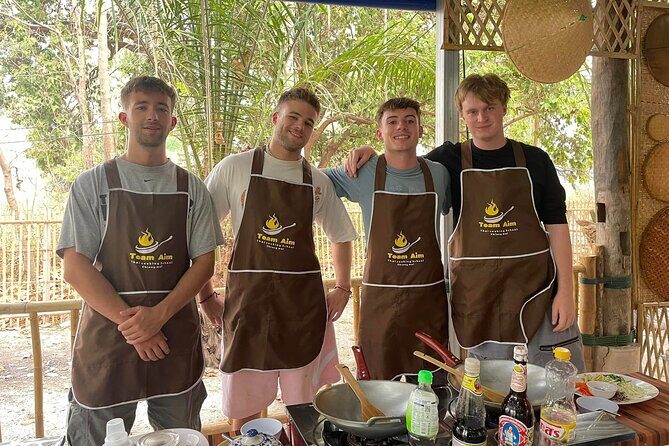
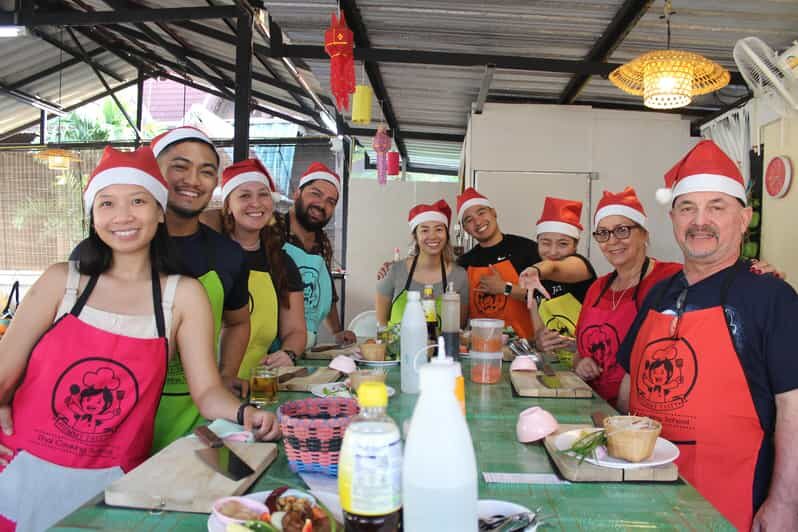
After the market, you drive to the school. Before the cooking starts, you’ll have a welcome drink—tea or coffee—so you’re not jumping straight into chopping and stirring while your energy is still catching up.
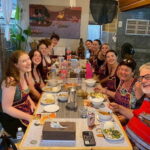
Then comes the key difference in how you cook: one person per wok. Everyone works. You’re not stuck on the sidelines holding a bowl. You’ll cook each dish yourself, hands-on, while the instructor guides you through the steps.
That approach shows up again in the included materials. You’ll receive a step-by-step recipe book, which is helpful because cooking classes move quickly. When you’re focused on the food in front of you, it’s easy to forget how you did something five minutes later. The printed guide gives you a way to repeat the dishes back home.
The school also provides drinks and essentials during the class, including drinking water, tea and coffee, plus tea and fruit in season. That matters because you’ll be eating a lot, and you’ll need to keep moving—especially if you pick the slightly more intense menu options.
What You’ll Cook: Spring Rolls, Curries, Thai Tea, and Sticky Rice Mango
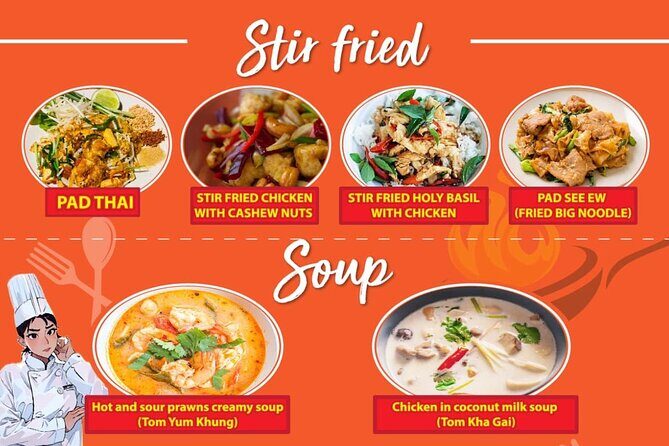
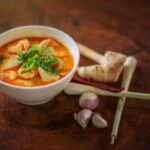
This class is built for variety. The lineup includes spring rolls, soup, a stir-fried dish, curry paste, curry, Thai traditional salad, and Thai tea. You’ll also choose sticky rice with mango.
Here’s how the menu choice works: you can choose 4 dishes + 1 curry paste + sticky rice with mango. The nice part is that everyone can end up with a different menu. So even if you’re traveling with friends, you won’t all have identical plates. You’ll still learn the same core techniques, but you might take home different recipes to compare later.
Vegetarian and vegan cooks have a real advantage here, because the class allows you to make all dishes vegetarian or vegan. You’ll also be able to adjust spice—make things spicy or mild by yourself. That’s not a throwaway promise. In Thai cooking, heat level is tied to spice paste and specific chili choices. Being able to control it lets you replicate the flavor balance more accurately later.
A practical note on cooking and eating
You’re meant to eat what you make. The class is designed so you can sample everything you produce during the session, and you can also take food away if you want.
That leads to an honest planning tip: you should treat this like a full meal. In my view, trying to squeeze this in after breakfast or dinner is a fast way to feel overly full before you’ve even finished cooking.
You can also read our reviews of more tours and experiences in Chiang Mai



Why curry paste is a big deal here
Many cooking classes include curry as a finished dish. This one includes making curry paste. Curry paste is one of the foundations of Thai flavor. When you make it yourself, you’ll understand the role of aromatics and how the final texture affects the curry. It’s also the part you can bring home most effectively, because you can use the paste later to recreate the taste without needing every Thai ingredient again from scratch.
Morning vs Evening Timing: Pick the Session That Fits Your Day
You’ve got two course options. The morning course runs roughly 9:00 am to 2:30 pm, with pickup in the 8:20 am to 8:55 am window. The evening course runs roughly 4:30 pm to 9:00 pm, with pickup in the 3:30 pm to 3:55 pm window.
How this matters in real life: both sessions are long enough that you should plan your day around them. If you choose the morning session, you’ll likely end mid-afternoon—perfect for a lazy dinner or a night market stroll afterward. If you choose the evening session, you can spend the daytime exploring, then shift into cooking before dinner time.
You also get something useful for the food-lover mindset: the course includes a lot of eating, and Thai tea is part of it. That means you won’t be left wondering if you’ll get enough to feel satisfied. You’ll leave with full stomach memories, plus a recipe book for the next time cravings hit.
Price and Value: What You’re Really Getting for $34.01
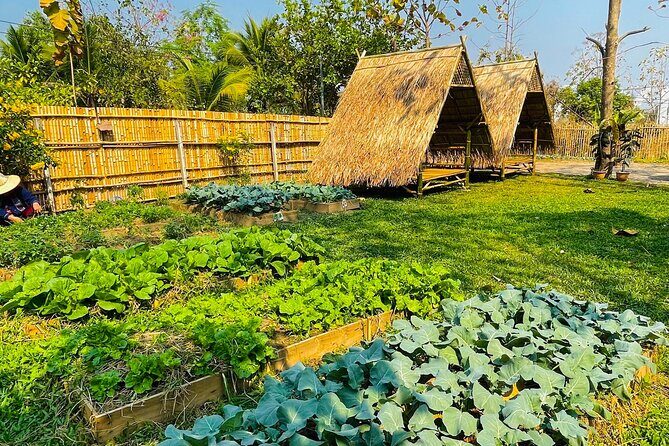
At $34.01 per person for about 5.5 hours, this class sits in the value range you want in Chiang Mai—especially because it includes more than just cooking. You’re paying for a complete loop:
- Market visit plus ingredient shopping
- All ingredients for cooking
- Step-by-step recipe book
- Drinks (water, tea, coffee) and tea/fruit in season
- Small class size with one person per wok
- Free round-trip transportation within 2.5 km of Chiang Mai Old City
- Free Wi-Fi internet
When you price these elements separately, the “per person” number feels more reasonable. You’re not just paying for a chef to guide you through one dish. You’re getting multiple dishes, curry paste work, and a structured learning experience. Add the small-group attention and the hands-on format, and it becomes less like a show and more like a skill-building session.
One more point: booking tends to happen in advance (it averages 41 days). If you’re traveling during a busy season, plan to reserve early so you can choose the morning or evening slot that matches your schedule.
Transportation, Meeting Point, and Where Pickup Really Helps
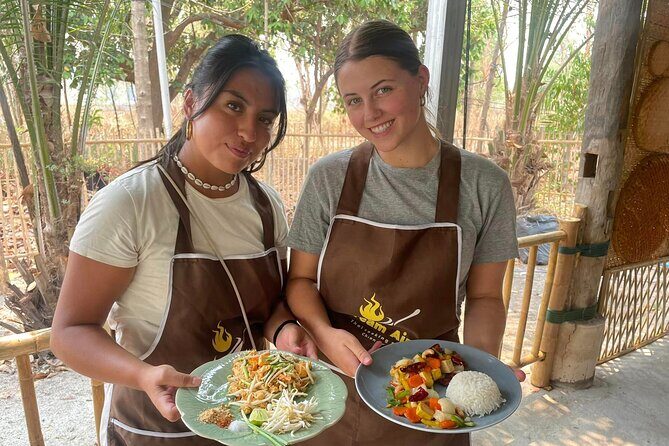
Pickup is offered, but the free round-trip transport only covers within 2.5 km of Chiang Mai Old City. If your hotel is farther out, you might need to rely on the meeting point instead.
The start point is McDonald’s at 17/1 Kotchasarn Rd, Tambon Chang Khlan, Amphoe Mueang Chiang Mai, Chang Wat Chiang Mai 50100, Thailand. The activity ends back at the meeting point.
Also keep in mind the experience uses a mobile ticket. That’s usually easy, but it’s still worth checking your phone battery before you head out.
How to Choose Your Menu Like a Pro
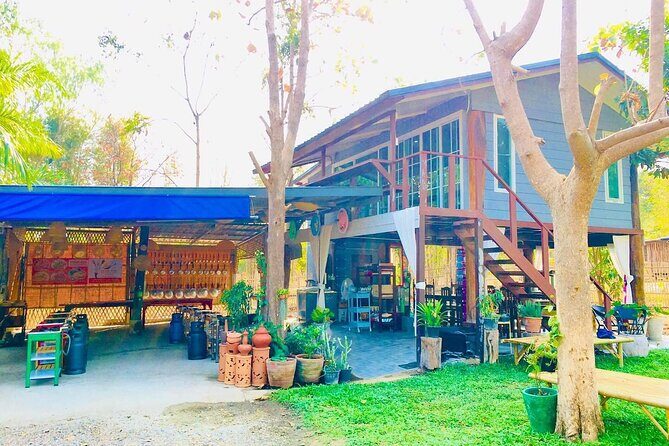
You’ll be choosing a menu from the dish set, with the structure of 4 dishes plus curry paste plus sticky rice with mango. Your best move is to think in terms of techniques:
- If you want something refreshingly light, pick the Thai traditional salad.
- If you want bold flavors you can recreate later, include curry paste and curry.
- If you want a snack that’s fun and crunchy, spring rolls are a great choice.
- If you want a comforting Thai staple, choose soup or stir-fried and noodle-style options from what’s available.
Because the class allows vegetarian/vegan substitutions and spice adjustment, you’re not locked into one version. You can tailor heat level and ingredient choices to your dietary needs.
One strategy I’d use: choose at least one dish that you already like from restaurants, then pick one that sounds exciting but you rarely order. That way you leave with both comfort and novelty.
Who This Cooking Class Is Best For (and Who Might Skip It)
This experience is a great fit if you:
- Want to learn Thai cooking beyond tasting
- Enjoy markets and want ingredient context, not just food pictures
- Prefer a small group where you’ll get real hands-on time
- Want recipes you can actually use later, with a step-by-step book
It may not be the best fit if:
- You hate long meal-style activities and want something shorter
- You’re far beyond the Old City area and don’t want to plan around the meeting point
Also, if you’re sensitive to spicy food, don’t worry—but do choose your spice level early in the process so everything stays comfortable for you.
Should You Book Team Aim Thai Cooking School in Chiang Mai?
In my view, this is one of the smarter cooking-class choices in Chiang Mai if your goal is learning. The market start, the open-air kitchen, the one-wok hands-on structure, and the option to make vegetarian/vegan dishes plus control spice level all point to a class designed for real participation.
I’d book it if you’re the type who likes to understand ingredients and wants a recipe book you’ll actually cook from again. I’d also book it if you want a full food day that doesn’t require you to hunt for dinner plans afterward.
Skip it only if your schedule can’t handle a long session or if your hotel is too far from the Old City and you don’t want to work around the meeting point.
FAQ
FAQ
Where is the meeting point for the cooking class?
The class starts at McDonald’s, 17/1 Kotchasarn Rd, Tambon Chang Khlan, Amphoe Mueang Chiang Mai, Chang Wat Chiang Mai 50100, Thailand.
Does the class include pickup?
Pickup is offered. Free round-trip transportation is available within 2.5 km from Chiang Mai Old City.
How long is the cooking class?
The duration is about 5 hours 30 minutes (approx.).
What are the session times?
There is a morning course from 09:00 am to 02:30 pm, and an evening course from 04:30 pm to 09:00 pm.
What do I cook during the class?
You’ll cook spring rolls, soup, stir-fried dishes, curry paste, curry, Thai traditional salad, and Thai tea.
Can I choose the dishes I cook?
Yes. You can choose 4 dishes plus 1 curry paste and sticky rice with mango, and participants can make different menus.
Can the dishes be made vegetarian or vegan?
Yes. All dishes can be made vegetarian or vegan.
Can I adjust how spicy the food is?
Yes. You can adjust the spice level to make it spicy or mild.
Is there anything included besides cooking?
Yes. The course includes all ingredients, a step-by-step recipe book, drinking water, tea and coffee, tea and fruit in season, free Wi-Fi, and you can eat your food or take it away.
What should I expect regarding tickets?
You’ll use a mobile ticket, and confirmation is received at the time of booking.