REVIEW · CHIANG MAI
Local Farming Experience in Chiang Mai, Thailand
Book on Viator →Operated by Hang Tueng Farmstay And Workshop Chiang Mai · Bookable on Viator
Rice, mud, and buffalo water in one morning. This Hang Tueng Farm experience is interesting because it teaches you how rice actually grows, then puts you to work with the plants. I also love the chance to feed and shower the Riam Thai buffalo, which makes the day feel like real farm life instead of a staged demo. The main drawback to consider is that you will get messy, and the whole schedule depends on good weather.
You’ll spend about 3 hours with Hang Tueng Farmstay And Workshop Chiang Mai, in a group capped at 10 travelers, so it stays personal. Your main guide in the rice work is Uncle Serd, a local farmer who shows you the steps from nursery to planting. The tour includes lunch and an herbal drink, but private transportation is not included, so plan how you’ll reach Hang Tueng Farm.
In This Review
- Key highlights to know before you go
- What a 3-Hour Hang Tueng Farming Workshop Really Covers
- Riam Thai Buffalo: Grass Harvesting and Shower Time
- Rice Nursery Work: Uprooting, Mud-Management, and Bamboo Tying
- Planting Rice With Uncle Serd in the Field
- The Signature Lunch Set: Pad Thai Sauce, Green Curry Rice, and Herbal Drinks
- Price, Group Size, and Getting There From Chiang Mai
- What to Expect on the Ground: Mess, Water, and a Real Farm Rhythm
- Who Should Book This Rice and Buffalo Workshop
- Should You Book Hang Tueng’s Farming Workshop in Chiang Mai?
- FAQ
- What is the price of the local farming experience?
- How long does the experience last?
- What’s included in the ticket?
- What food and drinks will I get?
- Where do I meet, and where does it end?
- Is transportation included?
- How big is the group?
- What is the cancellation policy?
Key highlights to know before you go
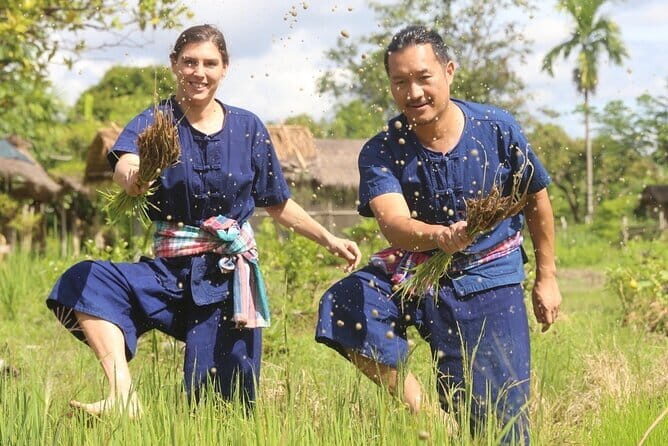
- Riam Thai buffalo time: harvest grass for feed and shower the buffalo
- Step-by-step rice work: uproot seedlings, kick mud out, and tie them with bamboo rope
- Planting with Uncle Serd: learn the farm routine in the field, not just in theory
- Small group vibe: up to 10 travelers, so you get attention while you work
- Farm-focused lunch set: herbal drink plus a meal built around local ingredients
What a 3-Hour Hang Tueng Farming Workshop Really Covers
Think of this as a hands-on “farm skills in miniature” day. The flow is simple, but the tasks are real: you’ll move from buffalo care to rice nursery work, then into planting rice in the field with a local farmer (Uncle Serd).
The timing matters. At around 3 hours, you won’t be doing a whole farm season. Instead, you do the most teachable steps: how farmers handle seedlings, why they prep them before planting, and how the feeding routine connects the farm animals to the land. That fast, focused format is a big part of the value for most people visiting Chiang Mai.
You’ll also want to go in with the right mindset. This is not a sit-and-watch tour. Expect physical work like uprooting, handling muddy seedlings, and tying bundles. If you’re the kind of traveler who likes learning by doing, you’ll enjoy this pace.
You can also read our reviews of more tours and experiences in Chiang Mai

Riam Thai Buffalo: Grass Harvesting and Shower Time
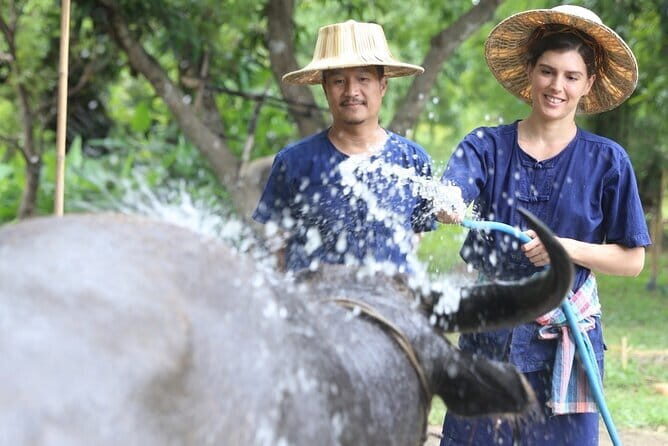
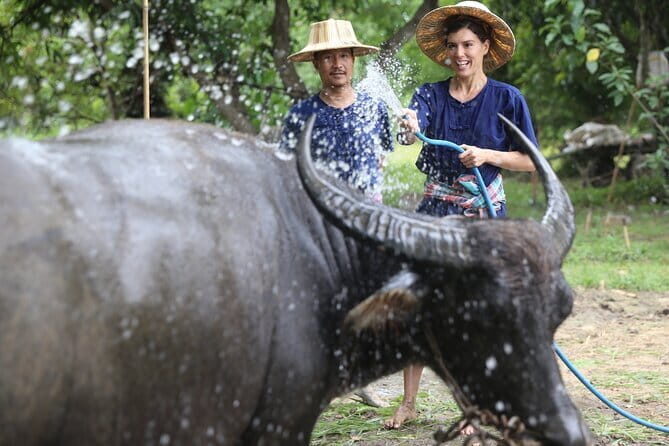
The day starts with buffalo care, and it’s one of the reasons this experience feels truly local. You’ll learn how to harvest grass to feed the Riam Thai buffalo. Then you shift to something that sounds simple but is very farm-real: showering the buffalo.
That shower part is more than a fun photo moment. Buffalo water and feeding are part of keeping animals healthy and comfortable, and it gives you a practical understanding of daily farm routines. The buffalo are also a bit of a social centerpiece. They like water and they eat a lot, so the interaction has energy.
Practical note: because you’re feeding and showering, you should assume you’ll get wet. Wear clothes you don’t mind getting dirty, and bring anything you care about in a bag or container. Also, if you’re not used to farm sounds and close animal proximity, start calmly and follow your guide’s cues. You’ll be far more relaxed once you see how the farm team handles it.
Rice Nursery Work: Uprooting, Mud-Management, and Bamboo Tying
After the buffalo segment, you go to the rice nursery area, where the real “how rice grows” lesson begins. You’ll learn how to uproot rice in the nursery and then manage the seedlings.
One step that stands out for me in how practical it is: you’ll enjoy kicking mud out from rice seedlings. That’s the kind of detail you only learn in person. It’s not glamorous, but it’s exactly the kind of prep work that helps seedlings get into the field properly.
Then comes the tying. You’ll learn how to tie rice seedlings with bamboo rope. That bamboo rope detail is important because it shows how farmers solve a real problem: bundling lots of seedlings quickly and consistently. In a short tour, this hands-on tying step gives you a feel for farm labor methods, not just plant names.
The main consideration here is physical. This is muddy work. If you have trouble bending or standing for short stretches, you might need to move slower and take breaks. The tour does say most travelers can participate, but it’s still farming work, not a gentle garden stroll.
Planting Rice With Uncle Serd in the Field

Now you take the prepared seedlings into the rice field with Uncle Serd, the local farmer guiding the planting process. This is where the day connects: the nursery prep you did earlier makes sense because you finally see how seedlings get planted in rows (and why the earlier steps matter).
Planting rice in the field is also the moment you get the most satisfaction. You’re no longer learning isolated tasks. You’re putting steps together into something that resembles how a farm day actually runs. That’s why people tend to rave about the learning part: you walk away understanding the full chain from seedling to planted rice.
I also like that the field time is paired with a real local character. Uncle Serd being the farmer you work with adds authenticity. You’re not just borrowing knowledge; you’re receiving farm instructions from someone who lives the routine.
If you want to get the most out of this portion, watch closely during the first planting steps and copy the method your guide shows you. Even if you’re not perfect the first time, you’ll learn fast by matching the rhythm.
The Signature Lunch Set: Pad Thai Sauce, Green Curry Rice, and Herbal Drinks
A big part of the value here is that lunch is included, and it feels tied to the farm theme rather than tacked on.
The lunch set includes a rice dish with chicken green curry, plus an herbal drink and mango sticky rice. That’s a classic Thai combo, and it’s a good recovery meal after muddy work. You also get to enjoy farm-style flavors connected to Hang Tueng Farm’s menu, including Pad Thai special sauce with mushrooms.
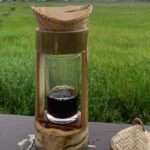
On the drink and dessert side, you’ll also see Roselle mixed with dates and grass jelly with rice germ whole grains. Even if you’re not sure you’ll like everything, it’s a nice mix of local tastes and textures, and it helps balance the hands-on, earthy day.
Quick tip: eat steadily and drink your herbal drink before you feel too tired. Farm days can sneak up on you, especially when you’re busy learning and moving. A little pacing makes the last hour feel much easier.




Price, Group Size, and Getting There From Chiang Mai
At $58.60 per person for about 3 hours, this sits in the “worth it if you want hands-on learning” category. You’re paying for more than a lesson—you’re paying for access to the farm routine: buffalo care, rice nursery work, planting in the field, and lunch with herbal drinks.
The small group size (maximum 10 travelers) is a key part of the value. With fewer people, you’re more likely to get hands-on attention and clearer instructions when your hands are covered in mud.
You’ll also get a mobile ticket, which is convenient in Chiang Mai where plans often change and people move between spots quickly.
What’s not included is private transportation. That means you’ll want to line up your own ride or use public transport options. The good news: it’s near public transportation, so you’re not locked into hiring a car just to get there.
Plan timing too. On average, this is booked about 23 days in advance, so if you’re traveling around holidays or weekends, lock it in earlier rather than gambling on last-minute availability.
What to Expect on the Ground: Mess, Water, and a Real Farm Rhythm
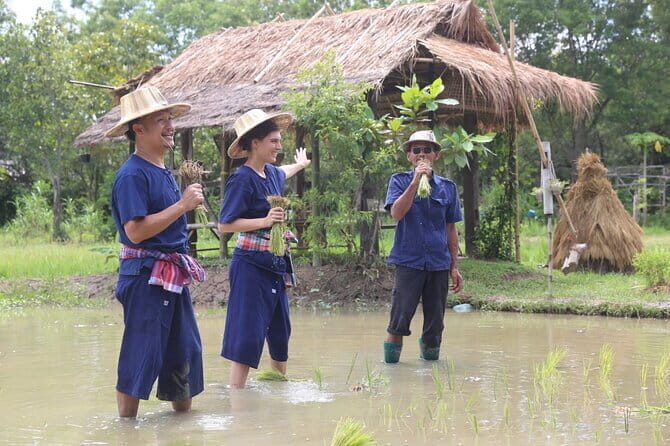
This is one of those tours where your comfort depends on your expectations. The work is practical: you’ll uproot rice seedlings, kick mud out, tie them up with bamboo rope, and then plant them. You’ll also feed and shower buffalo, which means water and wet clothing can happen fast.
That’s why I think it’s important to show up prepared for getting messy. If you can treat the mess as part of the fun, the day feels like a genuine experience. If you want clean clothes and a tidy timeline, you’ll likely feel annoyed.
A helpful approach:
- Wear clothing that’s meant for getting dirty and wet.
- Bring anything you want to keep safe in a bag.
- Be ready to follow the guide’s pace rather than trying to move faster than the group.
The farm also allows service animals, which can matter for travelers who need that support. And since most travelers can participate, you should be able to join unless you’re dealing with strong mobility restrictions or health constraints that make muddy standing hard.
Who Should Book This Rice and Buffalo Workshop

I see this as a great fit for three kinds of travelers.
First, families. The experience is described as fun for adults and kids, and the hands-on tasks give everyone something to do. Even if you’re not a plant person, you’ll still feel the excitement of working in a real rice nursery and feeding buffalo.
Second, culture and skills seekers. If you want a deeper sense of how people in northern Thailand farm, this gives you that in a practical way. You learn the sequence of tasks and why farmers do each one.
Third, anyone who wants a short, structured day. At about 3 hours, you can enjoy a meaningful activity without sacrificing your whole Chiang Mai schedule.
If you’re traveling mainly for temples and you want zero farm chores, this might feel like too much hands-on work. But if you enjoy active experiences more than museum-style sightseeing, it’s a strong choice.
Should You Book Hang Tueng’s Farming Workshop in Chiang Mai?
If you like hands-on learning, I’d book it. The best part is the combination: buffalo care plus rice planting, with Uncle Serd guiding the farm work in a small group. The included lunch set and herbal drink make the price feel more reasonable, because you’re not paying extra for food right after getting muddy.
Do book with one expectation clear: you’re not going to stay clean, and the day depends on weather. If you hate getting dirty or you’re limited on mobility, you might want to choose a calmer activity.
But if you want a genuinely local-feeling afternoon that teaches real farm steps you can actually visualize later, Hang Tueng’s workshop is the kind of experience you’ll remember.
FAQ
What is the price of the local farming experience?
The price is $58.60 per person.
How long does the experience last?
It lasts about 3 hours.
What’s included in the ticket?
Lunch and an herbal drink are included.
What food and drinks will I get?
You’ll have a lunch set that includes rice with chicken green curry, an herbal drink, and mango sticky rice. The farm menu also mentions Pad Thai special sauce with mushrooms, Roselle mixed with dates, and grass jelly with rice germ whole grains.
Where do I meet, and where does it end?
You start at Hang Tueng Farm, 89/23 ถ.ศรีบัวเงิน ซ. 19 Tambon Tha Sala, Amphoe Saraphi, Chang Wat Chiang Mai 50000, Thailand. The activity ends back at the meeting point.
Is transportation included?
No. Private transportation is not included, but the meeting area is near public transportation.
How big is the group?
There’s a maximum of 10 travelers.
What is the cancellation policy?
You can cancel for a full refund up to 24 hours before the experience starts. The experience may also be canceled due to poor weather, in which case you’ll be offered a different date or a full refund.