REVIEW · CHIANG MAI
From Chiang Mai: Chiang Rai’s Temples Exploration Day Trip
Book on GetYourGuide →Operated by Chiang Mai Footsteps Travel · Bookable on GetYourGuide
Three temples in one long day is a winning combo. This Chiang Rai trip strings together the White Temple (Wat Rong Khun), the Blue Temple (Wat Rong Suea Ten), and the Red Temple, plus a calming stop at a natural hot spring before the road gets busy.
I especially like the way Wat Rong Khun’s white facade and mirror details force you to slow down and look, and I like the small-group setup (max 12) that keeps the guide close enough to explain what you’re seeing. It’s the kind of day where pictures are easy, but understanding the symbolism is the real payoff.
The main trade-off is simple: the drive from Chiang Mai to Chiang Rai takes time, so you’ll want to settle in and plan for a long day on the road.
In This Review
- Key Things You’ll Remember from This Chiang Rai Temples Day Trip
- The Chiang Mai to Chiang Rai Drive: Long, But Not Random
- Morning Hot Spring Stop: Steam, Not Swimming
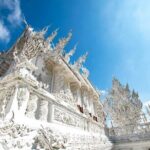
- Wat Rong Khun (White Temple): Mirrors, Meaning, and Pond Reflections
- Wat Rong Suea Ten (Blue Temple): Deep Blue Craftsmanship With a Story
- The Red Temple: Thai Spiritual Stories in Color
- Lunch, Timing, and the Small-Group Magic (Max 12)
- How the English Guides Shape the Day (Anna, Bee, Paul, and More)
- What to Pack and How to Behave at Thai Temples
- Value Check: Why This $51 Day Trip Can Be Worth It
- Should You Book This Chiang Rai Temples Exploration Day Trip?
- FAQ
- Where is the meeting point for this tour?
- Is hotel pickup included?
- What temples will I visit during the day?
- Will I get time to walk around the temples?
- What should I wear and bring for temple visits?
- Is lunch included?
Key Things You’ll Remember from This Chiang Rai Temples Day Trip
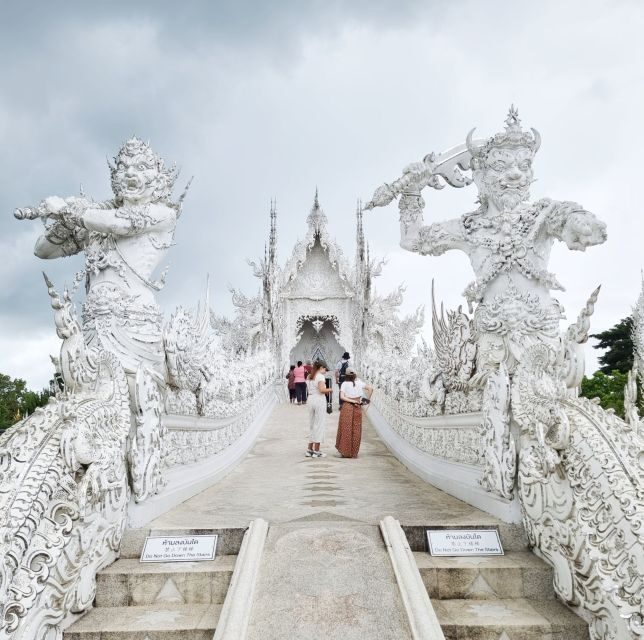
- Wat Rong Khun’s mirror look: white surfaces and shimmering details with a pond reflection vibe.
- Wat Rong Suea Ten’s deep-blue style: intricate designs in a temple with a story tied to old legends.
- Red Temple art and storytelling: bright colors that map Thai spiritual tales onto the architecture.
- A short hot spring breather: mineral steam and a quiet pause, even if you don’t swim.
- Max 12 small-group pace: enough time for photos and walking without feeling rushed.
The Chiang Mai to Chiang Rai Drive: Long, But Not Random
This is a true day trip, meaning you’ll spend a big chunk of your time in the vehicle before the temples start doing their job. Expect a long road stretch both ways; multiple guides and drivers keep the day moving with periodic stops to stretch your legs and grab water.
What matters for you: the schedule is built around temple time, not just transport time. So when you’re on the road, it helps to treat it like transit with purpose—use it to rest, charge your phone, and get ready for intense sightseeing later.
If you hate long drives, plan accordingly. This trip is best for people who can handle a full day (start early, finish later) and who really want the big-name Chiang Rai temples in one hit.
You can also read our reviews of more tours and experiences in Chiang Mai
Morning Hot Spring Stop: Steam, Not Swimming
Before you even reach the main temple circuit, you get a short stop at a natural hot spring. You won’t be here to swim, but you will see mineral-rich steam rising—an unexpectedly calming break when the day starts early.
I like this pause because it’s not another photo-op that feels staged. It feels like a reset button: fresh air, quick legs-stretch, and a moment to slow your brain down before you hit the White Temple’s intense visual impact.
Bring the basics for outdoors time. Sunscreen and insect repellent still matter here since the steam stop can be outside for short periods.
Wat Rong Khun (White Temple): Mirrors, Meaning, and Pond Reflections
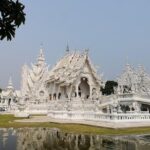
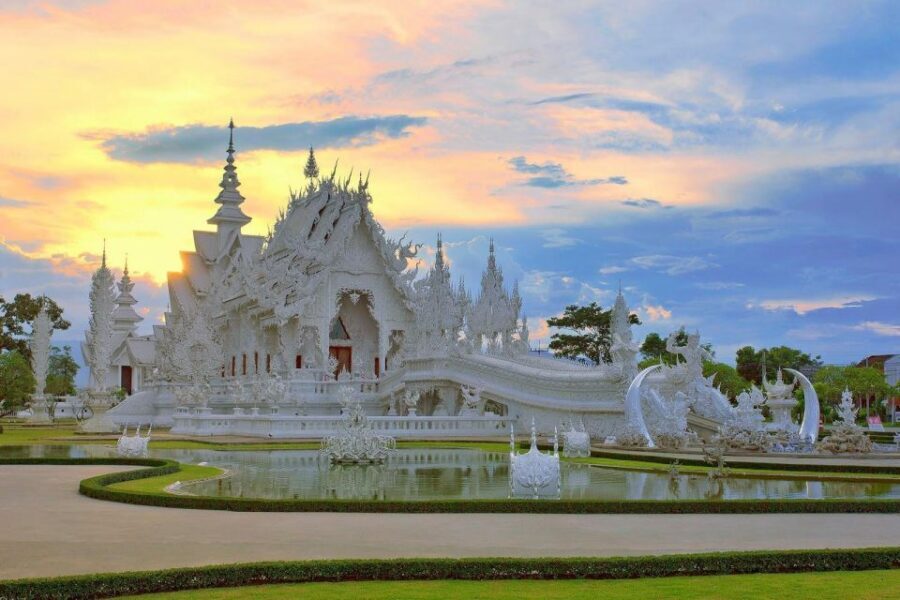
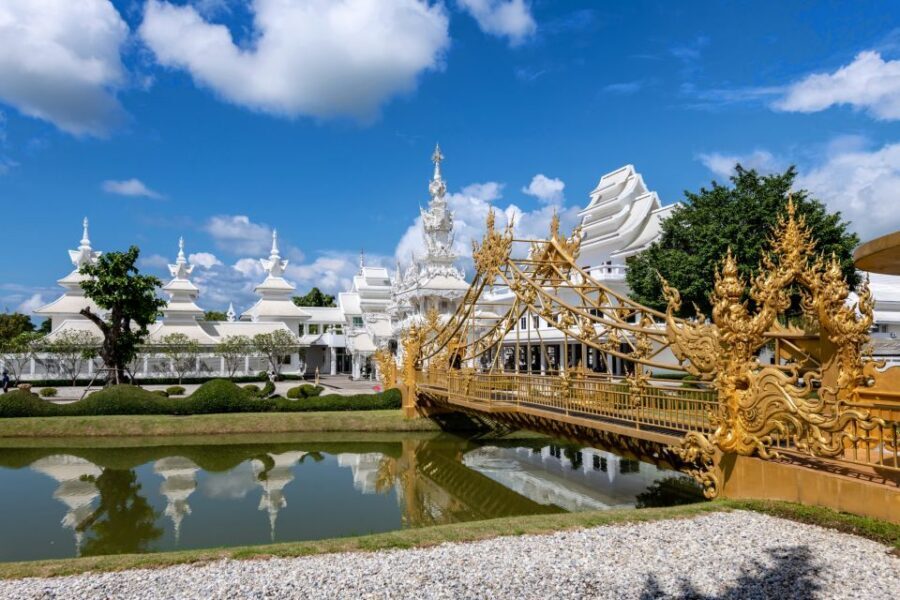
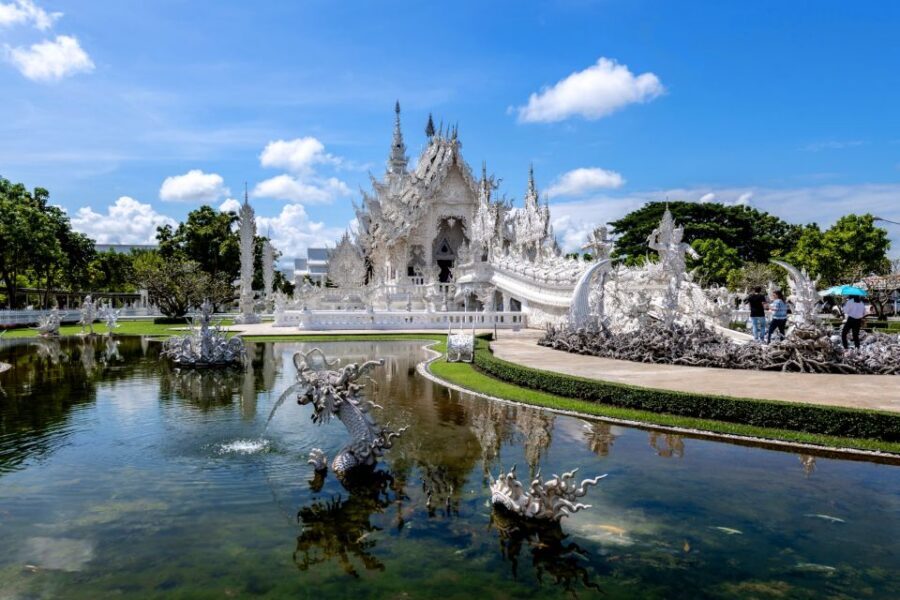
Wat Rong Khun, also known as the White Temple, is the star for a reason. It’s covered in white surfaces with shimmering mirror details, and the visual effect is strongest on clear days when the light catches everything.
The experience has two layers. First, it’s pure design drama—white-and-mirror architecture that looks almost unreal. Second, there’s a spiritual message woven into the Buddhist lessons shown through the temple’s design, which makes the walking paths feel more intentional than a simple sightseeing lap.
Practical tip: plan to take your time at this stop. You’ll want room to move around and absorb the details, not just capture a single wide-angle shot. One common note from past guests is that people sometimes feel they want a bit more time here, so I’d treat White Temple time as your main photography window.
If you’re visiting with limited stamina, prioritize this temple. Even if the whole day feels rushed sometimes, Wat Rong Khun is where your attention will naturally lock in.
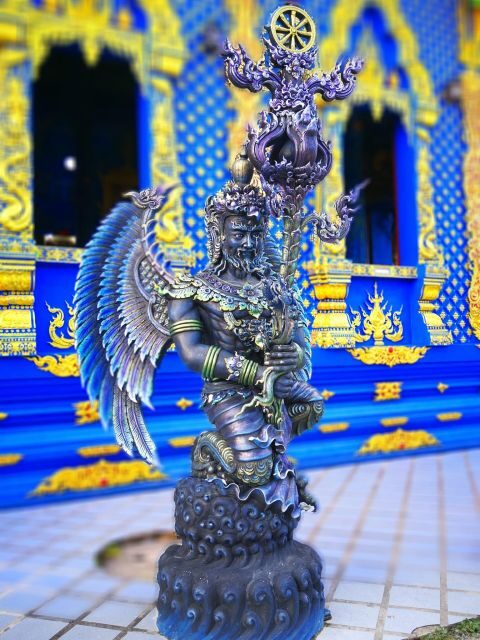
Wat Rong Suea Ten (Blue Temple): Deep Blue Craftsmanship With a Story
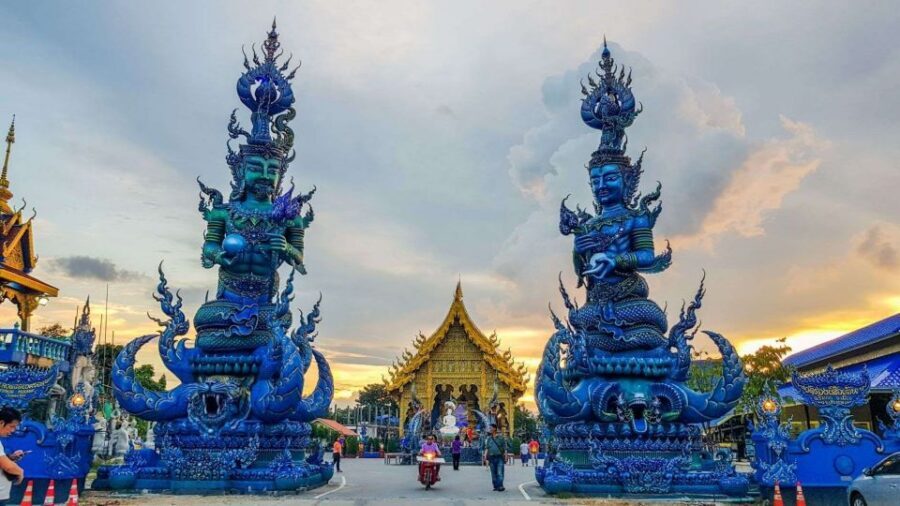
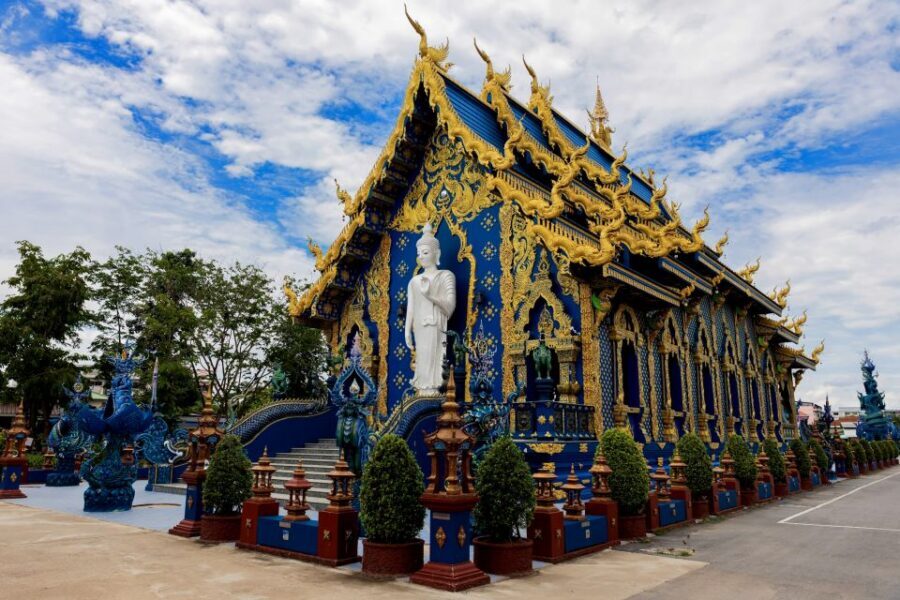
Next up is the Blue Temple, Wat Rong Suea Ten. This one is painted in deep blues and packed with detailed designs, so even when it’s not sunny, it still feels visually busy in the best way.
The setting also comes with history and legend. The temple was built where an older temple stood, and that area was once thought to be home to roaming tigers. That added context makes the color palette and craftsmanship feel tied to place, not just style.
What I like for your benefit: the guide’s explanations help you read the temple instead of just looking at it. When someone can translate the meaning behind the details, the Blue Temple becomes more than pretty blue walls.
This is also a good moment to keep your energy up. By this point, you’ve usually already handled the morning travel. Pace yourself—walk slowly, and stop to look up often since the design is not only at eye level.
The Red Temple: Thai Spiritual Stories in Color
Then comes the Red Temple, full of bright colors and intricate artwork. If the White Temple feels like mirrored symbolism and the Blue Temple feels like crafted dreaminess, the Red Temple is more like storybook theatre.
Every part seems to carry a story from Thai spiritual life and folk tales. That’s why people tend to remember this stop even if they struggled to keep their energy up earlier—because it feels like the tour finally turns into a narrative.
A practical angle: this temple can be more visually intense than you expect, especially for phone photography. Step back, take a breath, and then frame your shots. You’ll usually get better photos when you’re not rushing to capture everything at once.
If the group is moving with a tight schedule, focus on one or two areas with the most artwork detail. You can come away feeling like you saw the real Red Temple without trying to photograph every panel.




Lunch, Timing, and the Small-Group Magic (Max 12)
Lunch is included, and you’ll likely find it’s a straightforward Thai meal with options for different tastes. In real-world feedback, people often describe the buffet style as satisfying, with vegetarian options mentioned by at least one guest.
Timing is the other half of the value here. Past days run long, but the tour uses the guide’s planning to break the day into manageable chunks: transit, temple time, then food, then more temple time. The best-case result is that you don’t feel like you’re being dragged through stops with no breathing room.
The small-group limit matters. With a max of 12 people, you typically get more direct attention from your English-speaking guide. You’re also less likely to feel like cattle being moved from one spot to the next.
One more thing: temple crowds happen, especially at the big-photo sites. Your guide’s pacing helps you avoid some of the worst waiting, and they can also tell you where to stand for the best views.
How the English Guides Shape the Day (Anna, Bee, Paul, and More)
This trip lives or dies on guide quality, and the pattern in the feedback is clear: the strongest days happen when the guide explains what you’re seeing and keeps things organized.
I’ve seen names like Anna, Bee, Paul, Goi, Nine, Tee, Toy, Fon, Sara, Koi, and others tied to positive experiences. Even without memorizing every name, the useful takeaway is this: the guide is there to translate temple design and Thai culture into plain language, so you don’t need to be an expert to enjoy the temples.
Also, guides often help with practical photo moments. People mention guides taking pictures during temple stops, which is handy if you’re traveling as a couple or solo and don’t want to rely on strangers with shaky hands.
If you want a smoother day, ask your guide early about what order you’ll see things in and where the best photo angles are. You’ll get quicker satisfaction from the time you have at each temple.
What to Pack and How to Behave at Thai Temples
You’ll have a better day if you show up prepared. Wear comfortable shoes because you’ll walk inside temple areas and around courtyards. Sunscreen and a hat help too since temple time often happens in open-air spaces. Don’t forget insect repellent—Thailand mosquitoes don’t take a day off just because you’re sightseeing.
Dress code is not optional. Plan to cover your knees and shoulders, and remove your shoes before entering the main chapel areas. If you do this, you’ll spend less time worrying and more time enjoying.
This matters for the group pace. When someone needs extra time to adjust clothing or follow shoe rules, it can affect the flow for everyone. Being ready helps you and helps the tour.
Value Check: Why This $51 Day Trip Can Be Worth It
Let’s talk value, because $51 can sound either reasonable or high depending on what’s included. Here, the price covers hotel pickup and drop-off, round-trip transfers, entrance fees, an English-speaking guide, lunch, insurance, and drinking water.
What you’re really buying is time and organization. The drive is long, the temples are iconic, and entrance fees plus guiding add up when you price it yourself. If you’re starting from Chiang Mai and want the White, Blue, and Red Temples all in one day, this format is a smart shortcut.
The only way this feels like poor value is if you don’t enjoy long travel days or if you prefer slow travel with fewer stops. Also, if you’d rather spend most of your day in Chiang Mai itself instead of out on the road, you might feel the schedule is heavy.
But for most first-timers who want the big three, this is a clean deal: a guided, organized day that stacks the best-known Chiang Rai temple experiences without you building logistics from scratch.
Should You Book This Chiang Rai Temples Exploration Day Trip?
Book it if you want the iconic White Temple, Blue Temple, and Red Temple in one organized day, and you like having an English guide explain temple design instead of guessing. It’s also a great fit if you’re traveling solo, as small-group pacing usually helps you feel less lost and more in control.
Skip or consider alternatives if you’re sensitive to long drives or you want a relaxed, slow itinerary. This trip is intense by design, and it’s not suitable for people with mobility impairments.
My bottom line: if you can handle an early start and a long day, this is one of the most practical ways to see Chiang Rai’s top temples from Chiang Mai—without turning your trip into a DIY transportation puzzle.
FAQ
Where is the meeting point for this tour?
You meet at Baan Meesuk, an hotel/hostel in the old town of Chiang Mai. If pickup is included for you, it’s typically between 7:00 and 7:30, and you wait in the hotel lobby.
Is hotel pickup included?
Yes. Hotel pickup and drop-off are included, along with round-trip transfers between Chiang Mai and Chiang Rai.
What temples will I visit during the day?
You’ll visit Wat Rong Khun (White Temple), Wat Rong Suea Ten (Blue Temple), and the Red Temple. The day also includes a short stop at a natural hot spring.
Will I get time to walk around the temples?
Yes. The tour is designed with time for exploring each temple, plus opportunities for photos. Since it’s a small group, you also get easier pacing with your guide.
What should I wear and bring for temple visits?
Wear comfortable shoes and dress to cover your knees and shoulders. Bring sunscreen, insect repellent, and a hat. You’ll need to remove shoes when entering main chapel areas.
Is lunch included?
Yes. Lunch is included in the tour price, and drinking water is provided as well.