REVIEW · CHIANG MAI
Doi Inthanon Discovery Tour: Waterfalls, Villages & Highest Peak
Book on Viator →Operated by Sunleisure World · Bookable on Viator
A day on Doi Inthanon feels like a shortcut to northern Thailand’s big moments. You start early, ride in an air-conditioned van, and hit the national park, royal pagodas, and major waterfall scenery without juggling maps or taxis. It’s also kept to a small group, with a cap of 10 other travelers.
I really like the pacing for a long day. You get hotel pickup and drop-off (selected hotels) and you’re guided between stops, so you spend your energy looking around instead of figuring out where the road goes next. That structure matters when you’re dealing with mountain traffic and shifting weather.
One thing to watch: the tribe stop may not match the Karen Long Neck visit many people hope for. Also, when weather turns rainy or foggy, views from the top and the pagoda outlooks can be harder to enjoy as planned.
In This Review
- Key points to know before you go
- Doi Inthanon in one day: why this plan works
- Pickup, air-conditioned van, and a group capped at 10
- Inthanon Mountain, aka the Roof of Thailand (2,565 meters)
- Royal Twins Pagodas on the Inthanon summit: what to see
- Hill-tribe market and Mae Klang Luang coffee: real daily life breaks
- Wachirathan Falls: a short stop that can be worth it
- Price and value around $87.70: what you’re really paying for
- Should you book the Doi Inthanon Discovery Tour?
- FAQ
- How long is the Doi Inthanon Discovery Tour?
- What is included in the tour price?
- Is admission to Inthanon Mountain and the pagodas included?
- How big is the group?
- Do I get a mobile ticket?
- Where does the tour start in Chiang Mai?
- What is the cancellation policy?
Key points to know before you go
- Small group (max 11 total) means more attention and fewer bottlenecks at viewpoints
- Hotel pickup/drop-off saves time and hassle in Chiang Mai
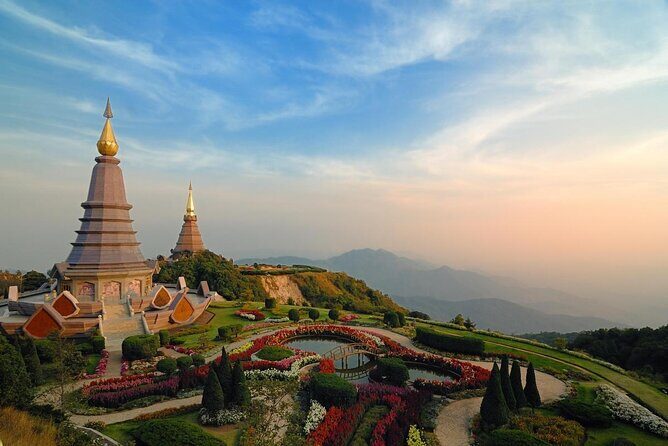
- Royal Twins Pagodas are a dedicated stop with names like Phra Maha Dhatu Nabha Metaneedol and Nabhapol Bhumisiri
- Wachirathan Falls is a focused half-hour stop, best treated as a photo-and-stroll moment
- Weather can change the impact of summit views, especially if rain hangs around
Doi Inthanon in one day: why this plan works
This tour is built for a single big goal: getting you to the top end of northern Thailand without turning your day into a transportation puzzle. Doi Inthanon is Thailand’s highest mountain, and on this outing you’re set up to experience that feeling in several ways—altitude, temples, and water.
You leave Chiang Mai around 7:00–7:30 AM and then you’re climbing into the park zone by late morning. The schedule lands at Inthanon Mountain around 10:45 AM, which is early enough to still catch clear moments if skies cooperate. Then it continues with the royal pagoda complex, a hill-tribe market stop, Mae Klang Luang’s coffee village break, and finally Wachirathan Falls.
The big value here is not trying to do everything in tiny pieces. It’s a “hit the highlights” day, but not a rushed blur. Each stop is long enough for real looking—about an hour at the mountain viewpoint and around an hour at the Twins Pagodas—then shorter, practical breaks at places like the market and waterfall.
You can also read our reviews of more tours and experiences in Chiang Mai.



Pickup, air-conditioned van, and a group capped at 10
If you hate wasting mornings, this is the part you’ll appreciate most. You’re picked up from your hotel in Chiang Mai (selected hotels) and moved around in an air-conditioned vehicle. The tour includes bottled water too, which helps when you’re outside and it’s warmer lower down.
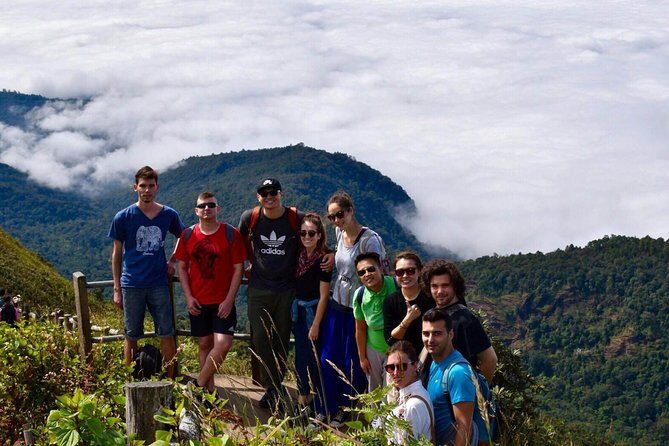
The small-group limit matters more than it sounds. With a maximum of 10 travelers besides you, the guide can keep an eye on timing and help you get oriented quickly at each stop. It also tends to reduce long waits when everyone is stepping in and out of viewpoints or crowding around entrance areas.
The day runs about 8 to 9 hours. That’s a long chunk, but it’s a fair trade for visiting multiple sites in one outing. One practical tip: since you start early, wear shoes you’ll be comfortable in if the ground is wet near waterfalls or temple areas.
Inthanon Mountain, aka the Roof of Thailand (2,565 meters)
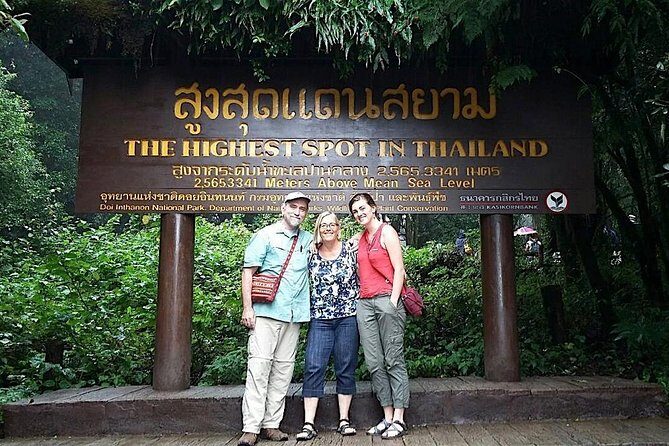
You arrive at Inthanon Mountain around 10:45 AM, at an elevation of 8,415 feet (2,565 meters). That number is more than trivia. In Thailand, altitude can feel noticeably cooler and more misty, even when the city is hot.
This stop is centered on the summit area and a place to pay homage to the previous king of Chiang Mai. Admission at this stage is listed as free, and the time on the mountain is about one hour. That hour is key. It gives you time to look around, walk the area at a relaxed pace, and catch any views that might be visible between clouds.
Here’s what I’d watch for: summit views are timing- and-weather-dependent. If the day is clear, this is where you’ll feel like you’re on top of the region. If it’s rainy or foggy, the “Roof of Thailand” factor can turn into a colder, quieter temple-and-mist experience instead. Either way, it’s a meaningful stop, just be flexible about the photo expectations.
Royal Twins Pagodas on the Inthanon summit: what to see

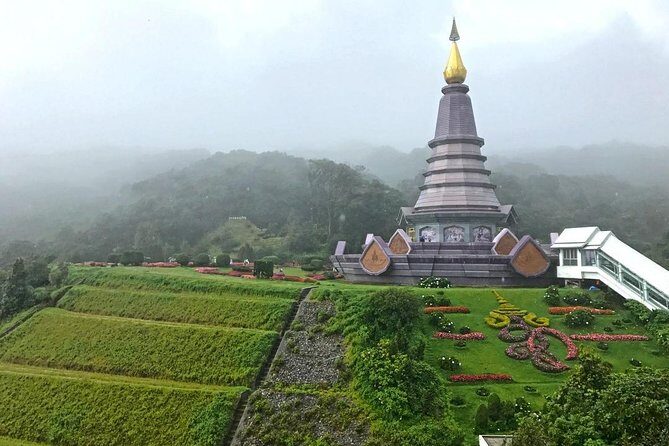
After the mountain, the tour shifts to the royal monuments viewpoint area. Around 11:45 AM, you’ll spend about an hour at the Twins Pagodas—Phra Maha Dhatu Nabha Metaneedol and Nabhapol Bhumisiri. These are described as royal pagodas built in honor of King Bhumibol Adulyadej. The admission ticket for this stop is included.
From there, the schedule includes additional nearby points—short visits of about 10 minutes each at other royal pagoda names, including Phra Mahathat Napha Methanidon and Naphaphonphumisiri. In practice, what you’re getting is a guided circuit through closely related places rather than one single monument. You’ll have time to appreciate the details without feeling stuck at a single spot too long.
What makes this part rewarding is the contrast with the mountain area. Instead of focusing on altitude, you can shift your attention to craftsmanship and symmetry. The twins are meant to be seen as a pair, and the views from the broader summit area can make them feel even more dramatic—if the weather cooperates.
That said, if it’s been raining, don’t assume you’ll see the exact summit panorama you might hope for from pictures. A rainy day can hide the wider outlook, so treat this as a temple-and-viewpoint stop, not a guaranteed postcard.
Hill-tribe market and Mae Klang Luang coffee: real daily life breaks

After the pagoda area, there’s a stop at the Inthanon Hill Tribe Market (RTA) at about 12:45 PM. You get around 30 minutes here. The market focus is on fresh food and vegetables grown by local villagers. It’s not just a souvenir stop; you’re stepping into a place where people sell produce and everyday items linked to what’s happening in the region.
Then, around 2:00 PM, you head to Mae Klang Luang Coffee House. This is a village break tied to livelihoods—rice and coffee cultivation—and it comes with mountain views in the area (when skies aren’t too fogged). You’ll have about 30 minutes, which is enough time for a rest, a drink, and a slower chat with your surroundings.
One key note for your expectations: the tour’s overview speaks about a Karen tribe village, but the actual experience may be different from what you’re imagining—especially if you’re specifically chasing the Karen Long Neck style many people associate with the region. The practical move is to confirm the exact hill-tribe community you’ll visit before you book, so your day matches your goal.
If you’re more interested in how people live—how food is grown and how communities earn money—then these stops can feel surprisingly grounded. You’re not just shopping; you’re getting context.





Wachirathan Falls: a short stop that can be worth it
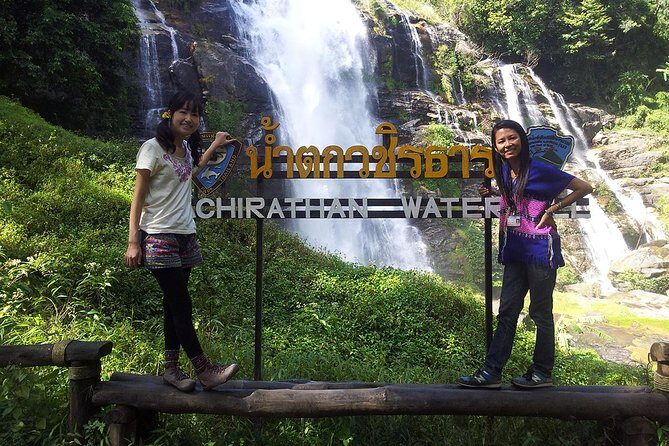
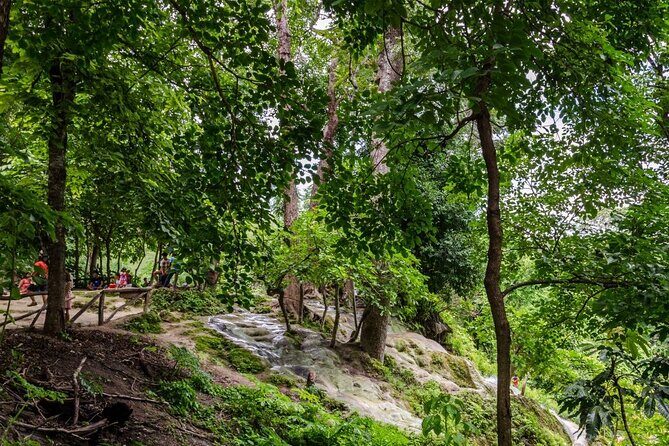
The last major sight is Wachirathan Falls at about 2:30 PM, with roughly 30 minutes on site. This is the kind of stop you’ll either love instantly or want a little more time for. It’s a waterfall, yes, but what matters is how the water looks in that particular moment.
On a clear day, you’ll likely get better visibility for photos and stronger overall “wow.” On a rainy day, the waterfall can be louder and more powerful, but mist and rain can reduce the distance views and make paths slick. Either way, treat this stop like a focused viewing window: you’ll want to be ready to walk a bit for the best angles and then enjoy the sounds and spray without rushing.
A practical approach: bring a light rain layer even if forecasts look okay. And if you’re someone who hates wet shoes, wear something quick-drying. You’ll be on the move again soon after this stop and you don’t want to spend the rest of the day uncomfortable.
Price and value around $87.70: what you’re really paying for
At about $87.70 per person, the big question is whether you’re getting more than a ticket price. Here, you are paying for several things that add up quickly if you tried to piece it together on your own: guide time, a small-group setup, and real transportation between far-apart stops.
The included items are meaningful: professional guide, bottled water, hotel pickup/drop-off (selected hotels), and an air-conditioned vehicle. Also, admission structure helps the value story. In the schedule, Inthanon Mountain lists an admission ticket as free, the Twins Pagodas admission is included, and other nearby pagoda stops are also listed as free. That means your money goes more toward the guided route and less toward constantly paying separate entry fees.
What you should plan for yourself: the tour data doesn’t mention a full included lunch. You do get breaks at the market and coffee house, so if you want food, you may need to buy or snack there. And since gratuities are optional, it’s on you to decide what feels fair after the day.
Compared with a DIY day, the comfort and time savings are the core value. Compared with cheaper group tours, the small group cap of 10 other travelers is a real quality-of-life upgrade at viewpoints.
Should you book the Doi Inthanon Discovery Tour?

Book it if you want a guided, organized day that hits the national park, royal pagodas, a local market stop, and Wachirathan Falls without you doing route planning. The combination of hotel pickup, small group size, and a mix of viewpoints (summit) plus daily-life breaks (market and coffee village) is a strong match for first-time visitors.
Skip or re-check before booking if any of these matter to you:
- You’re specifically hoping for a Karen Long Neck visit. This day’s tribe stop may not be the version you want, since the experience can be different depending on the community visited.
- You’re traveling during a period when rain is very likely. Weather can reduce summit visibility and change what you can see from outlook areas, including around the Twin Pagodas.
If your mindset is day-trip flexible—ready for mist, ready for photos when they show up—this is a solid way to see Doi Inthanon in a single push.
FAQ
How long is the Doi Inthanon Discovery Tour?
It runs about 8 to 9 hours, from pickup starting around 7:00 AM–7:30 AM through the return to the meeting point around 5:30 PM, depending on traffic.
What is included in the tour price?
The tour includes a professional guide, bottled water, hotel pickup and drop-off for selected hotels, and transport in an air-conditioned vehicle.
Is admission to Inthanon Mountain and the pagodas included?
In the schedule, admission at Inthanon Mountain is listed as free, the Twins Pagodas admission is listed as included, and the additional nearby pagoda stops are listed as free.
How big is the group?
The tour has a maximum of 10 travelers, so you’ll be in a small group.
Do I get a mobile ticket?
Yes, the tour provides a mobile ticket.
Where does the tour start in Chiang Mai?
Pickup is offered from selected hotels. The listed meeting point location is Chiangmai Tours by Sightseeing Chiang Mai at Duang Tawan Hotel, 132 Loi Kroh Rd.
What is the cancellation policy?
You can cancel for a full refund up to 24 hours before the experience starts. Changes made less than 24 hours before the start time aren’t accepted, based on local time.