REVIEW · CHIANG MAI
Chiang Rai Temples Tour & Golden Triangle Including Boat to Laos
Book on Viator →Operated by WE LIKE TOUR THAILAND · Bookable on Viator
White temple, then Laos by boat. This private day tour strings together Chiang Rai’s most famous temples with the Golden Triangle and a Mae Khong River boat ride toward Laos. You get a car from Chiang Mai, a guide who keeps the day moving, and enough time at each stop to actually look (not just snap and rush).
I especially liked the feel of traveling in an AC private vehicle with a guide who can answer questions and adjust the pacing. I also like that the day isn’t only about temples—this route adds the border area vibe near the Mekong and includes a hot-spring coffee break. One thing to plan for: the total day runs about 11 hours, with roughly 3 hours each way between Chiang Mai and Chiang Rai, so it’s not a short, casual outing.
In This Review
- Key points at a glance
- Why This Chiang Rai Day Trip Feels Like a Mini Journey
- Getting From Chiang Mai: 7:00 am Start and the 3-Hour Drives
- Wat Rong Khun: The White Temple’s Surprising Art-Temple Style
- Golden Triangle: Thailand–Myanmar–Laos by the Mekong
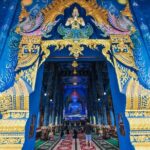
- Wat Rong Seur Ten (Blue Temple): A Temple Built in Stages
- Wat Huay Pla Kang: The 76-Meter Giant Buddha
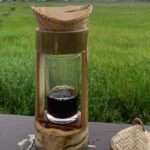
- Mae Khachan Hot Spring: Coffee Break in Mountain Country
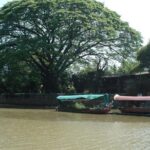
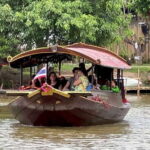
- Boat Cruise on the Mae Khong and Crossing Toward Laos
- Price and Logistics: Is $145 Good Value?
- The Guide Makes the Day: Ask About John
- Who This Private Tour Fits Best
- Should You Book This Chiang Rai Temples Tour?
- FAQ
- What time does the tour start?
- How long is the Chiang Rai Temples Tour?
- Do I get hotel pickup and drop-off?
- Is this tour private or shared?
- What places are included in the itinerary?
- Are entry tickets included?
- What language are the guides?
- Is lunch included?
- Is transportation provided?
- Can I cancel for a full refund?
Key points at a glance
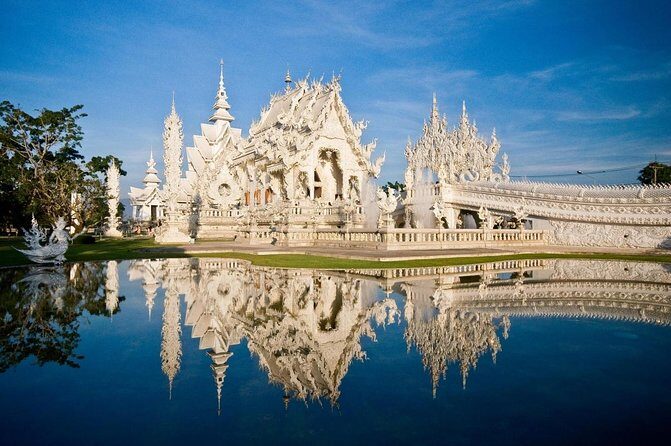
- Wat Rong Khun (White Temple): art-forward, high-impact stop designed by Chalermchai Kositpipat (1997).
- Golden Triangle: see the Thailand–Myanmar–Laos junction area near Chiang Saen and the Mekong.
- Blue Temple (Wat Rong Seur Ten): community roots starting in 1996, with construction that began later.
- Wat Huay Pla Kang: Chinese-Lanna style and a giant 76-meter Buddha landmark in Chiang Rai.
- Mae Khachan Hot Spring: a mid-journey reset point with a natural break and coffee-time feel.
- Boat to Laos direction: the Mae Khong cruise adds a different rhythm than temple hopping.
Why This Chiang Rai Day Trip Feels Like a Mini Journey
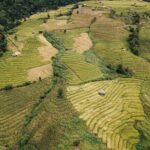
This tour works because it doesn’t treat Chiang Rai as just one temple-and-go day. You’re building a full storyline: modern temple art in the north, then the Mekong border zone, then back to standout architecture in Chiang Rai. Even the route itself matters—there’s time to watch northern Thailand countryside slide by, with paddy fields, farmland, mountains, and local roadside communities.
For me, the best part is that you’re not locked into bus pacing. Since it’s a private group (only your party), your guide can keep the flow easier when crowds build and when you want an extra minute for photos. If you’re the kind of traveler who likes to take in details—faces, patterns, and temple design—this kind of structure helps.
The schedule is tight enough to feel like you covered a lot, but it isn’t so rushed that every stop disappears. You still get about an hour at the main temples and a shorter stop at the hot spring.
You can also read our reviews of more boat tours in Chiang Mai
Getting From Chiang Mai: 7:00 am Start and the 3-Hour Drives
The day starts at 7:00 am with pickup, and you’ll be back in Chiang Mai later in the evening with drop-off at your hotel. The driving time is straightforward: about 3 hours from Chiang Mai to Chiang Rai, then about 3 hours back.
That long road time can feel like a tradeoff, so I recommend you treat it like part of the experience rather than dead time. Bring something to keep your head clear—water is included, and mineral water plus the guide’s commentary can make the ride pass faster. The tour description also signals frequent views of rural life along the way, which is a real change from city travel.
Practical note: if you dislike early mornings, this might be the dealbreaker. Otherwise, it’s a decent “day-trip distance” because Chiang Rai isn’t next door, and the route is clearly built around making those road hours worth it.
Wat Rong Khun: The White Temple’s Surprising Art-Temple Style
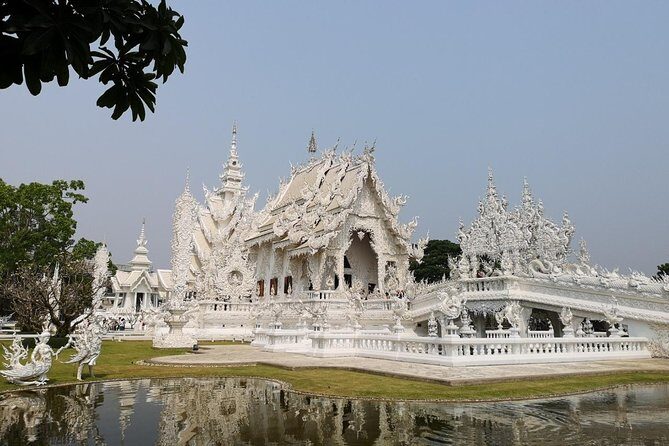
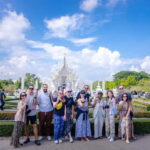
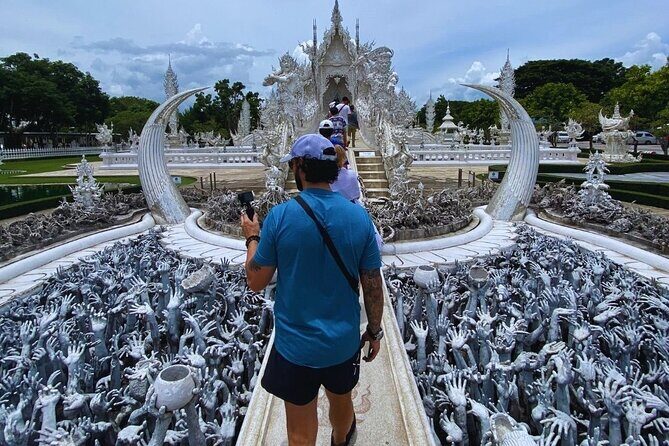
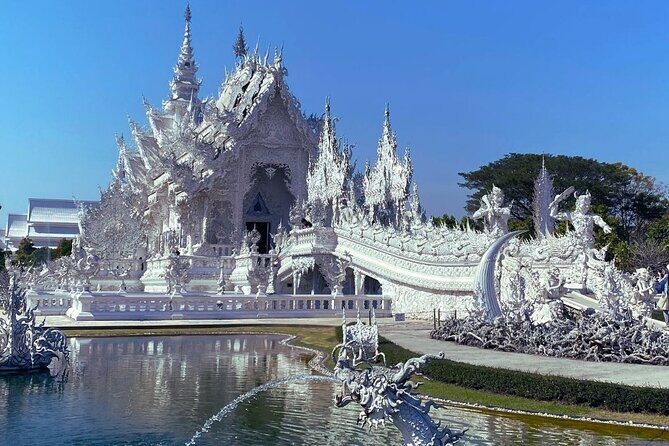
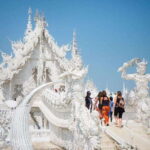
Wat Rong Khun, the White Temple, is the signature start. This temple was founded in 1997 by Thai artist Chalermchai Kositpipat, and its whole identity is wrapped in that bold white look. Even if you’ve seen photos, it hits differently in person because the design has that clean, crafted feel—like someone made a modern art statement and then decided to build it as a real temple you can walk through.
You’ll have about 1 hour here, and admission is included. That timing is important. This isn’t one of those sites where you look once from the main gate and move on. The value is in taking your time with the visual details and the way the temple space is arranged.
One consideration: the style is very “designed.” If you’re expecting something more old-school and subtle, you might want to shift your mindset and approach it like an art museum with a sacred purpose.
Golden Triangle: Thailand–Myanmar–Laos by the Mekong
After the White Temple’s modern visual punch, you head to the Golden Triangle area where Thailand, Myanmar, and Laos come together. You’ll get about 1 hour here, and admission is listed as free.
This stop is based around the junction zone near the Mekong riverside area—specifically it’s described as 9 kilometers north of Chiang Saen along the Mekong road. The name often gets translated into a “where borders meet” concept, and here you get that practical geography: the Mekong is the key reference point, and the area near Sop Ruak is identified as part of where the rivers and border zone come together.
What you should expect from this kind of stop is more “viewing and orientation” than a deep museum visit. It’s about understanding the location and seeing the border-region landscape. If you like geography, river life, and how countries touch on the ground, this is one of the more interesting parts of the day.
Wat Rong Seur Ten (Blue Temple): A Temple Built in Stages
Next is Wat Rong Seur Ten, commonly called the Blue Temple. You’ll also get about 1 hour, and admission is listed as free.
Here’s what makes this temple interesting beyond the color: the construction began from a local community effort. The information you’re given says the community started initiated work in 1996 to replace an abandoned temple, but actual construction didn’t begin until 2005. That time gap gives the place a different feel. It’s not just a design concept executed overnight—it’s tied to local repair, rebuilding, and patience.
Because the stop is timed at an hour, you can enjoy the art details without feeling like you need to race. If White Temple is all about stark brightness and modern identity, the Blue Temple leans into a different kind of visual mood—cool-toned, more atmospheric.


Wat Huay Pla Kang: The 76-Meter Giant Buddha
Then you go to Wat Huay Pla Kang, one of Chiang Rai’s newer landmarks. This temple was founded in 2005, and it’s described as having unusual architecture in Chinese-Lanna style.
The headline feature is the 76-meter Giant Buddha, and you’ll spend about 1 hour here with admission included. That timeframe matters again: with a landmark like this, you want time for angles—how the statue dominates the view, how the temple grounds open up around it, and how the style elements work together. If you only had five minutes, you’d miss the scale.
Potential drawback: because it’s a big photo magnet, it can attract crowds at peak times. The private setup helps, but it doesn’t eliminate crowds. You can still have a good experience—just don’t expect perfect emptiness.
Mae Khachan Hot Spring: Coffee Break in Mountain Country
Halfway between Chiang Mai and Chiang Rai, you stop at Mae Khachan Hot Spring. The tour schedule gives you about 30 minutes, and admission is free.
This is described as a mountain-surrounded hot spring and ranked among the better hot-spring stops in northern Thailand. Even with only a short stop, the point is clear: you get a change of pace and a natural break before the second half of the day’s driving and temples.
Because your time is limited, I’d treat it like a quick reset: stretch, grab a drink, enjoy the mountain-air feeling, and then get back on track. It’s not the stop where you plan to linger for hours.
Boat Cruise on the Mae Khong and Crossing Toward Laos
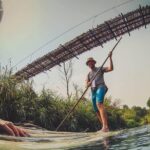
One of the most distinctive parts of this itinerary is the boat cruise along the Mae Khong River and the plan to cross to Laos border. This is where the day stops being only about temples and starts feeling like a border-region adventure.
The tour summary frames this as cruising along the Mae Khong River and continuing through the Laos-border segment, then returning to finish the Chiang Rai highlights (including the Blue Temple and the giant Buddha). That sequencing makes sense because you’re mixing views: river-time gives you breathing space between major temple stops.
What to keep in mind: border-area travel can be time-sensitive. Even with a guide handling the logistics, you’ll want to stay flexible and follow instructions closely. If you’re someone who gets restless when plans shift by minutes, this could test your patience.
If you’re okay with that, the payoff is big: you see the region from the water and experience a different side of Northern Thailand beyond architecture.
Price and Logistics: Is $145 Good Value?
At $145 per person, this is priced for a long, full-day private route. The key for value is what you’re getting bundled into the price:
- Hotel pickup and drop-off
- Air-conditioned vehicle
- Private English- or Mandarin-speaking guide
- Lunch with local Thai food
- All fees and taxes
- Travel insurance
- Mineral water
- Admission coverage across the route (White Temple and Wat Huay Pla Kang are marked ticket-included; other stops are listed as free)
When you add it up, you’re not just paying for views—you’re paying for transport between Chiang Mai and Chiang Rai, a guide’s time for the full day, and the convenience of not having to coordinate separate tickets and rides.
So is it a bargain? It depends on your style. If you like to plan every detail yourself, you might feel the price is more than you’d pay. If you want a smooth, guided, all-in-one day with a driver and a guide who can keep things moving, then $145 is a fair value for the work your guide and vehicle are handling.
The Guide Makes the Day: Ask About John
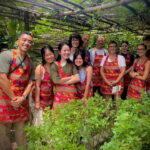
The guides are a big part of why people rate this tour so highly. One name that comes up is John. In one standout description, John is described as a walking encyclopedia—plus patient, humorous, and good with photography. That matters because temple days turn into photo days fast, and having a guide who understands angles and pacing can save you from frustration.
Another guide name you might see is Mr. Big. The feedback connected to him highlights hotel pickup, good conversation during the drive, and a habit of moving around popular temple areas in ways that reduce the worst tour-bus crowding.
Even if you don’t get the same guide, it’s a strong sign the operator takes guidance seriously, not just driving you from stop to stop.
Who This Private Tour Fits Best
I think this tour suits you if:
- You want Chiang Rai highlights in one day without self-planning.
- You enjoy modern temple design as much as traditional sacred spaces.
- You want the Golden Triangle area plus a river element, not just temples.
- You like the idea of a private route where your guide can manage the pace.
It’s less ideal if:
- You hate early starts or long driving days.
- You want a relaxed trip with minimal time pressure.
- You prefer to avoid anything that feels like a border checkpoint environment.
Should You Book This Chiang Rai Temples Tour?
Book it if you want a structured, high-contrast day: White Temple’s sharp art style, Blue Temple’s slower-built story, a massive landmark Buddha at Wat Huay Pla Kang, then a Golden Triangle geography stop, plus the river rhythm of the Mae Khong cruise and the Laos-border segment.
Skip it if you’re only after one or two temples, because the driving time is real and the schedule is built around getting a lot in. But if you like full-day itineraries that reduce hassle and maximize variety, this one is easy to recommend.
FAQ
What time does the tour start?
The tour start time is 7:00 am.
How long is the Chiang Rai Temples Tour?
It runs about 11 hours.
Do I get hotel pickup and drop-off?
Yes. The tour includes hotel pickup and drop-off.
Is this tour private or shared?
It’s a private tour. Only your group participates.
What places are included in the itinerary?
It includes Wat Rong Khun (White Temple), the Golden Triangle area, Wat Rong Seur Ten (Blue Temple), Wat Huay Pla Kang, Mae Khachan Hot Spring, and a Mae Khong River boat component toward the Laos border.
Are entry tickets included?
Yes, all fees and taxes are included. In the schedule, admission is marked included for Wat Rong Khun and Wat Huay Pla Kang, while Golden Triangle, Blue Temple, and Mae Khachan Hot Spring are listed as free.
What language are the guides?
The tour offers an experienced private guide in either English or Mandarin.
Is lunch included?
Yes. Lunch with local Thai food is included.
Is transportation provided?
Yes. You travel in an air-conditioned vehicle.
Can I cancel for a full refund?
Yes. You can cancel up to 24 hours in advance for a full refund.