REVIEW · CHIANG MAI
4-Hour Doi Suthep & Hmong Hill Tribe Village from Chiang Mai
Book on GetYourGuide →Operated by Touring Center · Bookable on GetYourGuide
Doi Suthep hits different in person. This half-day tour strings together Wat Phra That Doi Suthep and the Doi Pui Hmong Hill Tribe Village so you get a real slice of northern Thai culture, fast. You also come away with one of the best skyline views you can chase in the city’s mountain air.
I love how the tour stays focused: a guided walk with context, not just wandering. I also like that the big temple climb is flexible, with 309 steps as an option and a cable car if you want to save your legs for the terrace photos. The one drawback to consider is the stair-and-slope factor—this route is not a good fit if you have back, heart, or mobility limits.
If you’re comfortable dressing for temple rules and doing some walking uphill, you’ll probably feel like you used your Chiang Mai time wisely. If the day is hazy or foggy, the view can be less dramatic than you hope, though the temple experience still works.
In This Review
- Key Highlights Worth Planning For
- How This Half-Day Tour Feels: Temple Awe + Hill-Village Reality
- Pickup and the Drive Up: Why Timing Matters for Doi Suthep
- Doi Pui Hmong Hill Tribe Village: Museum First, Market Time Second
- Shopping Without Getting Stuck: A Simple Way to Handle Stalls
- Wat Phra That Doi Suthep: The Stairs, the Stupa, and the Big Religious Meaning
- The Terrace View: When the Weather Plays Along
- Temple Details You’ll Appreciate More With a Guide
- Cable Car vs. Steps: How to Choose Based on Your Body
- Transport and Group Size: Why Up to 9 People Helps
- English Guidance: What to Expect From the Explanations
- What to Bring (So You Don’t Get Turned Away)
- Who This Works Best For (And Who Should Skip It)
- Price and Value: Why $36 Feels Fair for This Route
- Should You Book This Tour?
- FAQ
- What is the duration of the Doi Suthep & Hmong Hill Tribe Village tour?
- How much does the tour cost?
- Where does pickup happen?
- What time do tours depart?
- How many people are in the group?
- Is transportation provided?
- Are entrance fees and the cable car included?
- What should I wear or bring for the temples?
- Is this tour suitable for people with mobility issues?
- Are shorts and sleeveless shirts allowed?
Key Highlights Worth Planning For
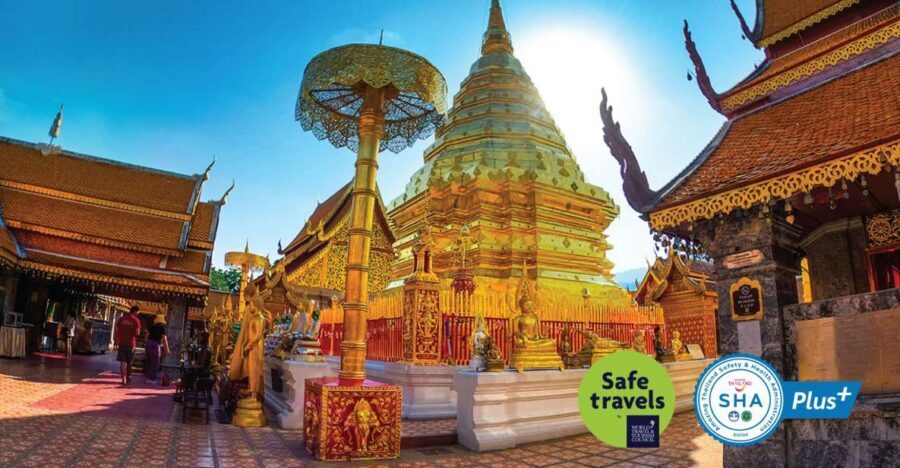
- 309 steps to the stupa, with a cable-car option for different fitness levels
- Temple terrace views over Chiang Mai and the surrounding hills
- Doi Pui museum and village walk for everyday Hmong life context
- Small group size (up to 9) for easier questions and pacing
- English-speaking guides with strong explanations of Buddhism and local culture
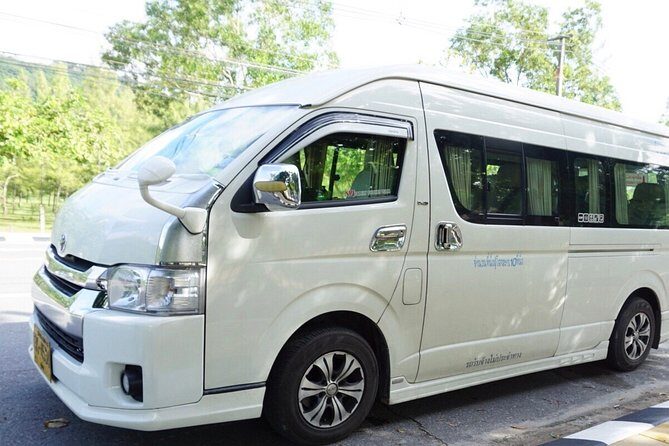
- Air-conditioned 9-seat minivan plus water and a refreshing towel
How This Half-Day Tour Feels: Temple Awe + Hill-Village Reality
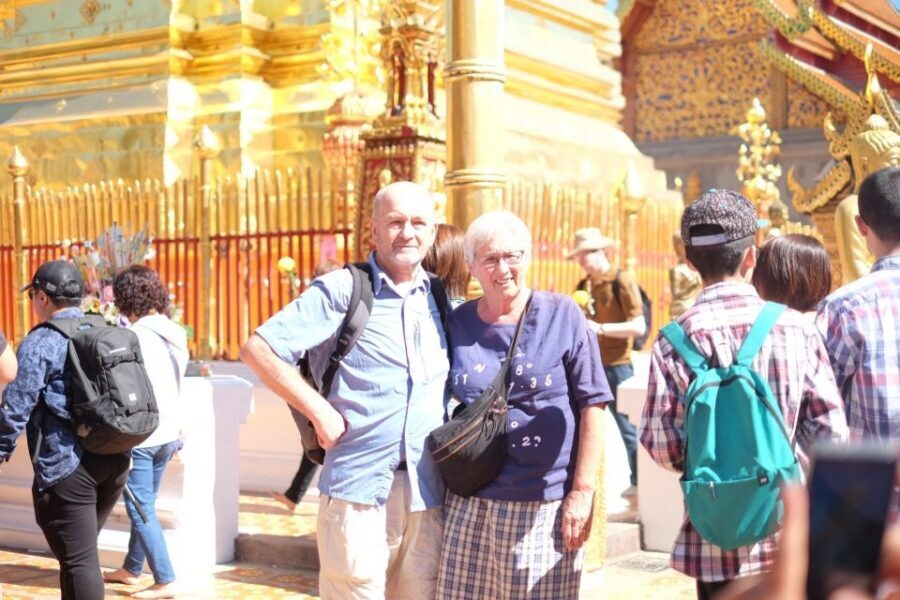
This isn’t a slow, all-day nature crawl. It’s a tight, 4-hour cultural loop that makes sense if you’re doing Chiang Mai in “short visit mode” or you want one great mountain day without burning your whole schedule.
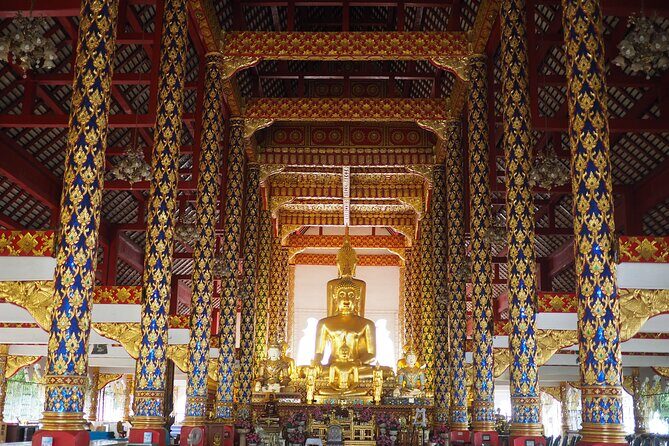
The heart of it is the contrast. You start with the mountain’s cultural layer in the Doi Pui Hmong Hill Tribe Village, where you can walk around, see the museum, and understand how people live day to day. Then you shift to the spiritual landmark side with Wat Phra That Doi Suthep, one of the area’s most famous Buddhist sites. It’s the kind of pairing that helps you connect the dots between religion, local history, and how people make a living in the region.
Price-wise, $36 per person is easier to justify because it rolls in the essentials: a guided experience, entry fees for both stops, and transportation in a comfortable 9-seat minivan.
You can also read our reviews of more tours and experiences in Chiang Mai.


Pickup and the Drive Up: Why Timing Matters for Doi Suthep
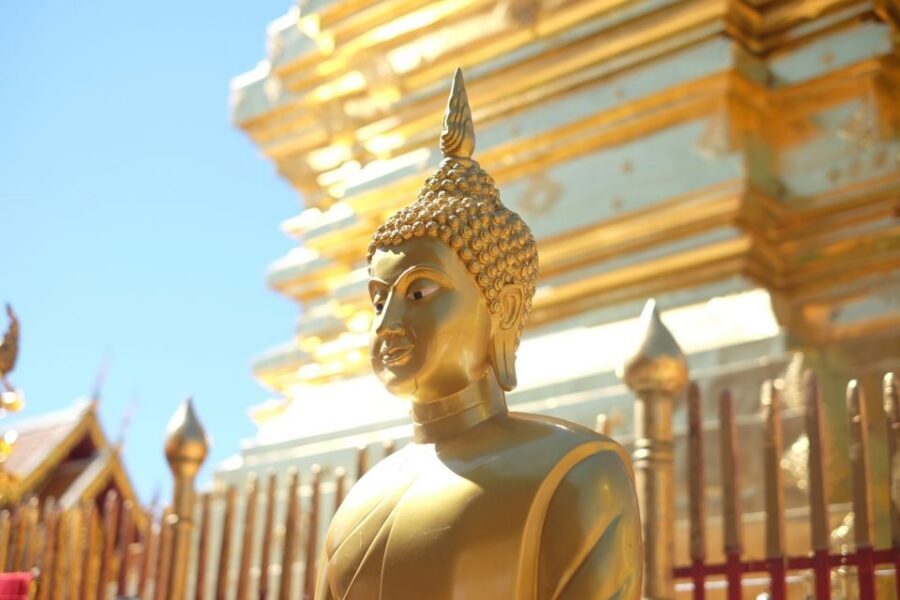
Your day is built around a hotel pickup in Chiang Mai—typically 08:00–08:30 for the morning slot or 13:00–13:30 for the afternoon slot. The pickup is in the lobby (within about 6 km of the 3 Kings Monument), then you head out by van.
The drive up takes about 45 minutes. That timing is practical because it gives your guide room to set expectations before you reach the temple area—especially helpful when you’ll be walking and navigating uneven stone paths.
Also, going with an organized van route matters here. The roads can get narrow as you climb, and you’ll want a driver who’s used to the terrain. Many guests praise the driving style and comfort, which is exactly what you want before you start climbing.
Doi Pui Hmong Hill Tribe Village: Museum First, Market Time Second
The tour starts in the Doi Pui area, with a stop at the Hmong Hill Tribe Village. You’ll spend about 1 hour here, guided. The first part is typically the museum, followed by exploring the village.
Why this stop is worth your attention: the museum gives you a framework. Without it, a village visit can turn into a quick look at crafts and souvenir stalls. With the museum + guide, you get context for clothing, daily life, and local traditions—so what you see feels like more than shopping.
After the museum, you usually get time to walk around the village area and see the market. This is where you’ll notice:
- there are lots of small shops and stalls
- food and snack tasting can be part of the experience
- people may encourage purchases of textiles, crafts, and jewelry
One practical note: expect the village to include both locally made items and more “standard souvenir” style goods. If you’re the type who likes to browse without being rushed, plan to move slowly and let your guide know what you’re interested in—textiles, coffee-related items, or just general daily life.
A few guests also mention coffee plantation details connected to the area. If coffee is your thing, it’s a good moment to ask what’s grown locally and what’s being offered as tasting.
Shopping Without Getting Stuck: A Simple Way to Handle Stalls
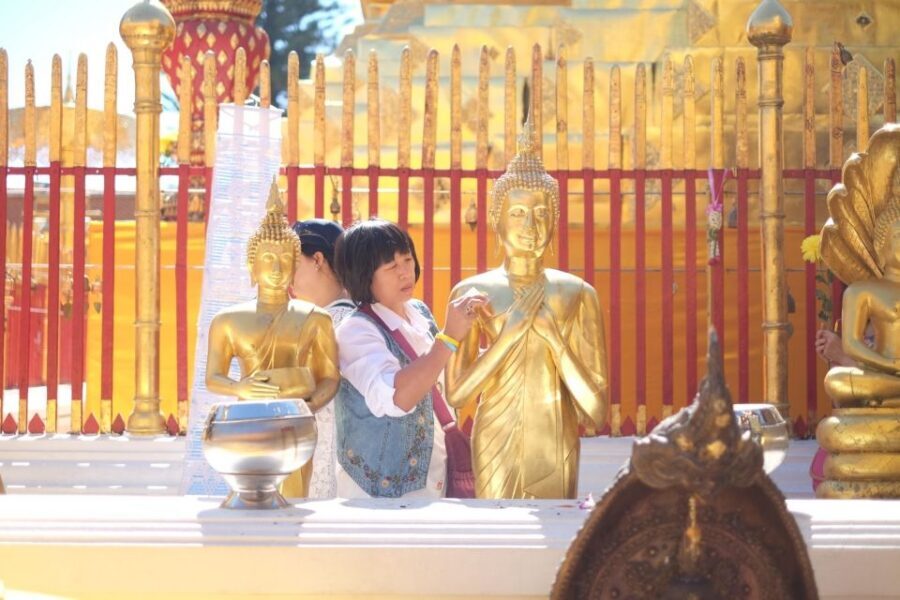
You don’t need to buy anything to enjoy the village. But if you do want souvenirs, come in with two habits:
- Ask what something is and what it’s made of before you commit
- Keep your budget in mind, because some stalls focus on higher-ticket items like jewelry
One tip from a guest: watch out for aggressive pricing on items advertised as silver rings, with figures around $120–$150 USD mentioned. You don’t have to become a hard negotiator—just treat it like any other tourist market: confirm, compare if you want, and don’t pay instantly just because something looks impressive.
If you plan to carry purchases, bring a small backpack. That makes a market stop way more comfortable.
Wat Phra That Doi Suthep: The Stairs, the Stupa, and the Big Religious Meaning
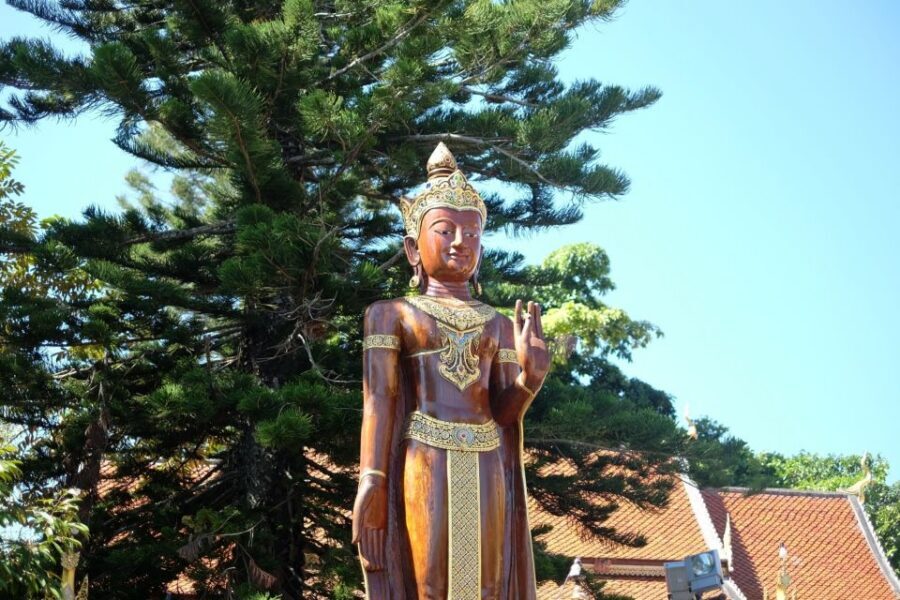
Next comes Wat Phra That Doi Suthep, still with a guided walk and a roughly 1-hour temple visit.
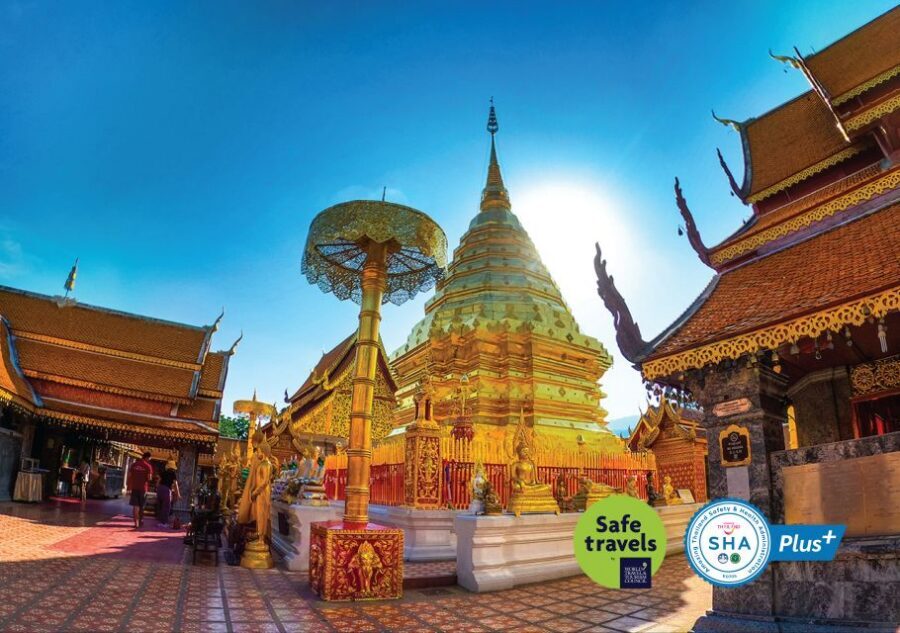
Here’s the key decision: you climb 309 steps to reach the stupa on the hilltop, or you take the included cable car. If you’re in decent shape, the stairs give you that pilgrim feeling—slow, steady, and a lot of photo angles as you go. If you’re carrying extra luggage, want to save energy, or your body complains on hills, the cable car is a smart choice.
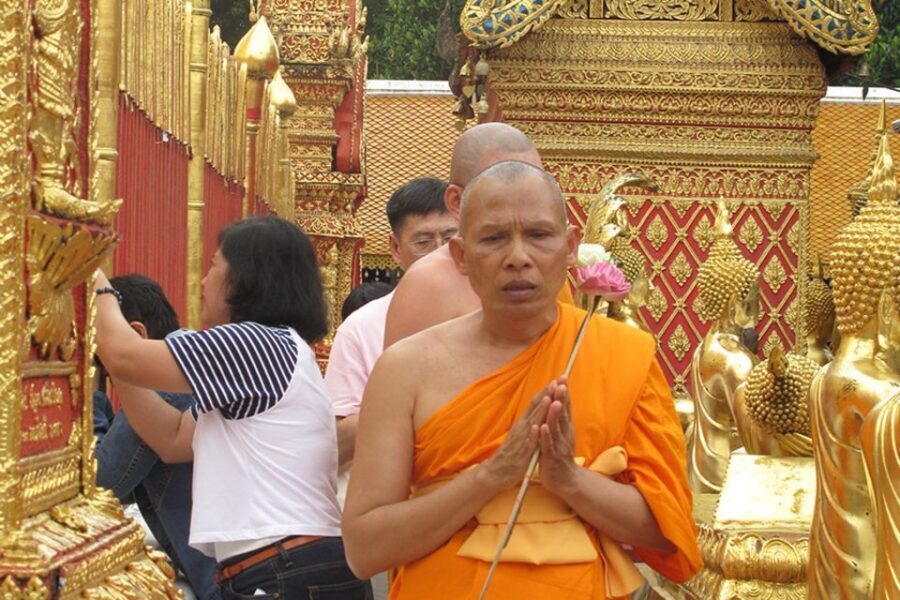
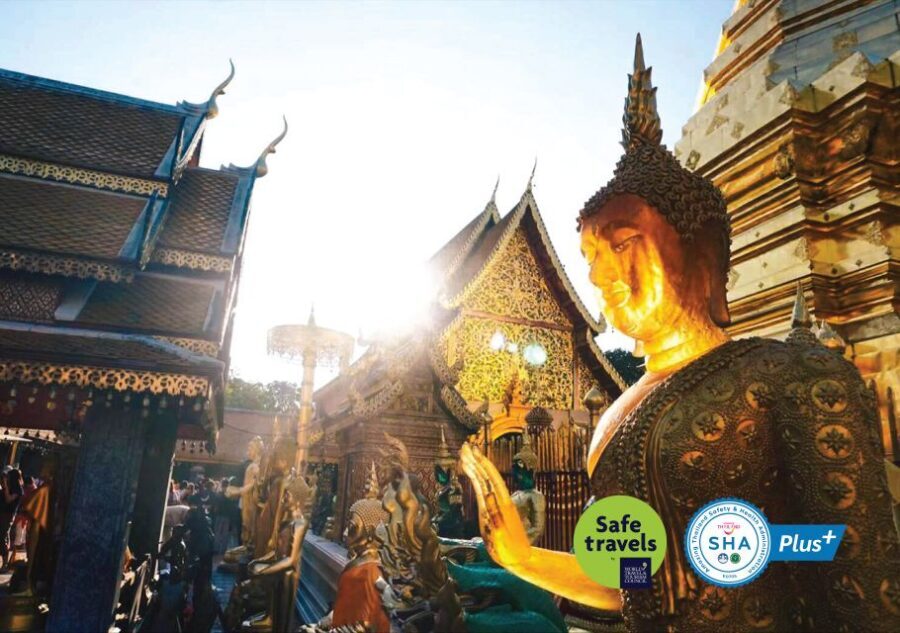
At the stupa, the temple is more than a viewpoint stop. It includes a holy relic of the Buddha, and your guide helps explain what you’re seeing—symbols, history, and Buddhist meaning behind the site. A number of guests highlighted guides by name, including Pae, Kai, Poonkie, Nut, Paul, and Tui, and praised their English and the way they connect symbols to the stories behind Buddhism. That’s what makes Doi Suthep go from impressive to actually memorable.


The Terrace View: When the Weather Plays Along
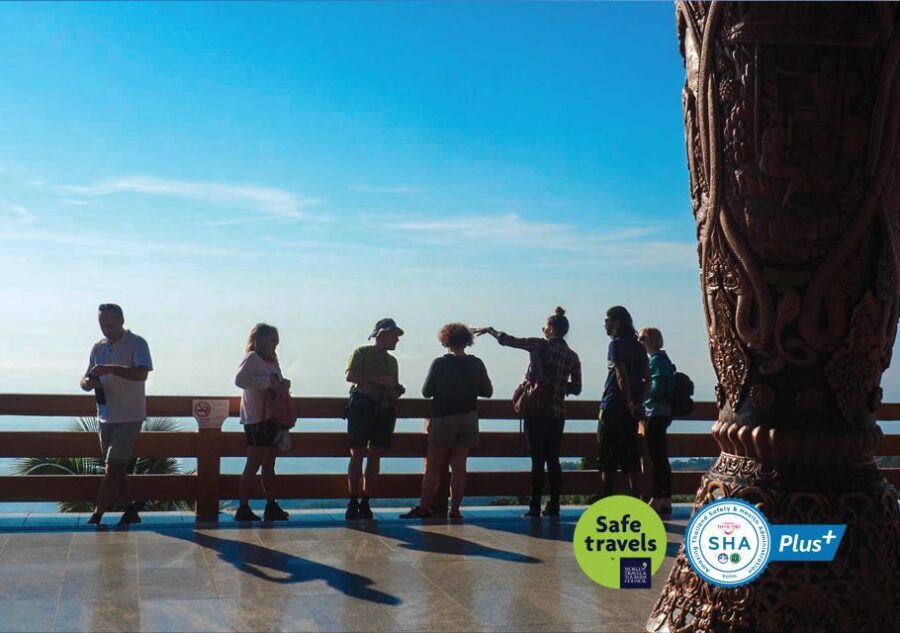
From the temple terrace, you get a sweeping view over Chiang Mai City and surroundings. This is one of those classic “you came for it” moments.
But reality check: the view can soften if it’s foggy or smoky. One guest described losing the dramatic scenery due to fog during rainy season. You can’t control that, but you can manage expectations. Even if the skyline isn’t crystal clear, the stupa area still delivers the same sense of place.
Temple Details You’ll Appreciate More With a Guide
If you’ve already visited a couple major temples in Thailand, you might think you know the pattern. Doi Suthep works because the experience is tied to the hilltop journey and the stupa symbolism. With a good guide, you understand why certain elements are positioned the way they are and what ceremonies and pilgrim routes mean.
Also, you might notice restoration or construction elements. One guest mentioned scaffolding during their visit, so if you’re a “perfect postcard only” person, just know the temple can be in active maintenance at times.
Cable Car vs. Steps: How to Choose Based on Your Body
This isn’t a fitness boot camp. Still, the steps are real, and the temple grounds include uneven paths. Before you decide, think about how your day feels right now:
- If your knees or lower back get angry on stairs, take the cable car and enjoy the terrace walking instead.
- If you want the pilgrim vibe and your legs are fine, the 309-step climb adds meaning and builds anticipation.
- If you’re traveling with tight timing, the guide can help you match your pace to the group so you don’t feel stuck waiting or rushing.
The tour’s best quality is flexibility. It gives you options without turning it into a choose-your-own-adventure mess.
Transport and Group Size: Why Up to 9 People Helps
The tour runs in a 9-seat air-conditioned minivan, with a small group size capped at 9 participants. That matters more than it sounds. With fewer people, you’re more likely to:
- get answers to your questions (instead of just hearing the guide talk)
- move at a pace that feels human
- take pictures without constant repositioning
Many guests specifically praise how smoothly the driver handled terrain and how professional the guide felt. Even in cases where the group ended up tiny, the tour still ran with the minivan and guide, which shows that this isn’t just a “bigger group equals better value” setup.
English Guidance: What to Expect From the Explanations
This tour is led by an English-speaking guide, and that’s the difference-maker for Doi Suthep. A temple can be beautiful and still be confusing if you don’t know what you’re looking at.
From names mentioned in guest feedback—like Pae, Kai, Poonkie, Nut, Paul, Nong, Bee, and Om—the consistent theme is that guests appreciated clear explanations about:
- the life of monks and Buddhist practice
- the meaning of temple symbols
- the culture behind what you’re seeing in the Hmong village
If you like learning while you walk, this is a great format. If you’d rather just enjoy visuals with minimal talking, you can still do that, but you’ll likely benefit from the guidance at least at the stupa and museum parts.
What to Bring (So You Don’t Get Turned Away)
The tour includes provided drinking water and a refreshing towel, which is a nice touch when you’re climbing and moving around.
But you still need to follow the temple dress rules:
- Bring comfortable shoes
- Wear long pants
- Bring a long-sleeved shirt
- Avoid shorts and sleeveless shirts
- Shoulders and knees must be covered for temple entry
Casual clothing is fine as long as you meet that requirement. This is one of those situations where packing correctly saves you stress at the worst moment.
Who This Works Best For (And Who Should Skip It)
This tour is a strong fit if you want:
- a half-day Chiang Mai cultural hit
- guided context at both the Hmong village and Doi Suthep
- an option to reduce stair workload via cable car
- a small-group vibe with easy questions
It may not be a good match if you have:
- back problems
- mobility impairments
- heart problems
- you use a wheelchair
Even with the cable car option, the temple area still involves walking on uneven ground and moving between sites. So listen to your body.
Price and Value: Why $36 Feels Fair for This Route
At $36 per person for about 4 hours, the value comes from what you’re getting bundled in:
- air-conditioned transport in a 9-seat minivan
- an English-speaking guide
- entry fees for Doi Pui hill tribe museum, Doi Suthep Temple, and the cable car
- water and a refreshing towel
- travel accident insurance
If you tried to do this on your own, you’d spend time coordinating transport and figuring out entrance costs. Here, the structure is tight and guided, and the stops are the exact two biggest “mountain culture” anchors in the Chiang Mai area.
In short: you’re paying for convenience, interpretation, and access—then getting temple awe and village context in the same afternoon or morning.
Should You Book This Tour?
I’d book this tour if you’re after one highly practical half-day plan that connects Wat Phra That Doi Suthep with the Doi Pui Hmong Hill Tribe Village. The best part is the pacing: you get the big stupa experience and the museum/village context without feeling like you’re stuck on the road all day.
Skip it if stairs and uneven walking are a problem for you, or if you hate being in heat (though the day includes water, you’ll still be outside and moving). Also, if you’re traveling during heavier fog or smoky periods, accept that the view might be muted.
If you’re comfortable with the temple dress code and you want guided meaning over random sightseeing, this one is an easy yes.
FAQ
What is the duration of the Doi Suthep & Hmong Hill Tribe Village tour?
The tour runs for about 4 hours.
How much does the tour cost?
The price is listed at $36 per person.
Where does pickup happen?
Pickup is included at your hotel lobby in Chiang Mai, within 6 km of the 3 Kings Monument.
What time do tours depart?
The tour offers a morning slot around 08:00–08:30 and an afternoon slot around 13:00–13:30.
How many people are in the group?
The group is limited to a small group size, with a maximum of 9 participants.
Is transportation provided?
Yes. You ride in a 9-seat air-conditioned minivan.
Are entrance fees and the cable car included?
Yes. Entry fees for Doi Pui hill tribe museum, Doi Suthep Temple, and the cable car are included.
What should I wear or bring for the temples?
Bring comfortable shoes, long pants, and a long-sleeved shirt. Shoulders and knees must be covered for entering temples.
Is this tour suitable for people with mobility issues?
No. It’s not suitable for people with back problems, mobility impairments, heart problems, or wheelchair users.
Are shorts and sleeveless shirts allowed?
No. Shorts and sleeveless shirts are not allowed.