REVIEW · CHIANG MAI
Half day Best of Chiang Mai City by Tuk-Tuk Private tours
Book on Viator →Operated by Chiang Mai Local Tours · Bookable on Viator
Tuk-tuk rides sort out your Chiang Mai plans fast. This half-day private tour by tuk-tuk feels like a smart first-day move, with hotel pickup and an English-speaking guide to steer you. You get an organized sweep of the old city sights without spending your best energy on navigation.
I particularly like the mix of four temples plus a real local shopping stop. You’ll have plenty of chances to photograph landmarks and pick up small souvenirs without turning the trip into a long, exhausting route.
One thing to weigh: it’s about three hours, with only four temples and one market, and the tuk-tuk condition can vary. If you’re picky about ride comfort, go in with that in mind.
In This Review
- Key Things to Know Before You Go
- Tuk-Tuk Pickup and Start Times: Plan Your 3-Hour Window
- Old City Canal and Chiang Mai Gates: Photo Stops Before Temples
- Wat Chedi Luang and the Story of the Emerald Buddha
- Three Kings Monument: A Quick Landmark Photo Break
- Wat Srisuphan Silver Temple and the Lanna Silversmith Workshop
- Warorot Market: Souvenirs, Fruit, and Local Prices
- How Much Can You See in Half a Day
- Tuk-Tuk Comfort and Dress Code Tips for Temple Visits
- Price and Value for a Private English-Guided Tour
- Should You Book This Half-Day Best of Chiang Mai City Tour?
- FAQ
- How long is the Half Day Best of Chiang Mai City by Tuk-Tuk tour?
- What are the departure times?
- Where do I get picked up and dropped off?
- What stops are included on the tour?
- Which temples are visited during the tour?
- Do you visit Warorot Market?
- Is there an English-speaking guide?
- What’s included in the price?
- What’s not included?
- What should I know about dress code and participation?
Key Things to Know Before You Go
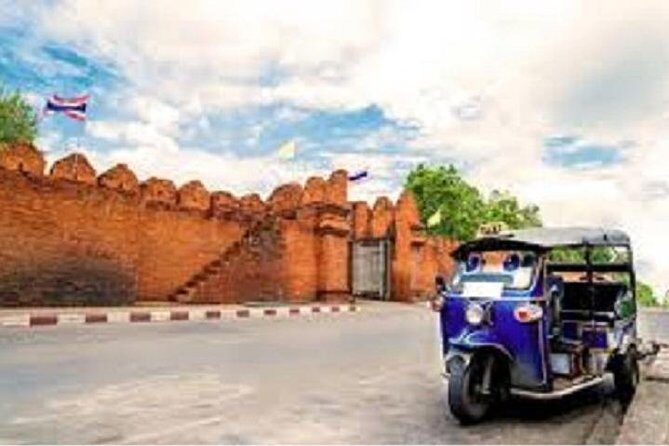
- Hotel pickup and drop-off by tuk-tuk: you start and end from your own place in Chiang Mai.
- Two departure options: 8:30am or 12:30pm start times, depending on what fits your day.
- Four temples, one market: a tidy route that’s great for orientation.
- Wat Chedi Luang’s earthquake scars: you’ll learn what happened to the top portion in 1545.
- Wat Srisuphan’s silverwork: famous for silver-colored architecture and a silversmith tradition.
- Warorot Market prices: a local-style market stop with lots of product variety.
Tuk-Tuk Pickup and Start Times: Plan Your 3-Hour Window
This tour runs on two start times, so you can match it to your energy and the weather. The morning option starts at 8:30am and the afternoon option starts at 1:30pm. It’s designed to be short: expect around 3 hours of sightseeing, then you’re back at your hotel around 11:30am or 4:30pm.
The tour is capped small, with a maximum of 10 travelers, but it’s still private in the sense that you’re touring with your group and guide rather than joining a giant bus crowd. There’s also a minimum of 2 people per booking, so check that your dates can be confirmed.
You’ll get an English-speaking guide, plus drinking water and season fruits during the tour. There’s also accident travel insurance included, which is a small but reassuring detail for a ride through busy streets and temple entrances.
One practical tip: since the route covers multiple temple sites, plan to wear clothing that matches a formal dress code. If you’re unsure what that means for you, bring something simple and respectful. You’ll also want to keep your camera charged. A lot of the stops are “look up, take a photo, move on,” not long museum-style visits.
You can also read our reviews of more city tours in Chiang Mai
Old City Canal and Chiang Mai Gates: Photo Stops Before Temples
Before you even reach the temples, you’ll get your bearings the easy way. You’ll ride through the canal area that surrounds Chiang Mai’s old city. It’s the kind of start that helps you understand where everything sits, because you’re seeing the layout from the road while the guide points out key landmarks.
Then you’ll stop at historical gates, including Chiang Mai Gate and Tae Pae Gate. These are popular photo spots and a helpful first lesson in how the old city was once protected with guard walls long ago. Even if you’re not a history fanatic, the gates give you a “map in your mind” fast, so later you’ll feel like you can find your way.
This portion is also where the tuk-tuk style makes sense. You’re moving at a comfortable pace while the guide handles routing. It’s a nice contrast to wandering alone, especially if you’ve just arrived and you don’t yet know which streets are worth repeating.
Why this part is valuable: orientation. In a half-day tour, the goal isn’t to cover everything. It’s to help you decide what to revisit later—temples you love, markets you want to return to, and areas where you’ll want to spend more time on your own.
Wat Chedi Luang and the Story of the Emerald Buddha
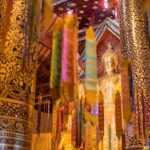
Next comes one of the most meaningful temple stops on the route: Wat Chedi Luang. The guide explains its name as the Temple of the big stupha, and you’ll hear how it was constructed during the 14th and 15th centuries.
This temple is especially interesting because it connects Chiang Mai to a famous figure you’ll likely hear about in Thailand’s bigger temple story. It was once home to the Emerald Buddha, which can now be found in Bangkok’s Grand Palace. That alone gives you a sense of how travel within Thailand has long historical ties, not just modern tourism.
Then there’s the earthquake story, and it’s one of the reasons this stop feels real instead of just decorative. In 1545, an earthquake destroyed the top 30 meters of the temple. Most of it has been repaired, but the damage around the lower edges is still visible. So when you look at the structure, you’re looking at history you can literally see.
What you should watch for: the guide’s explanations plus your own quick scan of the temple’s form. You don’t need to “know architecture” to appreciate it. You just need to notice what changed after the earthquake and how restoration still leaves a trace.
A quick realism note: temple visits always have practical rules. The route is short, so keep your timing tight, follow the guide’s cues, and dress respectfully. You’ll get more out of the stop if you aren’t rushing to ask questions at the last second.
Three Kings Monument: A Quick Landmark Photo Break
Between larger temple moments, you’ll make a stop at the 3 Kings Monument. It’s a shorter break in the flow, but it still works as a landmark pause—something you can photograph and use later as a reference point in town.
Because the route is time-limited, this stop feels like a “check the box, learn the context” moment. If you’re the type who likes to ask follow-up questions, this is a good time to do it, since you’re not juggling a longer walking session.
Wat Srisuphan Silver Temple and the Lanna Silversmith Workshop
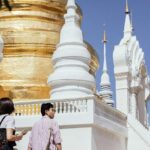
The most distinctive temple stop on the itinerary is Wat Srisuphan, also known as Wat Srisuphan Aram—often called Chiang Mai’s silver temple. This place isn’t famous only for looks; it’s tied to craft tradition.
Here’s what you’ll learn on site:
- The temple was first founded in 1501 under King Mengrai.
- It was renovated in 2004.
- The key feature is a silver-colored building that shimmers in sunlight.
- The ubosot uses alloy and zinc-silver, which helps create that metallic look.
- The temple supports Chiang Mai’s silversmith tradition, and you can see how techniques get passed to the next generation at the Ancient Lanna Arts Study Centre, known as Sala Sip Mu Lanna.
The guide also encourages you to look for artisans at work, tying the temple visit to something living, not only historical. That’s the big value of this stop: it gives you a bridge between temple culture and everyday craft.
If you like photos, plan to spend a minute just watching the way light hits the silver-colored elements. It’s the kind of detail that feels small until you’re standing there and the guide points out what to look for.
A small caution: the word formal shows up in the tour notes, so make sure your outfit is temple-appropriate before you arrive. If you’re caught short, it can slow you down, and the tour is designed to keep moving.
You can also read our reviews of more private tours in Chiang Mai





Warorot Market: Souvenirs, Fruit, and Local Prices
Your final stop is Warorot Market, a huge local market where residents do their everyday shopping. It’s a different vibe from temple walls, and that contrast is part of why this half-day tour works for first-time visitors.
On the way to the market, you’ll also pass the area where the Sunday Market and the famous Night Bazaar are located, so you get the geography even if those events are at different times.
Warorot itself has lots going on. You might see:
- fresh and dried fruit and vegetables
- souvenirs
- fireworks
- clothing
- fresh seafood
- jewelry and watches
- beauty supplies
- a large flower market
- and many other local goods
One of the best practical notes here is pricing: it’s said to have some of the lowest prices in Chiang Mai. Even if you don’t plan to buy much, it helps to see how locals shop and what items are actually available in bulk and variety.
How to use this stop well: treat it like a browse first, buy second. You’ll get the lay of the stalls quickly, and you’ll know what catches your eye for later. Also, don’t expect a quiet, museum-style experience. It’s a working market, so keep your phone and wallet secure and let your guide handle the pace.
If you want market time as part of your photos, go in ready to move. The best shots often happen as vendors are setting things out and customers are moving through the aisles.
How Much Can You See in Half a Day
This is a half-day tour, so it has a clean, simple goal: help you orient yourself and give you enough highlights to build a smart plan for the rest of your Chiang Mai stay. Four temples and one market sounds like a lot, and it is—just not the kind of schedule where you linger for hours.
That’s why it works best when:
- you’ve just arrived and want a quick map of the old city
- you want a mix of temples and shopping in a manageable window
- you prefer a driver-and-guide plan rather than figuring everything out yourself
It’s also why it might not work if you want deep temple time or lots more variety. With only a handful of stops, you’ll cover the “greatest hits,” not every temple worth seeing. One practical consideration is that the tuk-tuk ride takes you from place to place quickly, so you may feel like you blink and suddenly you’re at the next stop.
So I’d treat this as a first pass. Use it to decide what you want to revisit on a slower day. If you fall in love with a specific temple or craft stop, you’ll likely want to circle back and take more time.
Tuk-Tuk Comfort and Dress Code Tips for Temple Visits
The big question with any tuk-tuk tour is comfort. In general, the idea is flexible, low-stress transport. In at least one experience tied to this type of outing, the vehicle and ride style were a highlight: pickup was on time and the driver drove steadily.
Still, vehicle condition can vary. If you’re the kind of person who notices seat fabric, firmness, or upholstery wear, expect it might not feel brand-new. The tour is short, so you’re not stuck for a full day, but it’s worth being aware.
Also, the tour notes call for formal dress. For many visitors, that’s easier than it sounds, but it still matters. Temple entrances are where you’ll feel it most—so plan your outfit before pickup.
Finally, remember what’s included: water and season fruits are part of the experience, and that helps you keep energy up during temple walks and market browsing. Bring sunscreen or a hat if you use them on hot days, but don’t assume the tour will pause for long breaks.
Service animals are allowed, and the tour states most people can participate. The main “limit” is really the temple etiquette and how much walking you feel comfortable doing in a compact schedule.
Price and Value for a Private English-Guided Tour
At about $55 for a roughly 3-hour private half-day tour, you’re paying for convenience and structure. You’re not only buying sightseeing. You’re buying:
- hotel pickup and drop-off by tuk-tuk
- an English-speaking guide
- temple and market routing
- drinking water and season fruits
- accident travel insurance
That value can add up fast if you’d otherwise pay for multiple rides and waste time figuring out what’s worth your limited time. The itinerary is built around orientation: gates, a major temple, a craft-focused temple, and a working market. For a first visit, that mix is a strong use of your day.
What’s not included is also clear: souvenir photos and personal shopping. So if you’re planning to buy gifts, keep in mind this is a browse-and-buy market stop, not a bundled purchase package.
If you want a tour that feels efficient rather than slow, this price makes sense. If you’re chasing a very specific niche (like only artisan temples, or only deep temple architecture), you may want something longer. But for most first-timers, this hits a practical sweet spot.
Should You Book This Half-Day Best of Chiang Mai City Tour?
Book this tour if you:
- arrive with limited time and want an orientation sweep
- want tuk-tuk transport plus an English guide handling logistics
- like a tight itinerary with four temple highlights and a market stop
- want a chance to see where major market areas are and get a sense of prices at Warorot Market
Skip or reconsider if:
- you want lots more stops than four temples plus one market
- you’re very sensitive to ride comfort and upholstery condition
- you already know Chiang Mai well and don’t need help building your bearings
For most people, this is an easy, structured way to get your first day right. You’ll come away knowing what area to explore later, which temples you want to see again, and where local shopping feels accessible.
FAQ
How long is the Half Day Best of Chiang Mai City by Tuk-Tuk tour?
The tour lasts about 3 hours.
What are the departure times?
You can choose a morning start at 8:30am or an afternoon start at 1:30pm.
Where do I get picked up and dropped off?
The tour includes pickup and drop-off from your hotel or guesthouse by tuk-tuk.
What stops are included on the tour?
You visit four temples and one market, plus stops at historical gates and the 3 Kings Monument as part of the route.
Which temples are visited during the tour?
The tour includes Wat Chedi Luang, Wat Srisuphan (the silver temple), and additional temple stops as part of the four-temple schedule.
Do you visit Warorot Market?
Yes. Warorot Market is your final destination on the tour.
Is there an English-speaking guide?
Yes, the tour includes an English-speaking tour guide.
What’s included in the price?
Hotel pickup and drop-off by tuk-tuk, an English speaking tour guide, drinking water and season fruits, and accident travel insurance.
What’s not included?
Souvenir photos and personal shopping are not included.
What should I know about dress code and participation?
The dress code is formal, service animals are allowed, and most travelers can participate. The group is capped at a maximum of 10 travelers, and a minimum of 2 people per booking is required.