REVIEW · CHIANG MAI
Evening Cooking Class in Traditional Pavilion with Beautiful Garden – Chiang Mai
Book on Viator →Operated by Oh-Hoo · Bookable on Viator
The smell of herbs, hot woks, and fresh fruit—at 4 pm. This evening cooking class takes place at Grandma’s Home Cooking School in an open pavilion surrounded by an organic farm garden just outside Chiang Mai, so the whole night feels hands-on rather than classroom-y. I love the small group size and the chance to make your own curry paste with guidance from an English-speaking instructor.
Two things I especially liked: you get an actual farm walk where you can collect eggs and gather fresh ingredients, and you cook from a real Thai menu of favorites like Tom Yam/Tom Kha, Pad Thai, curry, and Mango Sticky Rice. The big drawback to note is that the exact dishes can shift with the season and ingredient availability, so you’ll want to match your expectations to the menu options.
In This Review
- Key takeaways from the class
- Why this Chiang Mai evening class works so well in the garden pavilion
- Your 4:00 pm-to-dinner flow: pickup, farm walk, and cooking time
- Touring the organic farm: eggs, herbs, and fresh ingredients you’ll taste later
- The cooking part: four dishes, your own station, and curry paste building blocks
- Soup: hot and sour or coconut and smooth
- Pad Thai: the stir-fry that demands timing
- Curry: green/red choice plus the real skill of curry paste
- Mango Sticky Rice: dessert that feels simple but isn’t
- Eating together: how the meal and sharing round out the learning
- Price and value: what $51.46 buys you in real terms
- Who should book this class (and who might want to skip it)
- Final call: should you book Grandma’s Home Cooking School in Chiang Mai?
- FAQ
- How long is the Chiang Mai evening cooking class?
- What time does the tour start?
- Where does the activity begin?
- Do you get hotel pickup?
- How many people are in each class?
- What dishes will I cook?
- Is there a mobile ticket?
- What happens if the weather is poor?
Key takeaways from the class
- Organic farm walk + ingredient gathering before you cook
- Max 8 people, with an individual station so you’re not waiting around
- Curry paste from scratch, guided by an English-speaking instructor
- Cook 4 dishes selected from Tom Yam/Tom Kha, Pad Thai, Green Curry or Red Curry, and Mango Sticky Rice
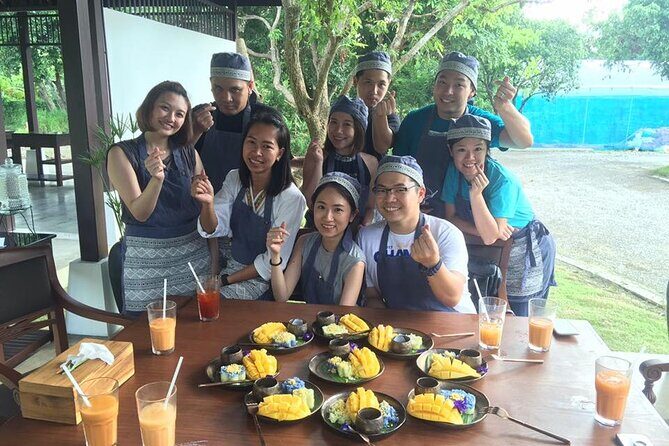
- Dinner is built in: you eat what you help make as a group
- Pickup and drop-off are offered, and the tour runs about 4 hours starting at 4:00 pm
Why this Chiang Mai evening class works so well in the garden pavilion
Thai cooking classes can turn into a production line. This one doesn’t. You start outdoors, in a calm organic-farm setting, and then you move into an open pavilion where you actually cook at your own station. That flow matters because Thai flavors are built in layers: herbs first, then aromatics, then spice, then balance.
I also like the practical structure. You’re not just learning recipes—you’re learning the logic behind them. When you’re guided through making a curry paste from scratch, you start to understand why green curry tastes green, why red curry brings heat and depth, and why coconut soup feels round instead of sharp.
One more thing: the vibe stays friendly and social. After cooking, you sit down together, compare flavors, and share stories before heading back. It’s not a rigid, timed buffet of tasks. It feels like a family-style evening where you leave with both food and technique.
You can also read our reviews of more cooking classes in Chiang Mai

Your 4:00 pm-to-dinner flow: pickup, farm walk, and cooking time
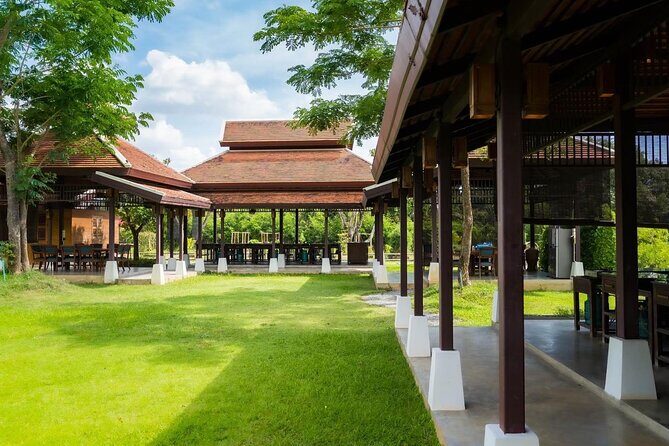
The day starts early evening—4:00 pm—which is perfect timing if you want dinner plans without burning a whole night. Pickup is offered in Chiang Mai, and the activity ends back at the meeting point (Tha Phae Gate area on Tha Phae Road).
Once you meet your group, you get that two-part rhythm:
1) tour the organic farm and collect ingredients,
2) cook in the pavilion and eat together.
This is a big part of why the experience feels worth it. You’re not paying for a single cooking session. You’re paying for a full evening with preparation, hands-on cooking, and a sit-down meal that uses what you made.
Also, because the group is capped at 8 travelers, the instructor can actually watch your hands and answer questions. That matters when you’re learning something sticky and technical like pounding or mixing curry paste ingredients in the right order.
Touring the organic farm: eggs, herbs, and fresh ingredients you’ll taste later
The farm component is more than a scenic add-on. It gives you the ingredients and context for what you’ll cook later.
You walk through an organic farm filled with fruits and vegetables, and you get guidance on Thai herbs and vegetables. Then you collect eggs and gather fresh ingredients for the class. Even if you’ve cooked Thai food before, this part changes how you think about the flavors. Fresh herbs don’t behave like dried herbs. Their aroma comes through differently in heat, and they often taste brighter than what you can easily find at home.
Here’s how I’d use the farm walk if you go:
- Pay attention to the herb names and what they’re used for. Thai dishes rely on specific leaves and roots, not just “spice.”
- Note textures. You’ll taste the difference between something picked that day and something sitting in a market display.
- Ask questions about substitutions you’d use at home. The instructor is there for your learning.
And because you’re outside, it’s smart to dress for comfort. Wear shoes that handle uneven ground, and plan for evening outdoor conditions. The class is described as requiring good weather, so if the sky looks questionable, bring a light layer just in case.
The cooking part: four dishes, your own station, and curry paste building blocks
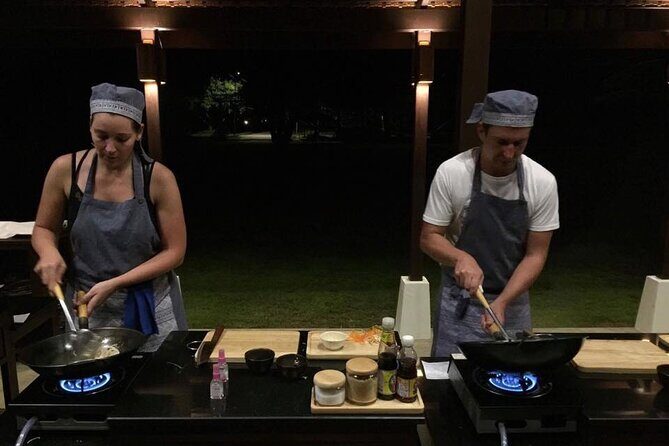
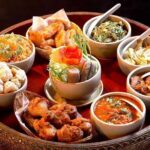
Now for the main event. You’ll cook four dishes from a menu chosen from:
- Tom Yam (Hot and Sour Soup) and/or Tom Kha (Coconut Soup)
- Pad Thai (Thai Stir-Fried Rice Noodles)
- Green Curry and/or Red Curry
- Mango Sticky Rice (Khao Niao Mamuang)
Your exact four-dish combo can change based on season and ingredient availability, so don’t worry if the schedule you imagined turns out slightly different. The core experience stays the same: you learn technique and flavor-building for several Thai favorites in one evening.
Soup: hot and sour or coconut and smooth
Soup sets the foundation. If you make Tom Yam, you’ll experience the classic punchy balance—spicy, sour, and aromatic all in one bowl. If you make Tom Kha, the coconut base softens the bite and rounds out the flavor.
Either way, watch what happens when you adjust heat and acidity. Thai soups tend to be built around balance rather than just intensity. If you taste and think it’s too sharp, the fix usually isn’t “add more spice.” It’s about restoring that harmony.
You can also read our reviews of more evening experiences in Chiang Mai



Pad Thai: the stir-fry that demands timing
With Pad Thai, the key is not overcooking rice noodles. This is the kind of dish where timing matters and where having your own station helps. You’re not waiting for someone else to manage the wok while you stand around.
I like that this dish teaches you the practical Thai approach: build flavor fast, then toss and finish. It’s less about slow simmering and more about heat control.
Curry: green/red choice plus the real skill of curry paste
Curries are where the class really earns its reputation. You create your own curry paste with your instructor’s guidance, then use it in curry. That’s not a small detail. Curry paste is the flavor engine. If you get that balance right (herbs, aromatics, spice, and depth), the rest of the curry tastes more correct even if your pot isn’t fancy.
Green curry and red curry each have their own personality, and making paste helps you understand why. The class experience turns curry from a “recipe I repeat” into a technique you can adapt.
Mango Sticky Rice: dessert that feels simple but isn’t
For dessert you’ll make Mango Sticky Rice. It’s one of those Thai sweets that tastes straightforward—until you’re actually doing it. Getting the right texture and sweetness is part of the learning, and it’s a great capstone after spicy savory dishes.
When you make it yourself, you’ll remember the small things: how the rice feels, how the topping interacts, and how the mango should taste bright rather than flat.
Eating together: how the meal and sharing round out the learning
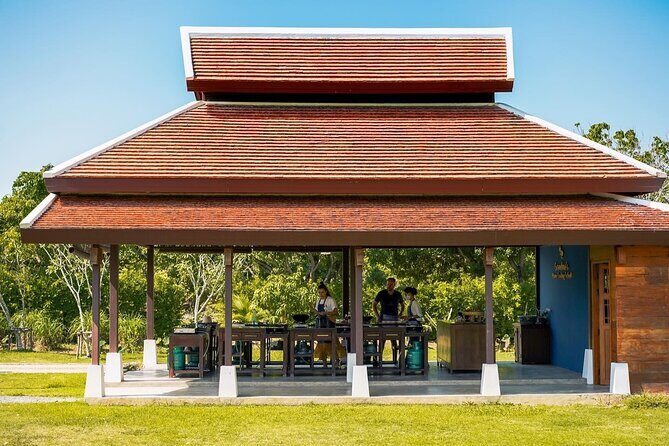
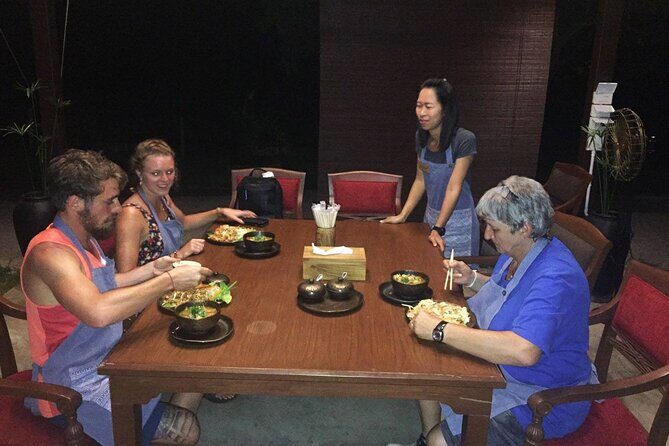
After cooking, you get to enjoy your meal with the group. This is where the evening becomes more than a cooking class. You taste your own food, taste other people’s variations, and compare what changed.
That sharing part is useful. Thai cooking often depends on tiny adjustments. If someone’s curry tastes sharper or a stir-fry tastes a bit sweeter, you learn what to watch for next time. The group environment also keeps the night from feeling like work. You’re focused, but you end up laughing about the realities of handling hot pans and sticky ingredients.
This also makes the experience feel like value. A big portion of what you pay for is that you eat what you cook, not just stand by while someone else prepares the final plates.
Price and value: what $51.46 buys you in real terms
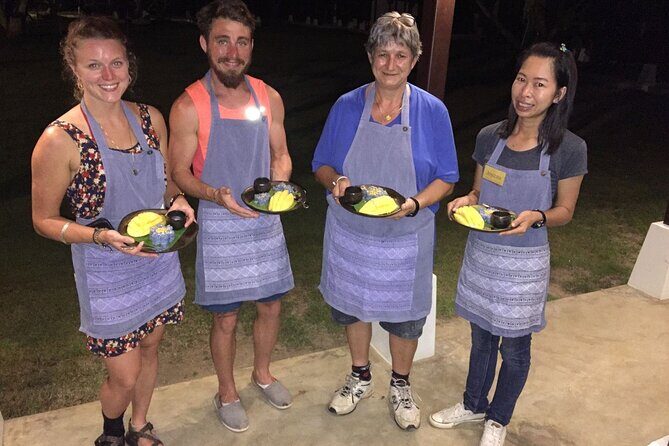
At $51.46 per person, you’re paying for a four-hour evening that includes:
- hotel pickup offered (so you’re not figuring out transport in the dark),
- an organic farm walk with ingredient gathering,
- small-group cooking with an individual station,
- instruction from an English-speaking guide,
- cooking multiple Thai dishes plus dessert,
- and a shared meal at the end.
When you price out the components separately, it’s pretty reasonable. You’re essentially buying an evening of guided cultural food education plus full dinner. The small group size is the real value driver, because it increases the time you spend actually cooking and asking questions.
Also, curry paste from scratch is the kind of skill that’s hard to learn from casual cooking videos. If you plan to cook Thai food at home, this is the part you’ll repeat later.
Who should book this class (and who might want to skip it)
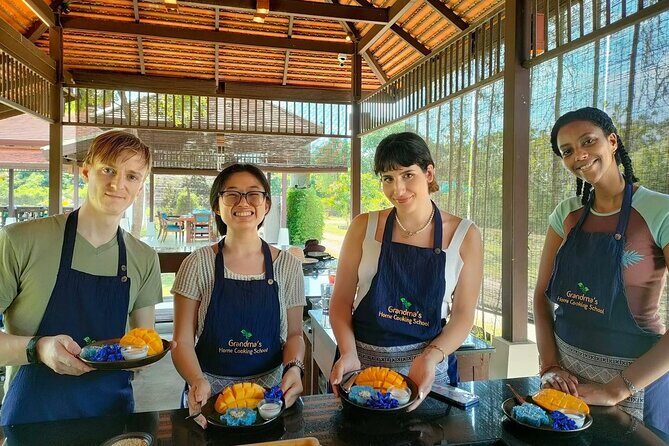
I think this fits best if you want a practical, structured way to learn Thai flavors without spending all day. It’s ideal for:
- food lovers who like to cook and want real technique,
- people who want a small-group setting with individual attention,
- curry fans who want to understand curry paste and balance,
- anyone who’s visiting Chiang Mai and wants one evening that’s both social and useful.
You might reconsider if you’re the type who wants a totally fixed menu, or if you dislike outdoor activity before cooking. The menu can change with seasonal ingredients, and the experience needs good weather.
Final call: should you book Grandma’s Home Cooking School in Chiang Mai?
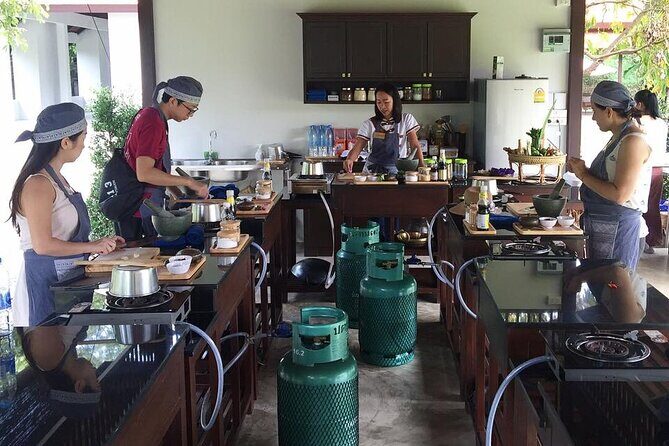
I’d book it if you want an evening that ends with two wins: you eat an excellent dinner and you leave with skills you can actually use at home. The combination of the organic farm walk, small-group cooking at your own station, and the curry paste lesson makes the class feel focused rather than generic.
If you’re aiming for a hands-on Thai food lesson with a relaxed family-style feel, this is a strong choice. Just keep your expectations flexible about the exact four dishes, since the menu can shift with what’s available that season.
FAQ
How long is the Chiang Mai evening cooking class?
It’s about 4 hours.
What time does the tour start?
The start time is 4:00 pm.
Where does the activity begin?
The meeting point is Tha Phae Gate, Tha Phae Road, Tambon Chang Khlan, Amphoe Mueang Chiang Mai.
Do you get hotel pickup?
Pickup is offered.
How many people are in each class?
The class has a maximum of 8 participants.
What dishes will I cook?
You cook 4 dishes selected from Tom Yam (Hot and Sour Soup), Tom Kha (Coconut Soup), Pad Thai (Thai Stir-Fried Rice Noodles), Green Curry, Red Curry, and Mango Sticky Rice.
Is there a mobile ticket?
Yes, the tour includes a mobile ticket.
What happens if the weather is poor?
The experience requires good weather. If canceled due to poor weather, you’ll be offered a different date or a full refund.