REVIEW · CHIANG MAI
Chiang Rai White Temple Blue Temple and Hill Tribe Village Tour
Book on Viator →Operated by WanderSiam · Bookable on Viator
Chiang Rai packs three unforgettable temple scenes. I really liked the Mae Khachan hot-spring foot soak and the fact you can boil eggs in the natural mineral water. The Wat Rong Khun White Temple is the star, and the bonus is that the day also includes a Lahu hill tribe village with walking and dessert.
My only caution is the time tradeoff: this is an almost full-day outing with several hours on the road, and Wat Rong Khun requires a 50 THB cash entrance fee once you get there.
In This Review
- Key highlights you’ll feel in your day
- Chiang Rai from Chiang Mai: what the 7:30 start and 11 hours feel like
- Mae Khachan Hot Spring: 90°C mineral water and hands-on boiled eggs
- Wat Rong Khun White Temple: the iconic sparkle and the cash fee
- Wat Rong Suea Ten Blue Temple: free entry, no monks, and modern art inside
- Wiang Pa Pao Lahu hill tribe village: mountain life, walking, and dessert
- Value for $56.93: what you get, what costs extra, and where it makes sense
- The best fit: who this tour will suit most
- A note on last-minute hiccups: don’t book your whole week around one day
- Should you book this Chiang Rai White Temple, Blue Temple, and hill tribe tour?
Key highlights you’ll feel in your day
- Mae Khachan Hot Spring, 90°C water + DIY eggs: foot soak first, then boil eggs right in the hot mineral water.
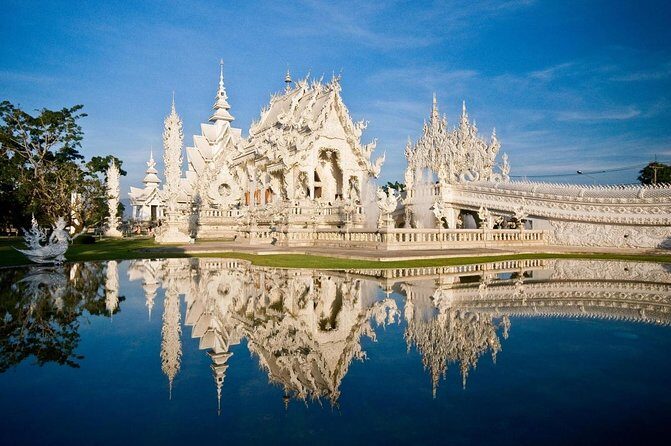
- Wat Rong Khun White Temple’s glass-and-plaster look: iconic white surfaces that sparkle in the sun.
- Wat Rong Suea Ten Blue Temple is free and not active: no monks live here, and the interior blends Buddhist themes with a modern art feel.
- Wiang Pa Pao Lahu village walking: you trade big-city sightseeing for mountain settlement life and a dessert stop.
- Hotel pickup + air-conditioned comfort: easy start from Chiang Mai Old City or meet at Thapae Gate if you’re outside the pickup zone.
Chiang Rai from Chiang Mai: what the 7:30 start and 11 hours feel like
This tour starts at 7:30 am near Tha Phae Gate in Chiang Mai, and it’s built as a one-day Chiang Rai hit. You’re picked up from hotels in the Old City area or just outside the city center; if you’re farther out, you meet in front of Burger King at Thapae Gate. Then you’re back at the same meeting point when the day ends.
The total duration is listed at about 11 hours, and that includes driving time on both legs. That matters because Chiang Mai to Chiang Rai is not a quick hop, so even though you’re only “at” temples for part of the day, the car time is real.
The bright side: you travel with a licensed English-speaking guide in an air-conditioned vehicle. The group size is capped at a maximum of 100 travelers, so you won’t be booking a tiny private day. Still, the day is paced as a steady flow of stops rather than a nonstop sprint.
One last practical note: you’ll want to keep your clothes temple-ready from the start. Shoulders and knees need covering, and you don’t want to scramble for a wrap at the gate.
You can also read our reviews of more tours and experiences in Chiang Mai.


Mae Khachan Hot Spring: 90°C mineral water and hands-on boiled eggs
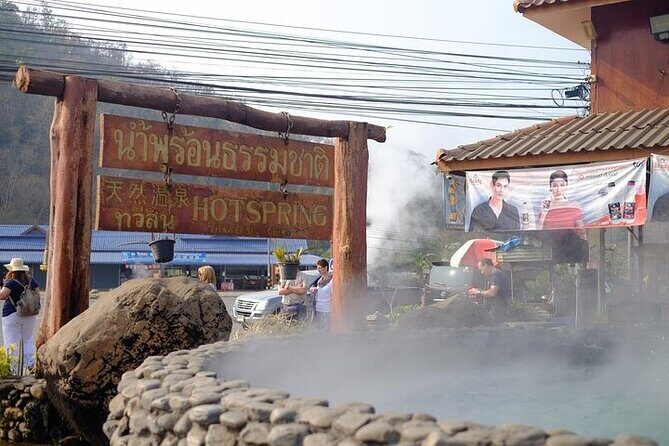
The first stop is Mae Khachan Hot Spring, positioned as the well-known natural hot spring for travelers on the Chiang Mai–Chiang Rai route. The key activity here is simple: soak your feet in mineral water and relax while everything heats up around you.
What makes this stop more than just a quick photo break is the temperature. The water is about 90°C, hot enough for boiling eggs in the spring water. You’re given boiled-egg breakfast as part of the experience, and the fun part is that you can boil the eggs yourself in the hot water.
Even if you don’t go full amateur chef, you’ll feel the difference between this and typical “bath and go” spots. It’s interactive in a low-pressure way, and it gives you something to do while your body warms up and your day gets going.
Timing-wise, the stop includes traveling time from Chiang Mai to Chiang Rai. That means you don’t just arrive, soak, and leave; your day rhythm is already set to move forward as a full circuit. Admission here is free, and you also get bottled water during the tour.
If you’re thinking about comfort, bring shoes you don’t mind getting a little wet, because foot soaking is part of the deal. Also, if you hate waiting in heat, arrive mentally ready to slow down for a bit.
Wat Rong Khun White Temple: the iconic sparkle and the cash fee
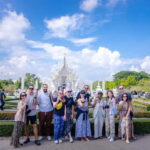
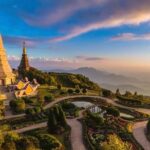
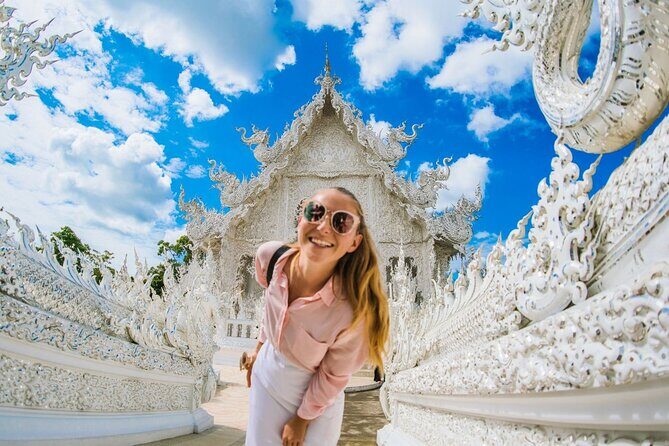
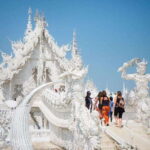
Next up is Wat Rong Khun, often called the White Temple. It’s one of Chiang Rai’s most recognizable attractions, located just outside the town, and it’s famous for how aggressively white everything looks. The temple uses pieces of glass in the plaster, which catch the light and give you that sparkling effect in sunny weather.
Plan on about 2 hours here. That’s enough time to see the key exterior and then take your time inside rather than rushing through like you’re late for a train.
Now the part to budget: the entrance ticket for Wat Rong Khun is not included. The fee is listed at 50 THB per person, and you need to pay by cash at the attraction. If you’re used to booking tours where everything is prepaid, this is the moment where you’ll want to have some Thai baht ready.
Also, temples require respect in how you dress. Cover shoulders and knees. If you show up in shorts that barely count as knee coverage, you might run into issues before you even reach the main buildings.
What I like about Wat Rong Khun on this route is that it’s truly a headline stop. It gives you a visual payoff that feels different from most Buddhist temple visits. The white surfaces and glass highlights make it feel like an art project turned into spiritual space.
Wat Rong Suea Ten Blue Temple: free entry, no monks, and modern art inside
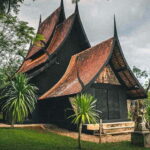
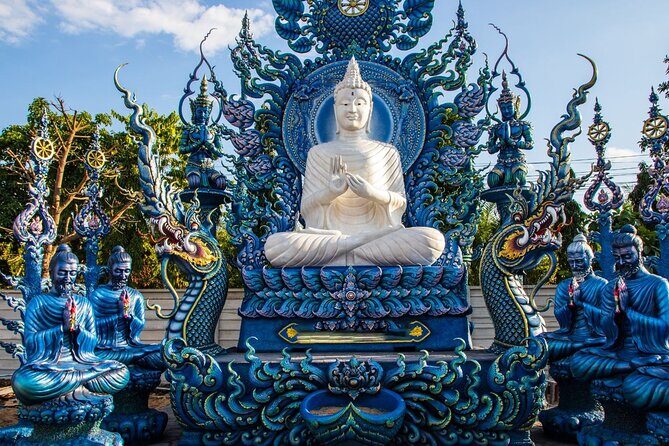
After the White Temple, the tour continues to Wat Rong Suea Ten, the Blue Temple. This one has a completely different mood thanks to its sapphire blue color and gold embellishments. It’s visually bold and easy to spot, even before you get close.
The big clarification: it is not an active temple in the sense that no monks live here. That often means the atmosphere can feel more like a visitor-focused site rather than a place with daily monastic rhythm.
Admission here is free, and the stop is about 1 hour. That short window is enough if your goal is to get the main interior highlights without turning it into a half-day detour.
Inside the great hall, the centerpiece is a huge sitting statue of a White Buddha. Surrounding it, you’ll see contemporary Buddhist art in a modern style. So you’re not just getting traditional architecture; you’re also getting a way of seeing Buddhist ideas through present-day artistic choices.
Practical takeaway: if you like taking photos, you’ll enjoy this stop, but don’t treat it like a drive-through. Even with only an hour, the contrast between the blue exterior and the interior artwork gives you enough to slow down and actually look.
Wiang Pa Pao Lahu hill tribe village: mountain life, walking, and dessert
The last stop is Wiang Pa Pao, where you visit a Lahu hill tribe village experience. This part shifts the day away from temple landmarks and into everyday life in mountainous settlements.
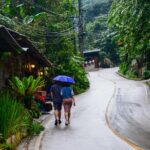
The activity includes exploring the area by walking and trekking around. You’ll see small Lahu settlements in a region where villages are often remote from roads and towns. The reason is cultural commitment: they keep their way of life even though modern routes pass nearby.
The tour also gives helpful context about the Lahu people. The Lahu originally lived on the Tibetan plateau and migrated gradually to Yunnan. Movement into north Thailand is generally described as starting in the 1870s or 1880s under pressure from Chinese domination. That background helps you understand why villages are set the way they are, and why the community structure matters.
This stop also includes dessert. It’s a small thing, but it can turn the visit from observation-only into an exchange moment, especially if you’re curious and polite in how you interact.
As for time, the duration here includes traveling time from Chiang Rai back to Chiang Mai. So you’ll likely feel the village visit as a meaningful segment, but it won’t be long enough for a deep cultural immersion program. Think of it as a first look that’s more personal than a quick market stop.
One more practical thing: hill routes can be uneven. Wear shoes you trust for walking. If it’s hot or hazy, take it slow and drink water when you can.


Value for $56.93: what you get, what costs extra, and where it makes sense
At $56.93 per person, this tour sits in a mid-range price zone for a one-day Chiang Rai itinerary with multiple stops. What you’re paying for is the structure: transport, guide, and the built-in stops that would be harder to stitch together yourself.
Here’s the value breakdown based on what’s included:
- Licensed English-speaking tour guide
- Hotel pickup and drop-off (within the Old City / near-center area)
- Air-conditioned vehicle
- Boiled eggs at the hot spring
- Dessert at the hill tribe village
- Bottled water
The main extra cost is straightforward:
- Wat Rong Khun entrance: 50 THB cash per person
So even with that extra fee, you’re still getting a full-day circuit that covers two top temple icons plus a cultural village stop, without needing to handle intercity transportation.
Is it worth it? If you want a clean itinerary and a guide to connect the dots between the sites, yes. If you’re the type who prefers total freedom and hate paying entrance fees on top, then you might feel the add-on at Wat Rong Khun.
Also, the day’s length is part of the price. You’re not just buying attractions; you’re buying time management. For a first trip to Chiang Rai, that’s a real win.
The best fit: who this tour will suit most
This tour is a good match if you want classic Chiang Rai landmarks plus a short cultural stop, all in one day. If you’re traveling with limited time and don’t want to plan transportation between stops, you’ll appreciate the pickup and the fixed route.
You’ll likely enjoy it if you:
- Like temples with strong visual identities (white glass shine, blue gold detailing)
- Want an activity that’s hands-on at Mae Khachan (the boiled eggs)
- Prefer a guided introduction to hill tribe life in the Lahu village area, with walking and a dessert stop
It may feel less ideal if you:
- Hate long car days. The schedule includes major driving time and ends back at the meeting point.
- Want deep cultural immersion. This village stop is built for a personal visit, but it is still a short segment.
- Don’t want any extra cash costs. Wat Rong Khun is payable by cash on site.
From the tour description, most travelers can participate, but you still need to be comfortable with walking and getting to temples with a dress code. Wear clothes you can adjust quickly.
A note on last-minute hiccups: don’t book your whole week around one day
The tour has a 3.7 rating across 3 reviews, and one experience highlights a risk you should take seriously with any day trip: last-minute cancellation. In that case, the booking was canceled the previous night due to an urgent personal issue connected to the assigned guide. The traveler did receive a full refund after a few days, but the missed travel day had no compensation.
That doesn’t mean it will happen to you. But it does mean you should protect your schedule. If you can, build in a buffer day in Chiang Mai and don’t stack an essential appointment immediately after a Chiang Rai temples outing.
If you do book, keep an eye on messages from the provider, and be ready to move your plans if your day changes. A tour can be great and still have rare operational problems.
Should you book this Chiang Rai White Temple, Blue Temple, and hill tribe tour?
If you want a one-day, high-impact route with the two biggest temple icons and a hill tribe village segment, I think this is a sensible choice. The Mae Khachan hot spring stop adds a memorable, hands-on breakfast element, and the Wat Rong Khun and Wat Rong Suea Ten contrast gives you variety in art style and atmosphere.
My main “yes, but” is planning. Make peace with the long day and the extra cash fee at Wat Rong Khun. Bring appropriate clothing for sacred sites, comfortable shoes for walking, and Thai baht for that 50 THB entrance.
Book it if your goal is clean logistics and classic Chiang Rai views without the hassle of figuring everything out yourself. Skip it if you’re trying to avoid road time or you want a more extended cultural experience than a guided village walk and dessert.
If you can handle a full day and you’re excited by temples with big visual identities, this tour will likely hit the right notes.