REVIEW · CHIANG MAI
Chiang Mai : Traditional Lanna Bamboo Fan Weaving
Book on GetYourGuide →Operated by Baannoi Nornmuan · Bookable on GetYourGuide
Bamboo fans look simple. They are not. In Chiang Mai, this Lanna bamboo fan weaving workshop turns those light, wavy fans into a real hands-on skill you can still feel later, not just something you watch from the sidelines. The session runs about 90 minutes, so you get learning without the long, tiring slog that some craft classes turn into.
What I like most is the tone: it’s family-style and relaxed, with hosts who slow down when needed. You can feel that in the way people talk about getting enough time, even with grandparents and kids in the same group, and how the workshop stays well organized from start to finish. I also really appreciate the take-home payoff: you leave with a fan you made, plus a drink included (butterfly pea with lime and honey) to mark the break and the finish.
One thing to consider: there’s no pick-up and no food included. If you’re planning on pairing this with other activities, you’ll want to build in travel time and a plan for lunch or dinner around it.
In This Review
- Key Things to Know Before You Go
- A Calm Corner of Chiang Mai: Where the Workshop Happens
- Starting With Lanna Bamboo Weaving: What the First Minutes Are For
- Fan Construction Techniques: Turning Bamboo Into a Framework
- The Weaving Rhythm: Learning the Steps That Create the Wave
- Cultural Context Without the Lecture Weight
- The Included Butterfly Pea Drink Break: A Small Reset
- Price and Value: Is $22 for 90 Minutes Fair?
- Timing and What the Workshop Feels Like in Real Life
- Who This Workshop Suits Best (And Who Might Skip It)
- Practical Tips for a Smoother Chiang Mai Fan Weaving Session
- Should You Book This Chiang Mai Bamboo Fan Weaving Class?
- FAQ
- Where is the Chiang Mai bamboo fan weaving workshop located?
- How long is the workshop?
- What is included in the price?
- Is food included?
- Is pick-up provided?
- What languages will the instructor use?
- Is this activity a private group?
- What do I take home?
- How much does it cost?
- What is the cancellation policy?
Key Things to Know Before You Go
- Private group feel: You’re not packed into a big crowd; the pace is easier to manage.
- Bamboo-to-fan hands-on practice: You learn the real steps of fan construction, not just a quick demo.
- Wave-like fan technique: The goal shape matters, and the weaving supports that flowing motion.
- English and Thai instruction: The host can work with you even if your Thai is basic.
- Butterfly pea drink included: A small but thoughtful break, and it fits the calm, craft vibe.
- Take your creation home: The workshop is built around making something you’ll actually use.
A Calm Corner of Chiang Mai: Where the Workshop Happens

This workshop takes place in Chiang Mai Province at 7/6 Rat-U-Thit rd. Soi 4, T. Wat gate, A. Muang Chiang Mai 50000. That address matters, because it puts you in a more local part of the city rather than a tourist-business corner.
In practical terms, you’ll want to treat this like a real appointment, not a walk-in activity. With no pick-up car included, you’ll likely arrive by taxi, Grab, or your own transport. The upside is that once you’re there, the experience shifts away from performance and toward something more personal: the setting supports a quieter pace, and the host-family atmosphere comes through.
From the details given, you’re working with bamboo materials provided, so you don’t need to bring supplies or worry about tracking craft tools down in Chiang Mai. You just show up ready to sit, learn, and follow the steps long enough to make something neat.
You can also read our reviews of more tours and experiences in Chiang Mai.



Starting With Lanna Bamboo Weaving: What the First Minutes Are For
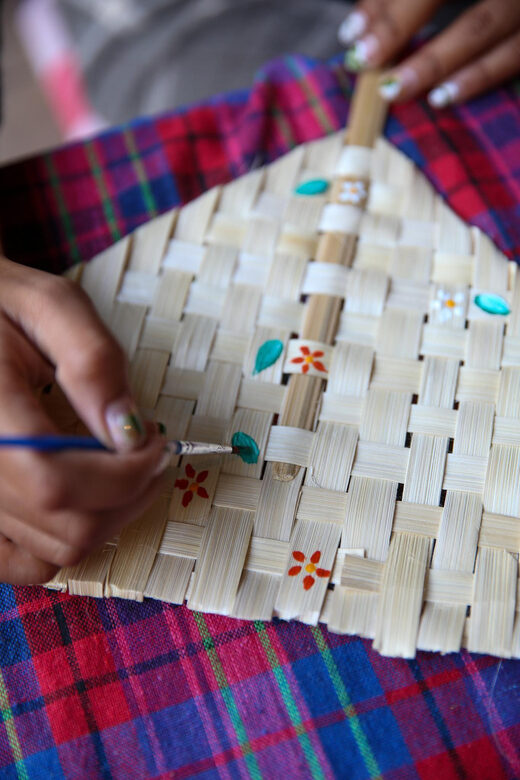
The workshop begins with an introduction to bamboo weaving and what it means in the Lanna context. Even if you don’t know much about Thai crafts, the class format is built to get you oriented fast: you learn the purpose of the materials first, then how weaving becomes both functional and artistic.
Why this matters: in a lot of craft workshops, the first part is just background talk. Here, the early explanations connect to what you’ll do with your hands next—so you don’t feel lost when the instructor shifts into technique.
You’ll also get clarity on the main outcome: the fan. The class isn’t aiming for a vague souvenir. It’s aiming for a specific object with a specific look, including that gentle wave-like motion that makes a bamboo fan feel alive instead of flat.
Another small but meaningful detail is that the instructors work in English and Thai. That helps a lot if your Thai is limited. The workshop is designed for communication, not just for showing tools and hoping you guess the rest.
Fan Construction Techniques: Turning Bamboo Into a Framework
Once the basics land, you move into fan construction techniques. This is the part where you stop thinking of it as a “bamboo craft” and start treating it like engineering—light engineering, sure, but still real structure.
In a typical fan build, getting the foundation right is everything. If the frame is off, the fan won’t sit the way it should, and the final weaving won’t look smooth. That’s why the instructor guidance matters. You’re not expected to figure out the pattern through trial and error alone.
What I find especially valuable for your experience is the pacing. This isn’t a rushed “do it quickly” class. The workshop is described as well prepared and accessible, and people specifically mention getting enough attention and time—so if you’re slower with your hands, that’s not a deal breaker.
The private group format also helps you learn the technique you need, not just the steps you can copy. In a small group, questions land when they matter, and you can get corrections early (before they show up in the final shape).
The Weaving Rhythm: Learning the Steps That Create the Wave
Here’s the core skill: weaving bamboo into the fan so it gives that mesmerizing wave-like motion. That phrasing is more than marketing. The wave effect is what tells you the pattern isn’t random. It’s controlled.
You’ll spend most of the workshop doing the weaving itself—working with bamboo in a way that requires patience more than speed. The good news: this kind of manual repetition is exactly what travel days often steal from you. Instead of another screen time moment, you get a quiet focus where your hands learn a rhythm.
The host experience really shows in how feedback is given. People mention language barriers, yet they still managed to connect. That usually means the instructor uses clear demonstration and simple, step-based guidance rather than relying only on complicated explanations.
And because you’re making something you’ll carry home, you’re not just doing an exercise. You’re building a piece with a purpose. That’s one reason the class feels more satisfying than a basic souvenir workshop.
Cultural Context Without the Lecture Weight
Along the way, you’ll get cultural context behind Lanna bamboo fan weaving. This usually means learning what the craft is for, how it fits with local traditions, and why bamboo is such a practical material.
But the best part isn’t the facts—it’s the way context supports the hands-on work. When you know the why, you tend to treat the technique more carefully. You pay attention to the details that affect the final shape and sturdiness.
The host behind the workshop is listed as Baannoi Nornmuan, and multiple comments mention a host named Bunnoi who is kind and welcoming. That local-person connection is the heart of the value here. You’re not just buying knowledge from a teacher. You’re learning from someone who lives with the craft.






The Included Butterfly Pea Drink Break: A Small Reset
At some point during the workshop, you’re served butterfly pea with lime and honey. This is one of those inclusions that seems small until you experience it, because it gives your brain a reset.
Why it helps: weaving can be tiring in a quiet way. Your shoulders settle differently after a drink. Also, the flavor profile fits the mood of the day—cool, floral, lightly sweet—so you don’t feel like you’re being pulled into a tourist-style “pause for photos” moment.
Plus, it’s included. If you’ve been trying to keep Chiang Mai costs under control, that matters. It’s one less expense you have to plan for mid-afternoon or pre-evening.
Price and Value: Is $22 for 90 Minutes Fair?
The price is $22 per person, with duration listed at about 90 minutes (roughly 1 to 1.30 hours). For craft workshops, the cost can vary a lot based on location, group size, and how much actual instruction you get.
Here’s how I’d judge the value based on what’s included:
- You get materials (bamboo).
- You get instruction in English and Thai.
- You get a take-home creation.
- You get a drink included.
What’s not included is food, and there’s no pick-up car. So the total cost of the experience is really the workshop price plus whatever you spend on getting there and eating before or after.
In return, you’re paying for a real skill with a tangible result. A handmade bamboo fan isn’t hard to replace, but it’s hard to replicate with the same confidence once you leave. If you like making things with your hands—or you want a calm activity that isn’t another temple stop—this is solid value.
Also, the reviews you’re likely to see emphasize personal attention in private settings. That quality matters more than a cheaper workshop that moves too fast.
Timing and What the Workshop Feels Like in Real Life
This is a 90-minute class, which is a smart length in Chiang Mai. You can fit it between other plans without feeling like your whole day disappears.
The rhythm usually goes like this:
- Introduction and setup (what you’re making and how the materials work)
- Learning and practicing fan construction basics
- Weaving work toward the wave-like final form
- Final touches and taking your creation home
- A drink break at a natural point in the session
The main thing you’ll notice is that the workshop is structured enough to keep you moving, but not so rigid that you never pause. That balance is why people mention the hosts being attentive and welcoming.
If you’re bringing kids, the private-group approach helps. You can still learn without the “adults only” vibe some classes have.
Who This Workshop Suits Best (And Who Might Skip It)
This workshop is a great fit if you:
- want a hands-on activity with a clear endpoint
- like learning a local skill from a host-family setting
- enjoy crafts that require patience and focus, not speed
- want something calmer after busy sightseeing days
It’s also a good choice for multi-generational groups. People specifically describe doing it with grandparents, parents, and children together, and still feeling that everyone got attention and time.
You might skip it if you:
- need heavy physical movement or action-based activities
- strongly prefer purely outdoors tours (this is a sitting craft class)
- don’t want to handle your own transport since there’s no pick-up
Practical Tips for a Smoother Chiang Mai Fan Weaving Session
A few things will make your time easier:
- Wear comfortable clothes you don’t mind getting a little bamboo-dust on. (Bamboo work is messy in small ways.)
- Bring a small amount of patience. The results look crisp because the process is methodical.
- Expect to slow down. This is one of those activities where rushing makes the fan harder to shape.
- If you’re not fluent in Thai, don’t worry. The instructor supports English and Thai, and the host setup is clearly built for communication.
Also, plan your day around it. Since food and pick-up car aren’t included, make sure you’re fed before you go, or have a meal plan for right after.
Should You Book This Chiang Mai Bamboo Fan Weaving Class?
If you want an authentic-feeling Chiang Mai experience that doesn’t rely on crowds or constant motion, I’d say this workshop is worth booking. For $22 you’re getting materials, instruction, a drink, and a take-home item made with your own hands, all in about 90 minutes.
Book it especially if you’re traveling with family or you value learning from a local host like Bunnoi (Baannoi Nornmuan). If you’re simply looking for something quick and effortless, you might find it better to choose a different activity. But if you like the idea of making a real Lanna bamboo fan—with a wave-like look you can explain later—this is a smart, low-stress choice.
FAQ
Where is the Chiang Mai bamboo fan weaving workshop located?
It’s listed at 7/6 Rat-U-Thit rd. Soi 4, T. Wat gate, A. Muang Chiang Mai 50000.
How long is the workshop?
The duration is about 90 minutes (around 1 to 1.30 hours).
What is included in the price?
The price includes bamboo materials and a drink: butterfly pea with lime and honey.
Is food included?
No, food is not included.
Is pick-up provided?
No pick-up car is not included.
What languages will the instructor use?
The instructor provides English and Thai support.
Is this activity a private group?
Yes, it’s a private group.
What do I take home?
You take home your handmade bamboo fan creation made during the workshop.
How much does it cost?
The price is $22 per person.
What is the cancellation policy?
You can cancel up to 24 hours in advance for a full refund.