REVIEW · CHIANG MAI
No.1 Chiang Mai: Stand Up Paddle Board through Mae Taeng Forest
Book on Viator →Operated by Chiang Mai Mountain Biking & Kayaks · Bookable on Viator
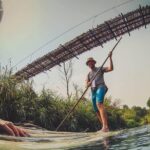
Paddle a jungle river, no experience required. This half-day stand up paddle boarding trip takes you from Chiang Mai up to the Mae Ngat valley and then onto the calm Mae Ping River, winding through the Mae Taeng Forest Reserve while your guide helps you get balanced fast. I especially like the beginner-friendly conditions and the fact you can switch to a kayak if you want an easier effort level.
You’ll get full instruction and all the water gear, plus hotel pickup and drop-off. If you’re nervous about standing, that kayak option is a smart safety valve. The main consideration is timing: lunch at the Mango Plantation restaurant can run late, so plan to eat a snack before you get hangry.
In This Review
- Key highlights worth planning around
- First impression: why the Mae Ping is a friendly SUP river
- Getting moving: pickup, the paddle shop, and your first briefing
- The ride north to Mae Ngat valley: what you’re doing before the paddle
- Safety gear and what it signals about the trip
- Sliding onto the Mae Ping: guided SUP technique that actually helps
- Wildlife time in Mae Taeng Forest Reserve: quiet nature, not a safari show
- SUP vs kayak: choosing the effort level without losing the day
- Midday fuel at Mango Plantation: plan for a later lunch window
- What to wear and pack: the gear that makes or breaks river time
- Who this trip is best for (and when to skip it)
- Price and value: what $71.98 buys you in Chiang Mai
- Booking smart: timing, group size, and the day’s start
- Should you book this Mae Taeng forest SUP trip?
- FAQ
- How much time does the SUP trip take?
- What time does the tour start?
- Is hotel pickup and drop-off included?
- Do I need to know how to SUP before I go?
- Can I choose a kayak instead of SUP?
- What safety gear is provided?
- Are paddle boards suitable for beginners of different sizes?
- What should I bring with me?
- Where is lunch included?
- What is not included in the price?
Key highlights worth planning around
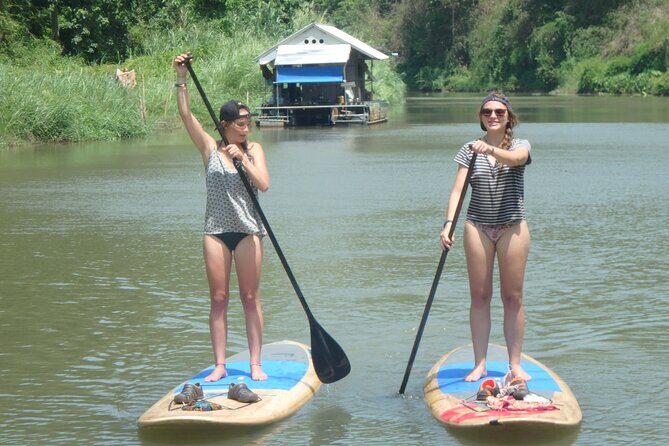
- Mae Ping River, Class 1 currents: calm, slow water that’s easier than ocean paddling
- Small group feel: capped at 5 travelers for this activity, with very limited numbers overall
- Real instruction on balance: you learn how to manage posture and paddling technique
- Wildlife-spotting on a forest river: birds and other animals along a lush reserve
- Mango Plantation lunch: a restaurant stop that can land in the mid-afternoon
First impression: why the Mae Ping is a friendly SUP river
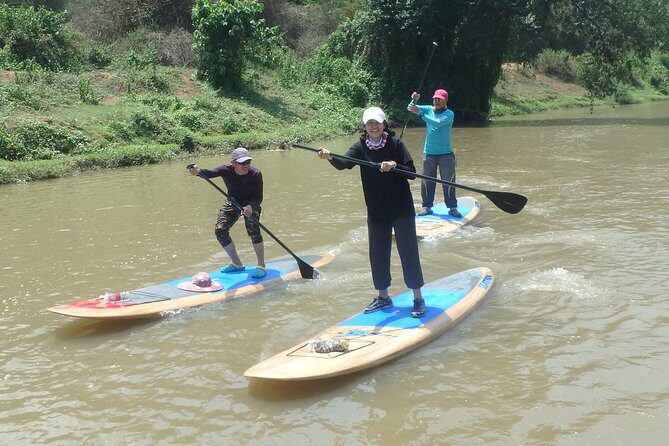
When you paddle SUP on an ocean, everything is harder: waves, chop, and the constant push-pull of wind. On this trip, you’re on the Mae Ping River, where the water is described as calm and slow-moving, with seasonal changes that can affect the exact feel of the current.
That matters because SUP is mostly balance plus rhythm. If you’re fighting waves, you focus on staying upright. If the water is gentle, you can actually learn the strokes that make standing feel normal. The tour is designed for that learning moment, not just for sport.
You can also read our reviews of more tours and experiences in Chiang Mai

Getting moving: pickup, the paddle shop, and your first briefing
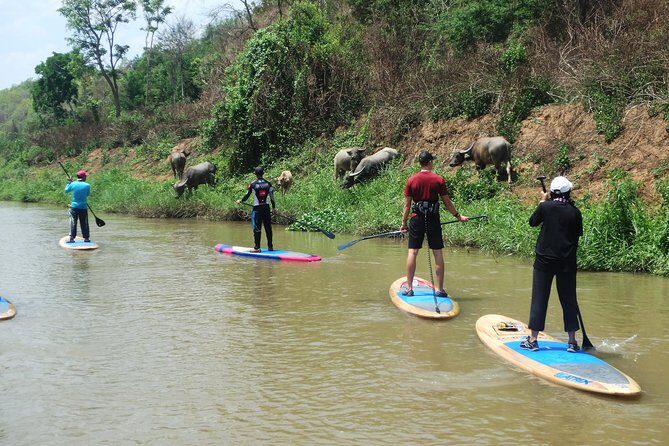
Start time is 8:30am, with hotel pickup in the Chiang Mai area. This is one of those tours that reduces friction. You don’t need to coordinate transport, navigate the day’s timing, or worry about where to rent equipment.
After pickup, you ride with your small group (kept very tight—up to 5 people on this activity). You’ll transfer to a paddle board shop where you’ll get instruction. If you’d rather not stand, you can choose a kayak right here. That choice early is useful because your gear and mindset shift fast once you decide.
You’ll also be asked to bring essentials that make the day comfortable:
- swimming gear
- a set of dry clothes for after
- water shoes if possible (and if you don’t have them, you might be able to get watershoes at the shop, depending on size)
The ride north to Mae Ngat valley: what you’re doing before the paddle
You travel roughly 1 hour north to the Mae Ngat valley area. This is more than a transfer. It sets you up with time to absorb the day’s flow—get oriented, meet your guide, and settle before you get wet.
This trip doesn’t rush the start. That’s a good thing. If you’re new to SUP, you want a calm ramp into the sport, not a frantic sprint to the water. By the time you reach the river, you’re ready for the safety briefing and gear fitting.
Safety gear and what it signals about the trip
Once you arrive, you’ll receive a safety briefing and collect the equipment. You should expect a life vest and helmet as part of the setup.
That’s not just “extra gear.” It changes how relaxed the experience feels. When the boat-and-gear basics are handled and explained, you can focus on the river and your technique.
Also, the boards used are described as suitable for beginners up to 220 lbs (100kg). If you’re over that weight limit, you’ll want to double-check before booking rather than assume the fit will work out.
Sliding onto the Mae Ping: guided SUP technique that actually helps
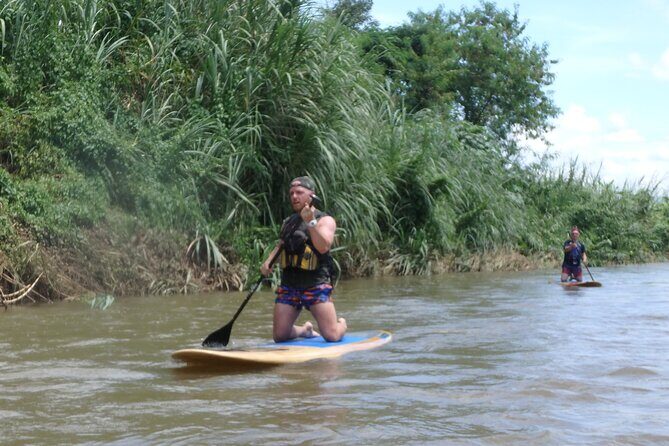
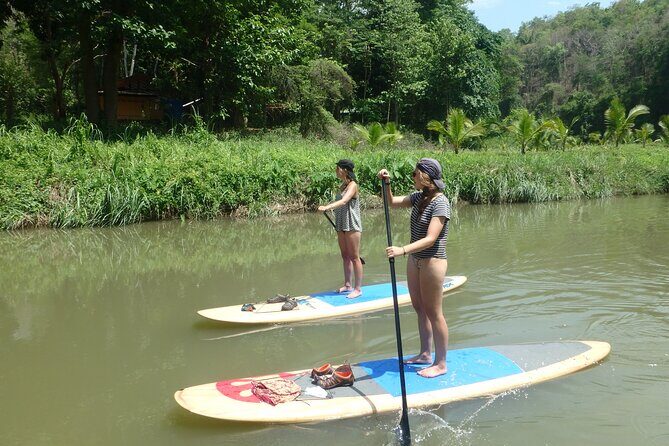
After you’re geared up, you head out behind your guide. The goal is to make the experience feel manageable quickly. You’ll get tips on navigating easy Class 1 currents and refining your paddling technique.
If you’re wondering what “Class 1” means in real life: think gentle, predictable water rather than technical rapids. You’re not being asked to perform under pressure. You’re learning how to steer with strokes and how to keep your balance while the river moves.
The guide can also coach you on form adjustments. If conditions require it, you can sit or kneel on the board. That’s a practical detail that helps beginners feel safe, because it gives you options if standing feels too shaky.




Wildlife time in Mae Taeng Forest Reserve: quiet nature, not a safari show
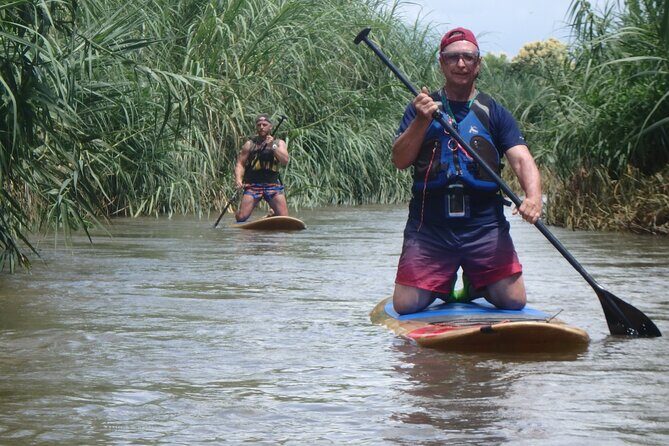
Part of the appeal here is the route through the Mae Taeng Forest Reserve, with the river fringed by jungle. The waterway runs through lush greenery, and the trip includes watching for birds and other wildlife along the way.
Don’t expect a guided nature lecture every minute. This is more like calm time outside, with your attention pointed toward what’s moving. When you’re new to SUP, that’s a relief: you’re not just staring at your feet the whole time. You look up, you scan the trees, and you let the river set the pace.
SUP vs kayak: choosing the effort level without losing the day
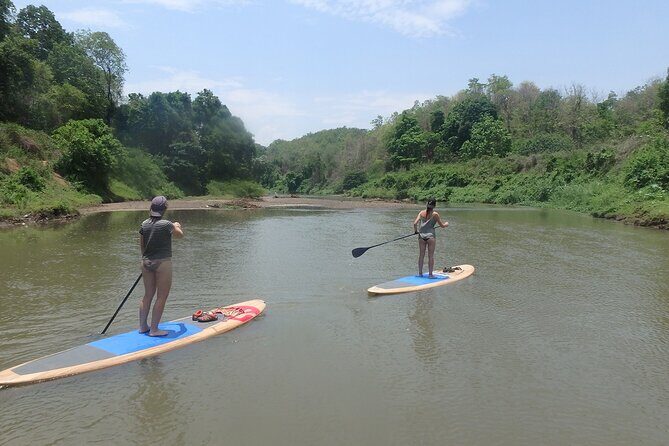
One of the smartest parts of this tour is that it’s not rigid. You can paddle on a board, or you can switch to a kayak option during the shop briefing.
That choice matters because SUP can be surprisingly tiring, especially the first time. You’re not just paddling forward—you’re stabilizing constantly. A kayak still lets you enjoy the river, the scenery, and the guided route, but with less balance work.
Some guidance you might hear from the operator matters here. Aidan (the owner) is noted for understanding the river well and advising a kayak-then-SUP approach. Even if you don’t follow that exact plan, the lesson is clear: start with the option that keeps you confident, then level up only if you feel good.
Midday fuel at Mango Plantation: plan for a later lunch window
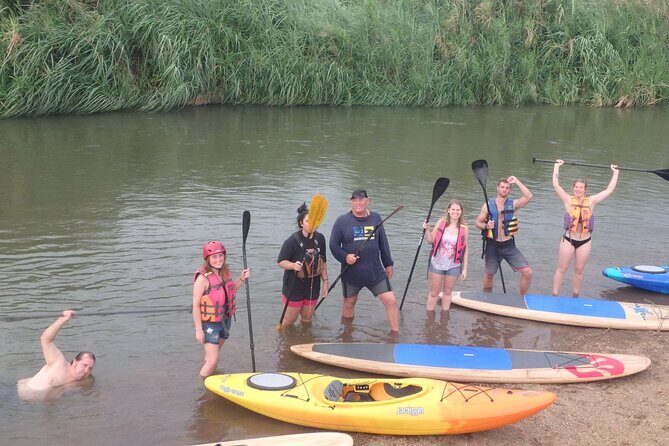
You’ll come ashore when it’s time to refuel with lunch at a restaurant at a Mango Plantation. Bottled water is included, but the lunch timing is worth planning around.
One note from real experience: lunch can land surprisingly late—around mid-afternoon for some people. So don’t assume you’ll be eating at a neat, standard hour.
Practical fix: eat a small snack before you go (or bring one with you if that’s allowed for you). If you tend to get cranky when you miss a meal, plan ahead. Sunscreen and snacks are the two “small” things that protect your day more than you’d expect.
What to wear and pack: the gear that makes or breaks river time
This is a water activity, so your clothing strategy is simple: get wet, then get comfortable again. You’ll want:
- swimming gear you can paddle in
- a dry set of clothes for after
- water shoes if you have them
If you don’t have water shoes, the tour notes that 40–45 water shoes can be provided (so if your size isn’t in that range, you’ll likely want to bring your own). A lot of people also find a dry bag useful for phone and essentials. The pro shop may sell items like waterproof phone bags, but bringing your own dry bag can be a faster and cheaper solution.
Also: sunscreen matters. A clear tip from experience is to reapply about every hour during the day. River sun can feel gentler than beach sun, but it’s still sun.
Who this trip is best for (and when to skip it)
This tour is described as suitable for all skill levels, including beginners. The river conditions and the instruction style are built for first-timers. Your only real “fitness” requirement is a moderate physical level—enough to paddle, step on and off the board or kayak, and handle the motion without panic.
You’ll likely love it if:
- you want a nature-focused half-day with light adventure
- you’re new to SUP and want real coaching
- you like the idea of wildlife spotting along a calm river
- you want hotel pickup and straightforward logistics
You might reconsider if:
- you get strongly affected by late meal timing and don’t plan snacks
- you’re expecting a full-day outing with lots of long breaks (this is shorter, around 4 hours)
- you’re outside the board weight suitability (over 220 lbs / 100kg), since the boards mentioned are for beginners within that range
Price and value: what $71.98 buys you in Chiang Mai
At about $71.98 per person, this trip isn’t a bargain SUP lottery ticket. But it also isn’t “just rent a board and good luck.”
You’re paying for:
- guided paddling on a specific river route
- safety briefing plus life vest and helmet
- equipment (inflatable paddle board or kayak)
- bottled water
- hotel pickup and drop-off
- lunch at the Mango Plantation restaurant
For a first-time SUP day, that’s the value. If you tried to self-arrange transport, instruction, and lunch, the cost likely climbs quickly. The small group setup also matters. Fewer people means more guidance time and fewer delays in getting everyone on the water.
If you want the best value, don’t treat it like a random activity. Treat it like an intro course that happens to be on a beautiful river.
Booking smart: timing, group size, and the day’s start
This activity is commonly booked about 7 days in advance on average, so waiting until the last moment can limit your options. The start time is 8:30am, which is ideal for a half-day plan: you still get the morning on the river, and you’re back before Chiang Mai feels fully chaotic.
Also, while the activity is marketed as small-group up to 10 or fewer, it can run with a maximum of 5 travelers for the specific departure. That’s great for comfort and for getting a little more personal instruction.
Should you book this Mae Taeng forest SUP trip?
If you want a calm, beginner-friendly SUP experience on a jungle river—without having to fuss with rentals, transport, and safety details—this is a solid choice. The kayak option is the real safety net, especially if you’re unsure about standing or you just want an easier effort level.
My only caution is the lunch timing. Bring a snack mindset, protect your skin with sunscreen, and you’ll be happier when the Mango Plantation meal lands later than you expected. For most people looking for a guided nature paddle, the balance of guidance, equipment, and river time feels worth it.
FAQ
How much time does the SUP trip take?
It runs about 4 hours.
What time does the tour start?
The start time is 8:30am.
Is hotel pickup and drop-off included?
Yes, hotel pickup and drop-off are included.
Do I need to know how to SUP before I go?
No. You’ll get instructions at the paddle shop, and the river conditions are described as beginner-friendly.
Can I choose a kayak instead of SUP?
Yes. You can choose to travel by kayak instead of using a paddle board.
What safety gear is provided?
You’ll get a life vest and helmet as part of the equipment.
Are paddle boards suitable for beginners of different sizes?
The supplied paddle boards are suitable for beginners weighing up to 220 lbs (100kg).
What should I bring with me?
Bring swimming gear, a set of dry clothes, and if possible water shoes.
Where is lunch included?
Lunch is served at a restaurant at a Mango Plantation.
What is not included in the price?
River fee/insurance is not included, and you’ll need to provide your passport number at check-in for insurance ID.