REVIEW · CHIANG MAI
Chiang Mai Temples & City
Book on Viator →Operated by Bravo Indochina Tours · Bookable on Viator
Six Wats in one tight day. Chiang Mai’s old sacred sites go from iconic to surprisingly personal when you see Wat Phra That Doi Suthep in the morning and then work your way through the old city temples the rest of the day. I especially like that this tour builds in time to notice craftsmanship—architecture, carvings, and painted details—rather than racing past everything for a photo. One thing to consider: it’s a long 10-hour day with lots of walking, and Doi Suthep includes 306 steps, so plan accordingly.
You’ll start at 8:30am with hotel pickup and a small group (up to 9 people). Then an English-speaking guide helps you connect what you’re seeing across different neighborhoods—hilltop, outskirts, and the walled old city—so the temples feel like a story, not just six separate stops.
In This Review
- Key highlights at a glance
- Why six Chiang Mai Wats feel like a fast education
- Morning start at 8:30am: Wat Phra That Doi Suthep and 306 steps
- Wat Chet Yot: the 15th-century 7-spire stupa you’ll remember
- Wat Suan Dok: white chedis, the flower garden meaning, and a relic visit
- Old city highlights: Wat Phra Singh, Wat Chedi Luang, Wat Chiang Man
- Wat Phra Singh: one of the standout old-city temples
- Wat Chedi Luang Varavihara: the massive pagoda that dominates the area
- Wat Chiang Man: going back to Chiang Mai’s founding era
- What you get from the guide (and why it matters)
- Price and value: $122.06 for a full circuit of guided temple time
- Practical tips so your day stays pleasant
- Should you book this Chiang Mai temples tour?
- FAQ
- FAQ
- What time does the Chiang Mai Temples & City tour start, and how long is it?
- Does the tour include hotel pickup and drop-off?
- Which temples are included in the tour?
- Are entrance fees included?
- What’s not included in the price?
- What happens if poor weather cancels the tour?
Key highlights at a glance
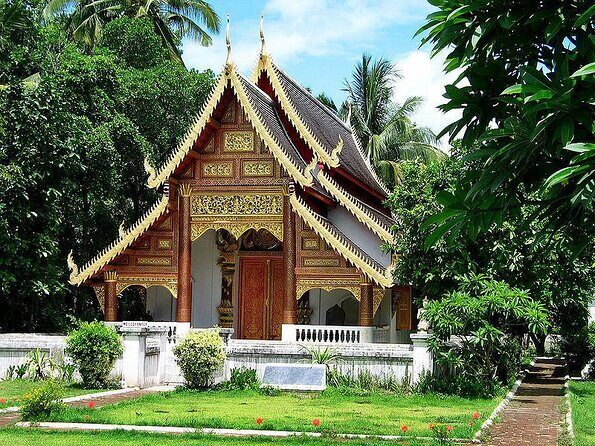
- Doi Suthep first, when the temple atmosphere is at its best
- Wat Chet Yot’s 7-spire stupa, Lanna-style architecture with standout form
- Wat Suan Dok’s white chedis, plus a visit to the historic Buddha relic site
- Old city trio, including Wat Phra Singh, Wat Chedi Luang, and Wat Chiang Man
- Small-group pacing with roundtrip hotel transport and bottled water
Why six Chiang Mai Wats feel like a fast education
Chiang Mai has a lot of temples. The problem is that if you only visit one or two, you miss how the styles and purposes change depending on where you are—hilltop vs. outskirts vs. inside the older walls.
This tour’s value is that it’s designed to help you compare. You’ll go from the famous hilltop icon at Wat Phra That Doi Suthep to Lanna-area temple design at Wat Chet Yot, then down into west-of-old-city Wat Suan Dok, and finally into the older core for Wat Phra Singh, Wat Chedi Luang, and Wat Chiang Man. The result is a day where you can actually start to see patterns: how devotion is shown in stone, how temple layouts guide foot traffic, and how different eras left their mark.
Also, I like the “stress-free” part that actually matters. With hotel pickup and drop-off plus a driver handling transport, you can focus on the temples instead of constantly checking rides, routes, and parking.
You can also read our reviews of more city tours in Chiang Mai
Morning start at 8:30am: Wat Phra That Doi Suthep and 306 steps
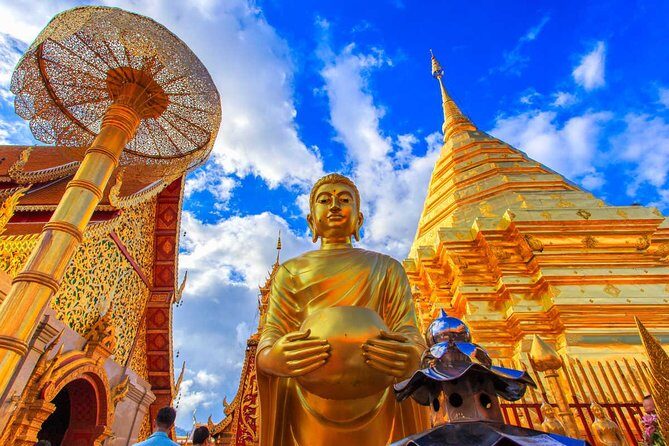
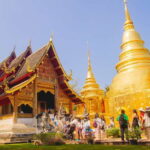
You’ll get going at 8:30am from your hotel and head up to Wat Phra That Doi Suthep. This is the best-known temple in northern Thailand, perched on a hilltop, and the timing helps—morning tends to feel calmer as you approach the site.
The main draw here is twofold. First, you’re walking into a place that matters spiritually, with a holy relic associated with the Buddha. Second, once you’re high enough, you get far-reaching views over Chiang Mai—exactly the kind of “you’re really above it all” moment that makes Doi Suthep feel like more than a pretty stop.
Now, the practical reality: you reach the temple by climbing 306 steps. If you’re comfortable with stairs, it’s totally doable, but it’s still a workout. Wear shoes you trust and pace yourself. If you have knee issues, you may want to take extra pauses on the way up. The good news is that the stair climb gives you a natural break and builds anticipation, so you arrive ready to look around rather than out of breath and annoyed.
Wat Chet Yot: the 15th-century 7-spire stupa you’ll remember
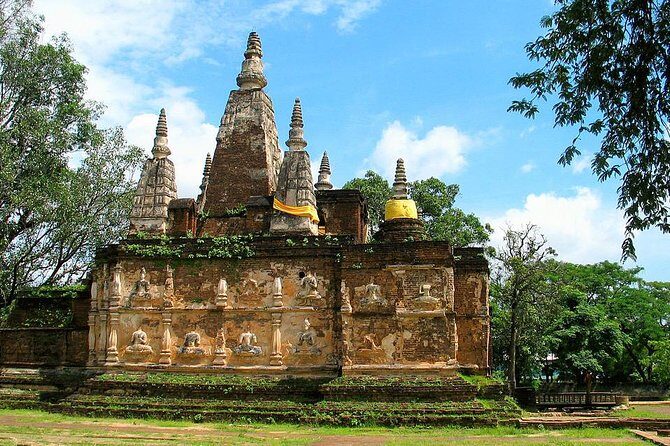
After Doi Suthep, the tour shifts to Wat Chet Yot (also known as Wat Jed Yod). This one’s a bit of a change of pace: it’s in the outskirts of Chiang Mai and is known for its unique Lanna architecture and its 7-spire stupa design.
If you’re the type who likes temples for their geometry, this is a strong stop. Seven spires gives you something specific to look for—something you can’t just glance at and forget. And because it’s tied to a 15th-century era, the look feels distinct from more modern impressions you might have in your head.
Plan on taking it slow here. Even if the stop time is shorter than the big name temples, Wat Chet Yot rewards you for standing back, finding the main stupa arrangement, and then coming closer to see how the details fit together.
Wat Suan Dok: white chedis, the flower garden meaning, and a relic visit
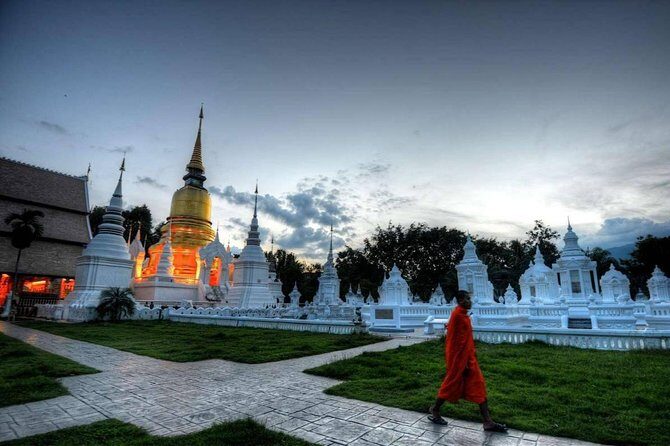
Next up is Wat Suan Dok, located just west of the older walled part of Chiang Mai. This temple is known for its large number of white chedis (pagodas), and the name literally points to its vibe: flower garden temple.
The white chedis are the kind of visual you can’t fake with a quick walk-by. They create repetition and rhythm across the grounds, so your eyes start following patterns automatically. That makes it easier to appreciate craftsmanship: stonework, alignments, and how the temple spaces guide where you stand and how you look.
This is also one of the most meaningful stops because the tour includes a visit connected to the historic Buddha relic at Wat Suan Dok. That’s the kind of detail that turns a temple visit from sightseeing into understanding. You’re not just looking at structures—you’re stepping into a place that holds significance for worship and belief.
If you’re visiting in warm weather, this is a good moment to pace your energy. Bring your water bottle along, sip often, and give your eyes a break by stepping into shaded areas when possible.
Old city highlights: Wat Phra Singh, Wat Chedi Luang, Wat Chiang Man
After lunch time, the tour moves into the old city zone with three big names. This is where the day starts to feel like a timeline.





Wat Phra Singh: one of the standout old-city temples
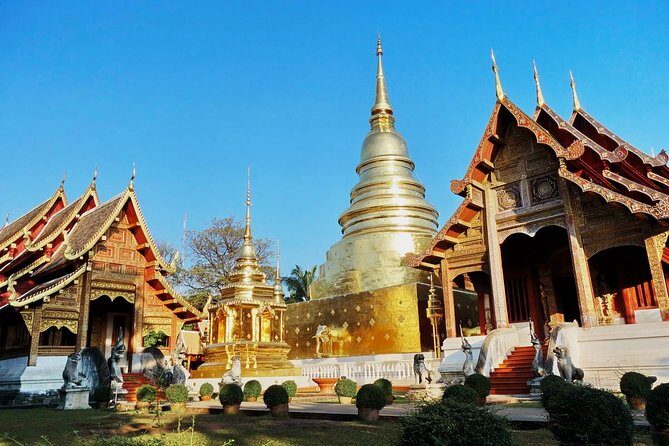
Wat Phra Singh is one of the most attractive temples within the walled old city. The feeling here is older and more intimate: you’re walking within a compact area where the temple complex history matters. If you like seeing how older temples relate to the city around them, this is a satisfying stop.
This is also a great place to focus on the “craft” side of temple design—again, those carvings and painted elements tend to pull you in if you slow down. The tour’s guide helps you keep your eyes on what’s worth noticing instead of getting lost in generic temple photos.
Wat Chedi Luang Varavihara: the massive pagoda that dominates the area
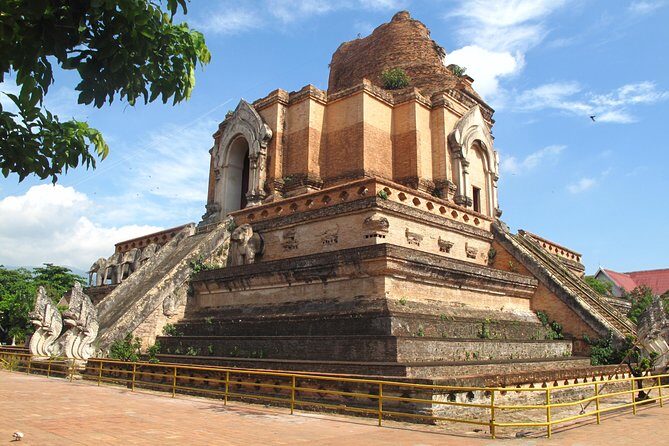
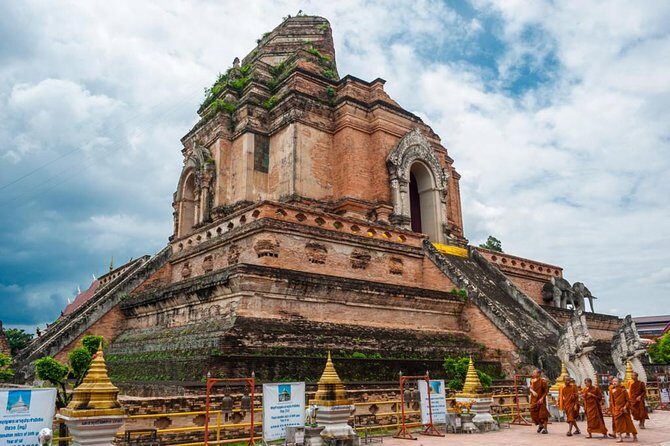
Then comes Wat Chedi Luang Varavihara, and the headline is simple: a massive, impressive chedi (pagoda) that dominates the area. This temple is tied to royal orders—King Saen Muang Ma is connected with the chedi, and the structure was meant to enshrine ashes.
Even if you don’t know the story ahead of time, you’ll feel the intention just by looking at the scale. Big structures like this aren’t built to be background. They’re built to be the focal point, the spiritual center, and the landmark.
So stand in the open and take a minute to see the chedi’s mass in relation to the space around it. Then walk closer when you’re ready for detail.
Wat Chiang Man: going back to Chiang Mai’s founding era
Finally, you reach Wat Chiang Man, described as the oldest temple in Chiang Mai, dating back to the founding of the city in 1296. This is the stop that tends to land best for people who want a sense of time depth.
The temple is connected to early leadership tied to the founding period—King Mengrai and the decision to build a new city with Chiang Mai as a capital is part of how the temple’s story is framed. You don’t need to memorize the names to appreciate the result: you’re looking at a site that has been standing through centuries of change.
By the end of the day, this stop helps everything else click. Wat Phra Singh and Wat Chedi Luang feel like major expressions of devotion in the old city, while Wat Chiang Man reminds you that the city’s spiritual core started early and has continued evolving.
What you get from the guide (and why it matters)
A big reason this tour works is the guide’s role in connecting the “what” with the “why.” In particular, Yukki is noted for making the whole day feel smooth and coherent, and that’s exactly what you want on a full temple day.
When you have an English-speaking guide, you’re not stuck guessing:
- which parts of the temple are meant to draw your attention,
- how different temple names point to different purposes,
- and what to look for as you move from one site to the next.
Add the steady presence of the driver, Mr Bank, and the logistics feel handled. Transport is included, so you can focus on the walking and the looking. A good driver also helps with the “start-stop” rhythm. It’s less stressful than trying to manage your own transport between hilltop and old city areas.
Price and value: $122.06 for a full circuit of guided temple time
At $122.06 per person, this isn’t a bargain in the ultra-budget sense. But it also isn’t just a cheap van ride to a list of temples. What makes it feel like good value is the bundle.
You’re paying for:
- hotel pickup and drop-off
- private transportation
- an English-speaking guide
- entrance fees for the temples listed
- bottled water
- a small-group format with a cap of 9 travelers
That combination matters because temple visits can cost more than you expect once you add tickets. And without a guide, you’d likely lose time trying to figure out what’s important at each site. This tour shifts the cost from DIY planning into guided viewing, which is often the best trade if you only have one day.
One more small point: the tour uses a mobile ticket, which can make the start day less fussy. You’re not hunting for printouts at a busy pickup time.
Practical tips so your day stays pleasant
A 10-hour temple day can be great—or it can start feeling like a long endurance test. Here’s how to keep it fun.
Wear temple-friendly clothes and shoes. You’ll be outside and inside at multiple sites. Shoes with grip are a big deal because you’re dealing with stairs at Doi Suthep and uneven temple ground elsewhere.
Treat Doi Suthep as the main workout. The 306 steps are the event. Everything else is calmer, but you’ll still have hours of walking after. Start slow on the stairs. Don’t try to “win” the climb.
Bring a light layer. Weather matters, and this tour requires good weather to run. If skies are bad, your plan might change. A light layer helps if morning is cooler or if you get occasional breezes.
Use the bottled water and take small breaks. Water is included, so sip regularly rather than waiting until you feel thirsty. Short pauses also let your eyes reset so you notice carvings and painted sections instead of just scanning.
Don’t overpack your expectations. Six temples sounds like a lot, but with a guide, you’ll still get time to look. The best approach is to pick one or two “focus details” per stop (like the 7-spire stupa at Wat Chet Yot or the chedi scale at Wat Chedi Luang) and let the rest support your main interests.
Should you book this Chiang Mai temples tour?
I’d book it if you want one day that really helps you understand Chiang Mai beyond the markets and streets—especially if you care about architecture, temple symbolism, and the different styles across the city.
It’s also a strong choice if you dislike logistics. Hotel pickup, entrance fees handled, and guided interpretation mean you get a smoother route across hilltop and old city areas. And the fact that it stays small (up to 9 people) helps keep the experience from feeling crowded.
You might choose something else if you’re sensitive to long days, heavy walking, or stairs. The 306-step climb at Doi Suthep is the one piece that can change the whole day’s comfort level.
FAQ
FAQ
What time does the Chiang Mai Temples & City tour start, and how long is it?
The tour starts at 8:30am and runs for about 10 hours.
Does the tour include hotel pickup and drop-off?
Yes. Hotel pick up and drop off are included.
Which temples are included in the tour?
You’ll visit Wat Phra That Doi Suthep, Wat Chet Yot, Wat Suan Dok, Wat Phra Singh, Wat Chedi Luang Varavihara, and Wat Chiang Man.
Are entrance fees included?
Yes. Entrance fees for the mentioned visits are included.
What’s not included in the price?
Tips, travel insurance, and alcoholic beverages are not included.
What happens if poor weather cancels the tour?
If the tour is canceled due to poor weather, you’ll be offered a different date or a full refund.